
Government Web Design
Webpop Design builds government websites around the tasks people arrive to complete, whether they are checking a service or submitting a form. With more than 300 web projects behind us, we work with councils, public sector teams and agencies that need accessible, structured sites for public guidance, documents and updates.
View Our Work Get a Quote

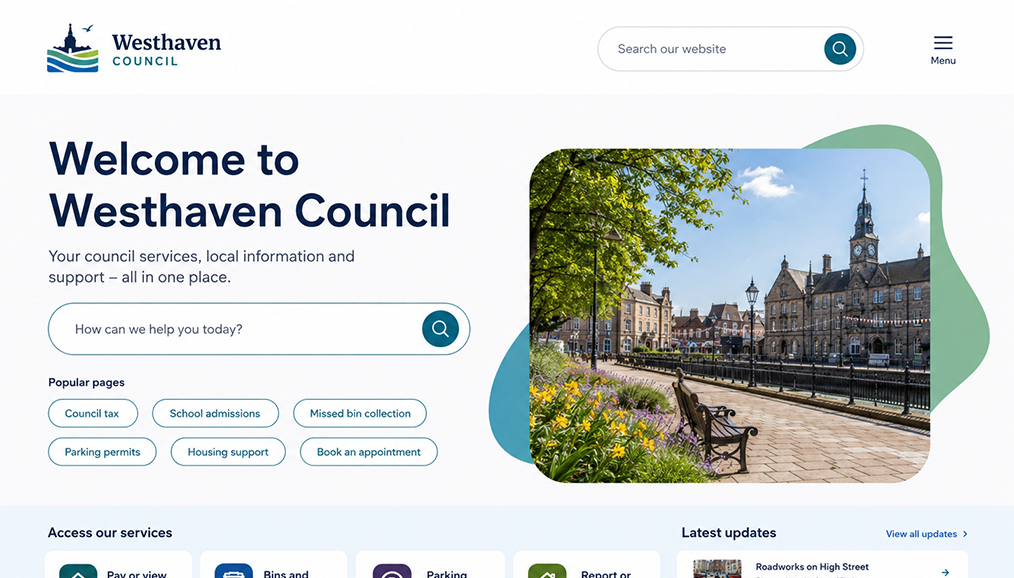


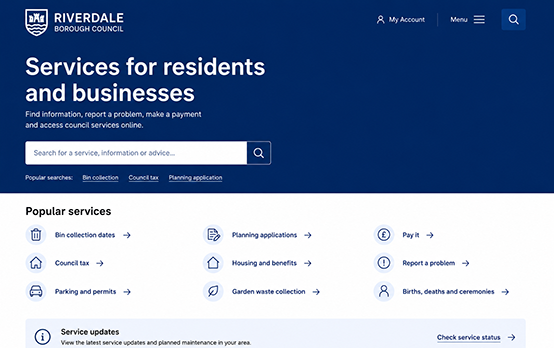
Public Sector Sites That Help People Find the Right Service.
Public sector sites need to be planned around the journeys people take. One visitor is checking a service, another completing a form, a third looking for guidance. We build the structure so each reaches the right service, document or next step.
As a web design agency in London, Webpop Design plans public sector sites around genuine service journeys, plain English and easy access to the forms, policies and contacts people need. We shape navigation and templates around how people search, and give your teams a consistent way to publish and review content.
Services, documents and updates are brought into one clearer system. Accessible layouts, searchable resources and clear eligibility content help users find what they need, while controlled publishing workflows give your communications and service teams lasting control over public information as it changes.
Start Your Project
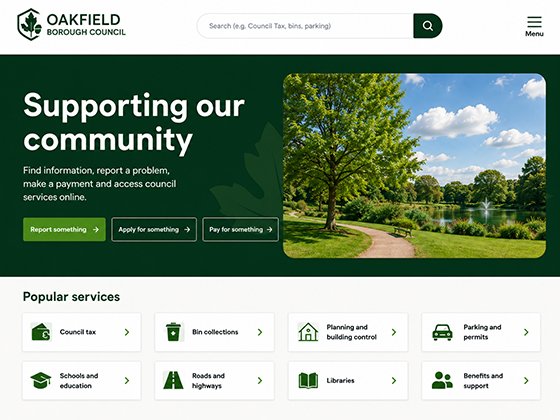
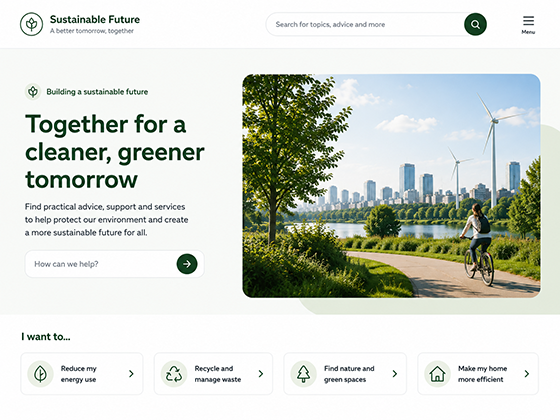
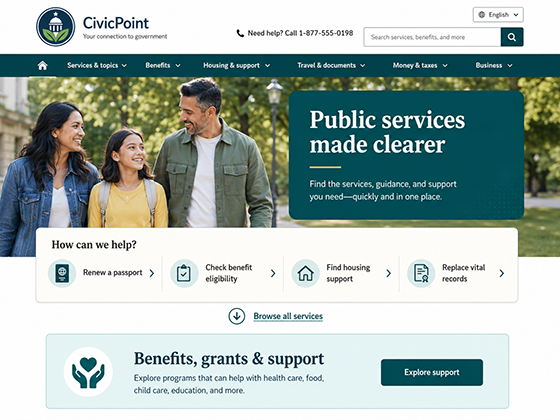
How Different Audiences Use One Public Sector Site.
Public sector websites need to support people who arrive with very different needs, knowledge and urgency, and who should never have to understand your organisation to get something done. One visitor is checking eligibility for support, another is reporting a problem or chasing a decision that affects them, and a third simply wants your opening times or current fees.
Businesses, suppliers and partners use the same site in a different way. They come for licensing details, procurement information, policy documents or a named contact option. The same planning challenge appears on large public-facing sites for healthcare providers and universities and colleges, where different audiences need easy access to complex information.
The structure has to carry all of these journeys at once, so the site stays usable however much it grows. Clear service pages, readable policies, searchable documents and controlled templates help your teams keep information accurate while users find what they need.
Our Government Website Design Process.
How we take a public sector site from discovery to a manageable, accessible launch.

Research & Discovery
The project starts by understanding the organisation, its audiences and the public tasks the site has to support. That means residents, businesses, applicants and internal teams, plus the services, forms and contact channels people use most often across your different departments and where public access breaks down.

Structure & Direction
The structure is planned around how the public reaches information, so it follows real user need. We define the main service journeys, content types and publishing priorities, keeping information easy to find and maintain as content grows and responsibilities shift across your teams over time without creating unnecessary publishing complexity later.

Journey Mapping & UX
Wireframes shape the key journeys before any visual design begins. We map how users move from a question to the right service, form or document, with clear hierarchy, accessible layouts and strong mobile behaviour built in from the start across everyday public service tasks, including common routes from mobile devices.

Interface Design
The interface is designed to feel clear, credible and suited to how public information is read. We work on readability, spacing, navigation, colour contrast and content hierarchy, and on how service pages, documents, notices and updates are presented at every screen size and content type without making the experience feel generic.

Build & Website Development
The approved designs are built into a bespoke, maintainable website with clean code, reusable templates and proper editing controls. Your team can update service pages, guidance, notices, forms and consultations themselves, and the design system holds together while they do it.

Launch & Go-Live Handover
Before launch, we handle testing, SEO migration, redirects, performance checks and a full content review. After handover, the site stays manageable, with scalable templates, clear publishing controls and a structure that keeps supporting public information as your services and priorities change over time.
Accessible Public Services Designed to Meet Genuine User Needs.
For a public body, accessibility is not a finishing touch. The Public Sector Bodies Accessibility Regulations make WCAG 2.2 AA a legal duty, and they cover the documents you publish as much as the pages themselves. We build that obligation into the work from the first wireframe, so it shapes the structure rather than being bolted on before launch.
In practice, that means semantic headings, visible focus states, strong colour contrast, keyboard navigation, forms with clear labels and useful error messages, and PDFs and reports that screen readers can read properly. We also help you produce and maintain the accessibility statement the regulations require, so it reflects the real state of the site rather than a template promise.
None of this means a public sector site has to look like a stripped-back government template to be compliant. We build bespoke, so your site can meet WCAG 2.2 AA, work for every user and still look like your organisation. Accessibility and a credible, recognisable public-facing brand are not a trade-off, and we design for both at once.
Relevant Website Projects.
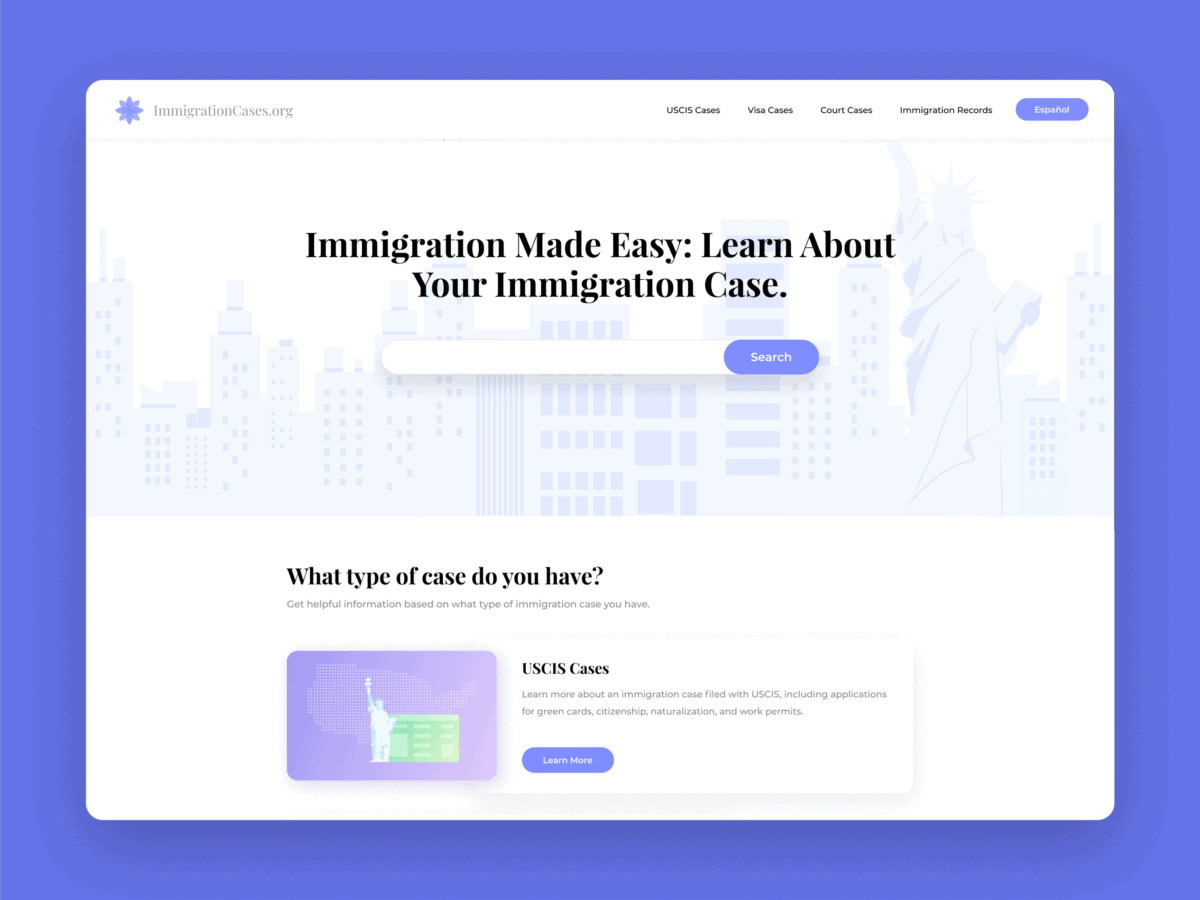
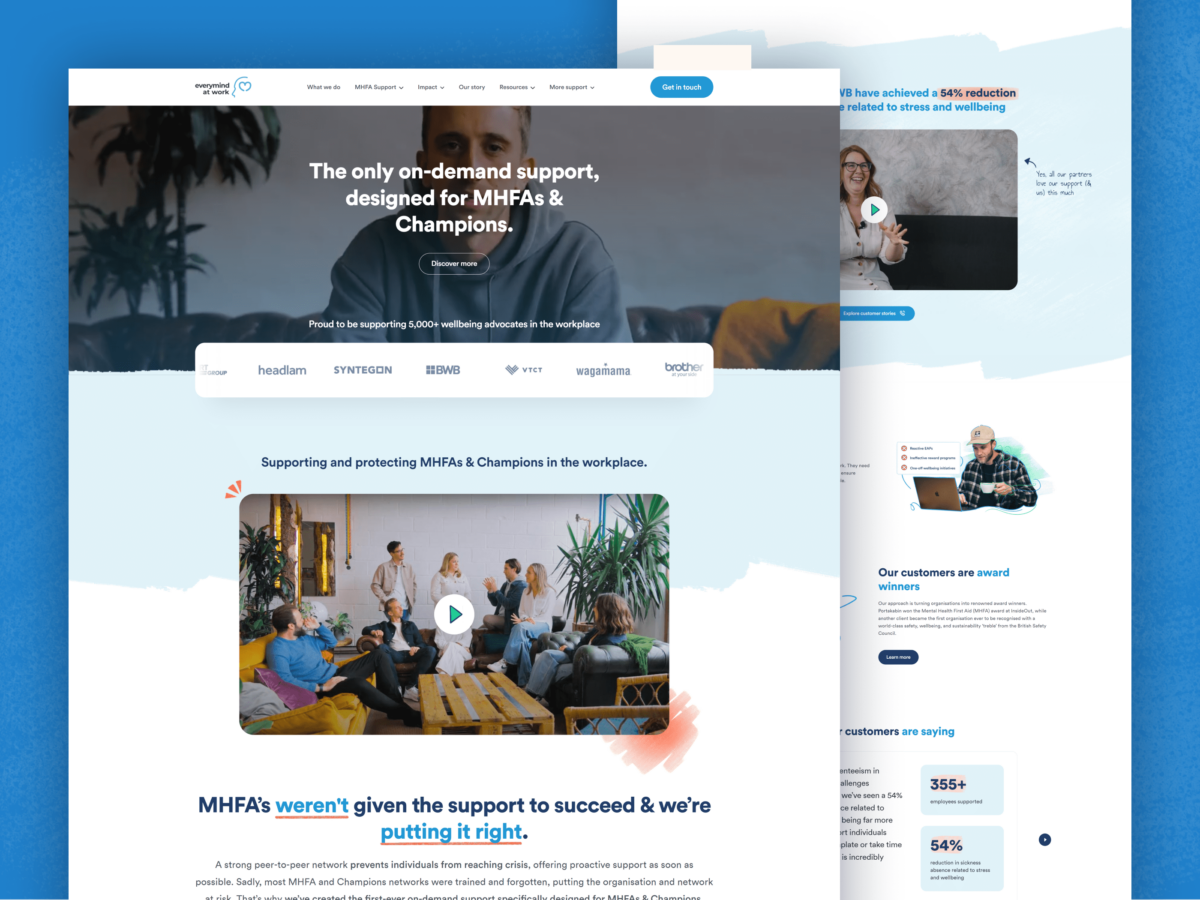
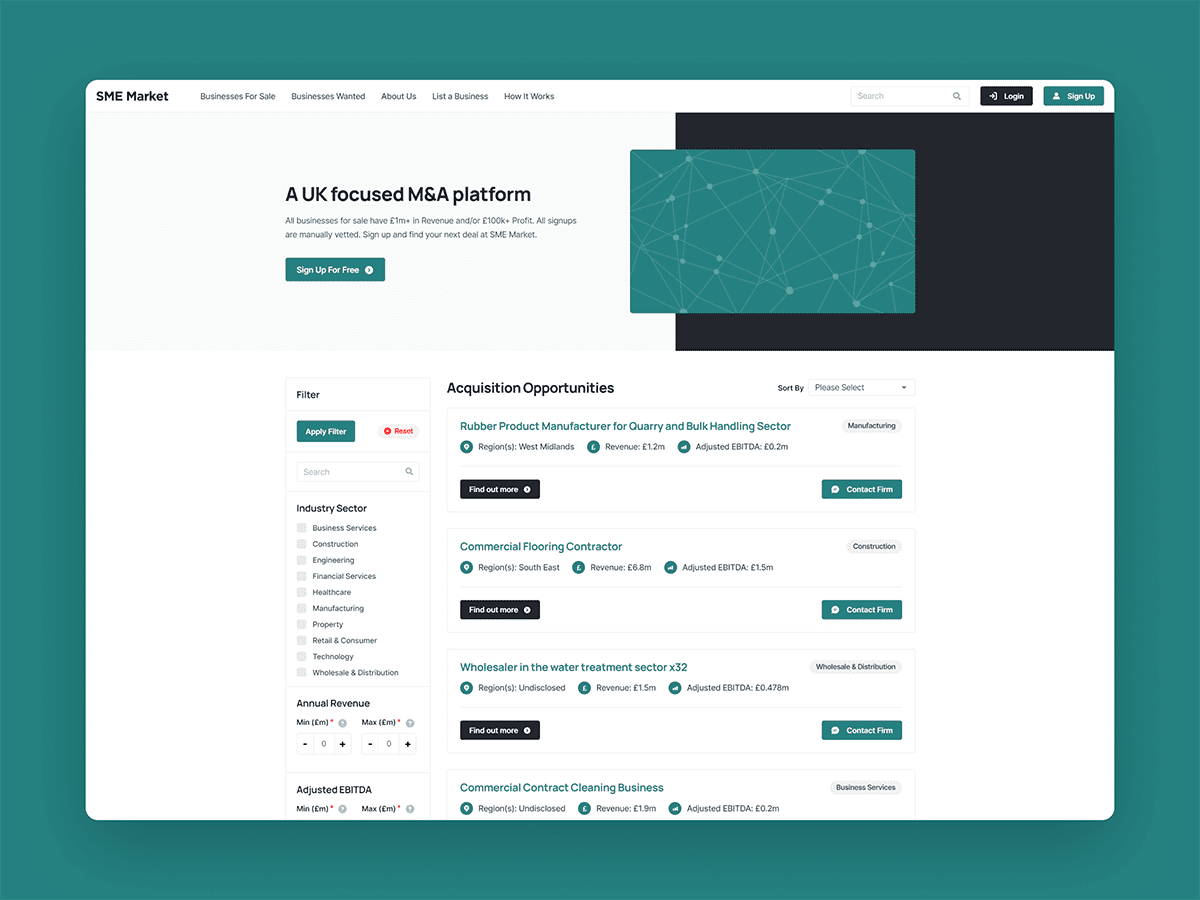
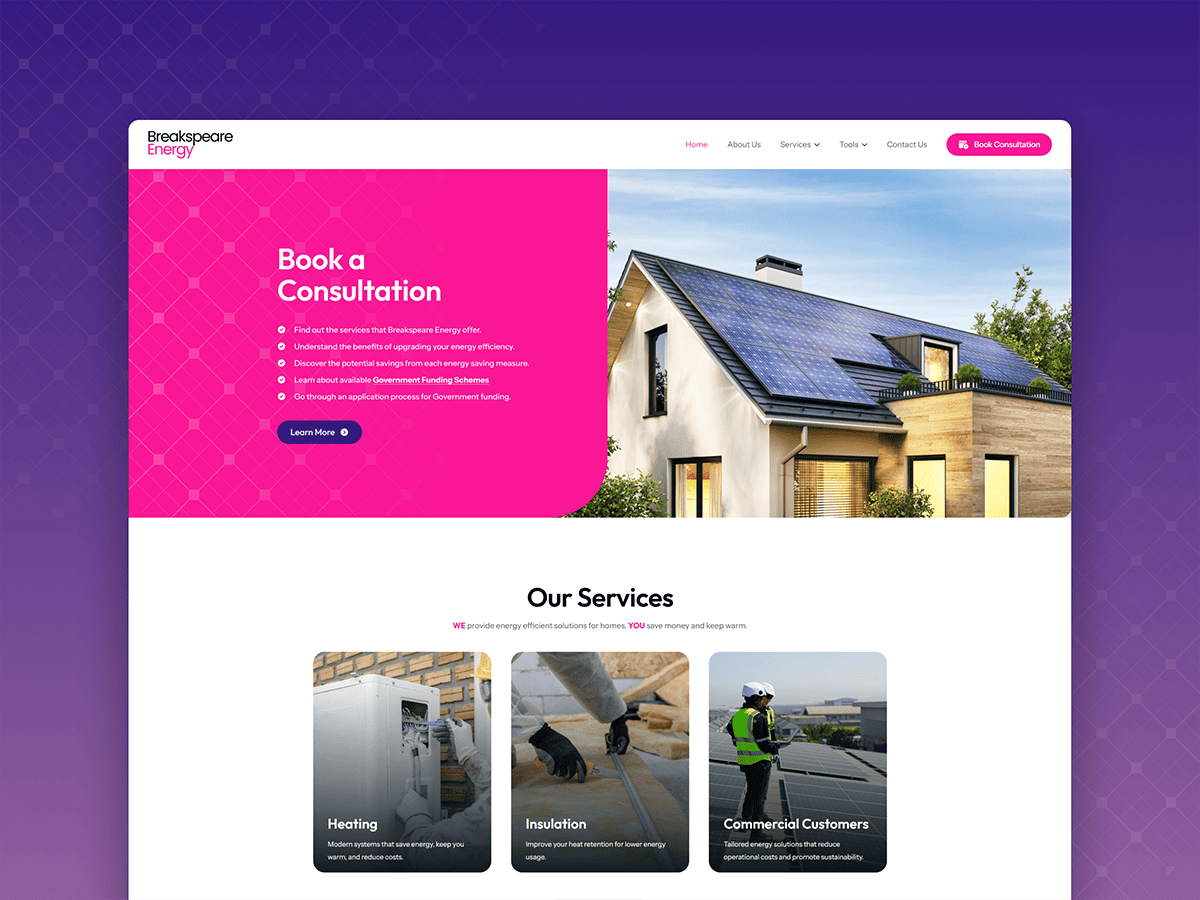
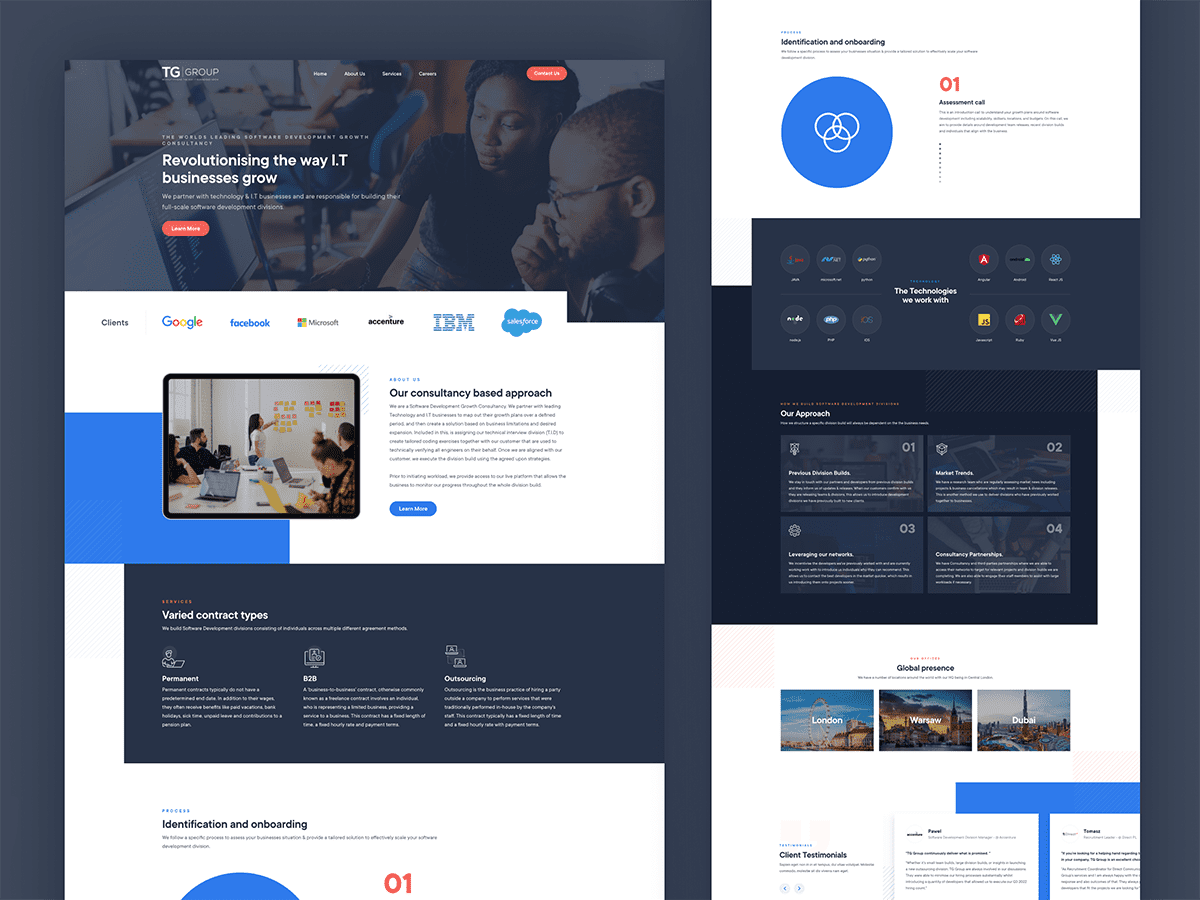
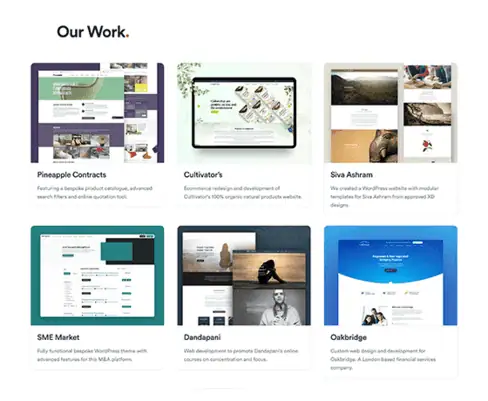
Explore related work showing structured content, accessible layouts and public-facing delivery.
Public Sector Organisations We Support.
We work with public sector organisations that need clearer information, stronger journeys and a more manageable public-facing site.

Local Authorities & Councils
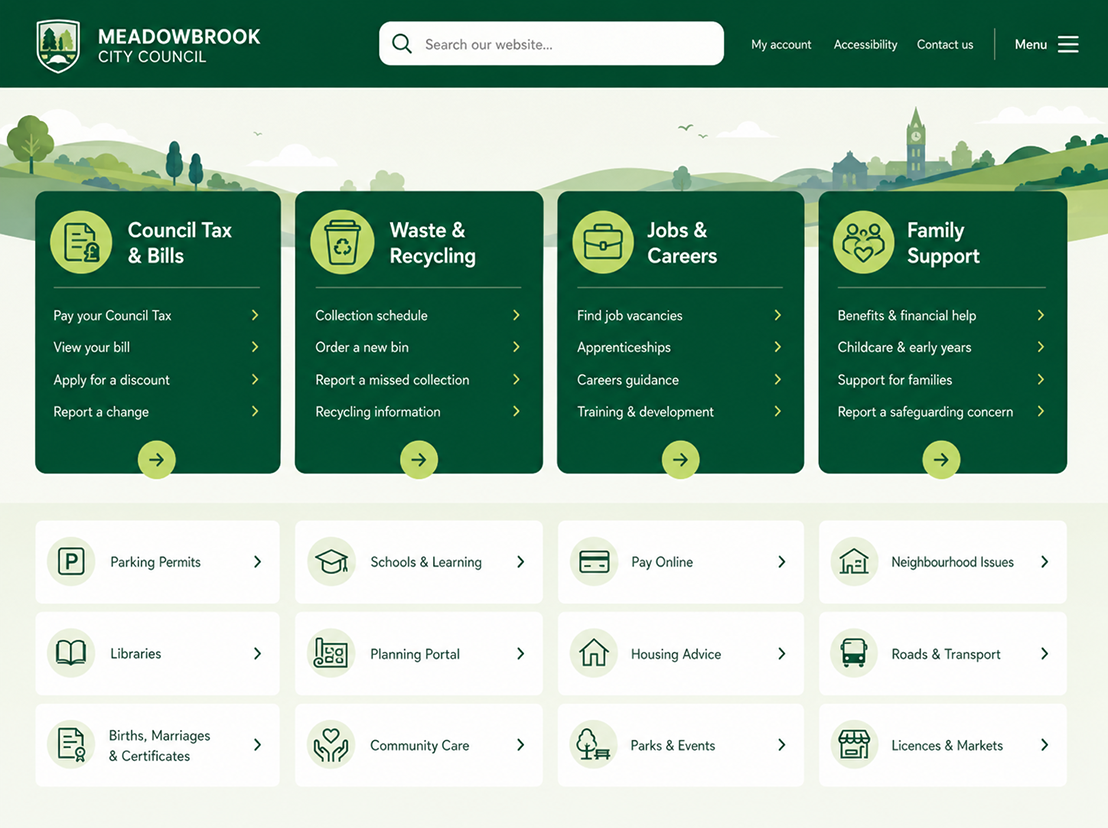
Council websites for resident services, consultations and reporting forms, helping local people find the information they need easily.

Central Government Teams
Structured websites for policy information, public guidance, service updates, reports, forms and stakeholder-facing content.

Public Service Providers
For organisations delivering public-facing services, we provide clear guidance, documents, updates and ways to get in touch.
Housing Organisations
Websites for tenancy guidance, repair reporting, resident updates, support services, documents and local community information.

Healthcare & Wellbeing Bodies
Accessible healthcare websites for service information, guidance pages, contact details and public health communication.

Regulatory & Membership Bodies
Structured websites for policies, guidance, resources, member information, public notices and sector communication.
How We Plan Government & Public Sector Websites.
Webpop Design is a good fit for organisations that want a serious, properly planned website built specifically for them, rather than a generic template with public sector wording dropped on top. We bring together design, UX, accessibility-conscious layouts, Cyber Essentials-accredited processes and SEO-aware planning, so important information is easy to find, trust and maintain.
This approach works for sites with multiple audiences, service pages, policies, forms and internal publishing needs. We plan from the content and user journey first, then build a bespoke site with controlled editing, adaptable page layouts and practical publishing management, so your teams keep long-term flexibility and the design still holds.
Start an EnquiryDesign Recognition & Credentials.
Featured by respected web design, development and digital industry platforms.











Trusted by Clients on Serious Website Projects.
See how clients describe Webpop Design’s strategic thinking, communication, careful delivery and post-launch support.

Tim Marshall
Allegiant Finance
Emma Griffiths
Synchtank

Emily De Jesus
LS Tractor USA

Alan Harder
Tango Financial

Dan Garner
Xibo
Government Website Systems & Integrations.
Public sector sites usually need to connect with the systems you already run, rather than replace them. Webpop Design plans around the tools you use for forms, alerts, consultations, analytics and publishing, and keeps the complexity down.
Relevant systems may include GOV.UK Notify for messages, Citizen Space or Commonplace for consultations, Granicus govDelivery for public updates, Google Analytics or Microsoft Clarity for insight, ArcGIS for mapping, Microsoft 365 for documents, and CRM-ready forms for enquiry routing. Each integration is scoped properly before any technical work is promised.















Frequently Asked Questions.
Answers to common questions government teams, councils and public sector organisations ask before starting a website project with Webpop Design.



How much should a government website cost?
The cost depends on the size of the website, the number of page templates, the volume of content, and whether forms, document libraries, integrations or SEO migration are required. A smaller public sector website will cost less than a large redesign with complex content, stakeholder review and legacy migration. Webpop Design provides a fixed-scope proposal after discovery, so the budget is clear before work begins.
How long can a government website redesign take?
Timelines depend on the content volume, approval process and technical requirements. A focused website can usually move faster, while larger public sector projects need more time for content planning, design review, accessibility checks, migration and testing. Clear stages are set for structure, design, development, content review and launch, so stakeholders know when feedback is needed.
Can you redesign an existing council or public sector website?
Yes. We redesign navigation, service pages, mobile usability, document libraries, forms and the way people move through public information. The aim goes beyond modernising the look. We make important information much easier to find, maintain and trust. SEO migration planning matters here too, especially where your existing pages already receive search traffic.
Do you build government websites in WordPress?
Webpop Design often builds bespoke websites using WordPress as the content management system, but the focus is on the website structure, user experience and long-term publishing setup. For public sector teams, this can mean editable service pages, guidance content, documents, public notices, forms, news, consultations and contact options without relying on developers for routine updates.
How do you approach accessibility and WCAG 2.2 AA?
We plan accessibility from the start, building it into the work. We design layouts, headings, colour contrast, navigation and mobile behaviour with accessibility in mind, which helps you meet your duty under the Public Sector Bodies Accessibility Regulations. Where you need formal WCAG 2.2 AA testing, auditing or legal sign-off, we scope it properly so responsibilities are clear.
Can you migrate content and document libraries?
Yes. Public sector sites often hold years of service pages, PDFs, reports, policies, minutes and consultation documents. We structure the migration so useful content is retained, outdated pages are reviewed and documents become easier to find. The aim is not to carry a confusing legacy structure into the new site.
Can the website include online forms and enquiry routing?
Yes. Government and public sector websites often need forms for applications, reporting, contact, feedback, consultations or service requests. Forms should be clear, mobile-friendly, secure and routed sensibly to the right team or inbox. More complex integrations with CRM, case management or back-office systems should be discussed during discovery before anything is promised.
How do you protect SEO during a public sector website redesign?
We plan SEO migration in detail, especially where users already find your service pages, guidance or local information through Google. That can include URL mapping, redirects, metadata, heading structure, content review, internal linking and analytics setup. The goal is to protect the search visibility you already have while improving the structure and usefulness of the new site.
Will the website be fast, secure and easy to support?
Performance, security and maintainability are part of the build planning. We focus on clean front-end development, sensible templates, controlled access and practical support after launch. Every project includes 30 days of free support, with ongoing support plans available to keep the website accurate, secure and manageable after the redesign.
Can you support councils and public-facing organisations?
Webpop Design can support government teams, councils, public sector organisations and bodies delivering public-facing information or services. We are careful not to claim procurement framework status, GDS accreditation or direct sector credentials unless confirmed. Where relevant, we draw on adjacent experience in websites, accessibility-conscious layouts, complex content structures, forms, SEO migration and manageable CMS design.
Build a Public Sector Website Your Team Can Manage
Talk to us about a public-facing website that helps people find information, complete tasks and reach the right team, while giving your staff a clear, reliable system for managing content safely.
Plan Your ProjectRelated Sectors & Website Services.
Explore related sectors where accessible journeys and trusted website structures support clearer user experiences.
-
 Aerospace
 -
 Banks
Banks -
 Car Dealerships
 -
 Charities
 -
 Churches
 -
 Construction
 -
 Corporate
 -
 Dating Agencies
 -
 Dental Practices
 -
 Entertainment
 -
 Estate Agents
 -
 Farm Shops
 -
 Finance
 -
 Florists
 -
 Garden Centres
 -
 Government
 -
 Healthcare Providers
 -
 Higher Education
 -
 Home Care
 -
 Hospitals
 -
 Hostels
 -
 Hotels
 -
 Industrial Companies
 -
 Insurance Firms
 -
 Law Firms
 -
 Libraries
 -
 Locksmiths
 -
 Membership Websites
 -
 Model Agencies
 -
 Theatres
 -
 Pubs & Bars
 -
 Recruitment Agencies
 -
 Removal Companies
 -
 Restaurants
 -
 Retailers
 -
 Schools
 -
 Self Storage Companies
 -
 Small Businesses
 -
 Tattoo Studios
 -
 Travel Agents