
Library Web Design
Libraries need websites that make collections, opening hours, events and resources easy to find. Webpop Design is a London-based agency that builds bespoke library websites with accessible navigation and straightforward content management for libraries, archives, online collections and cultural organisations across the UK.
View Our Work Get a Quote

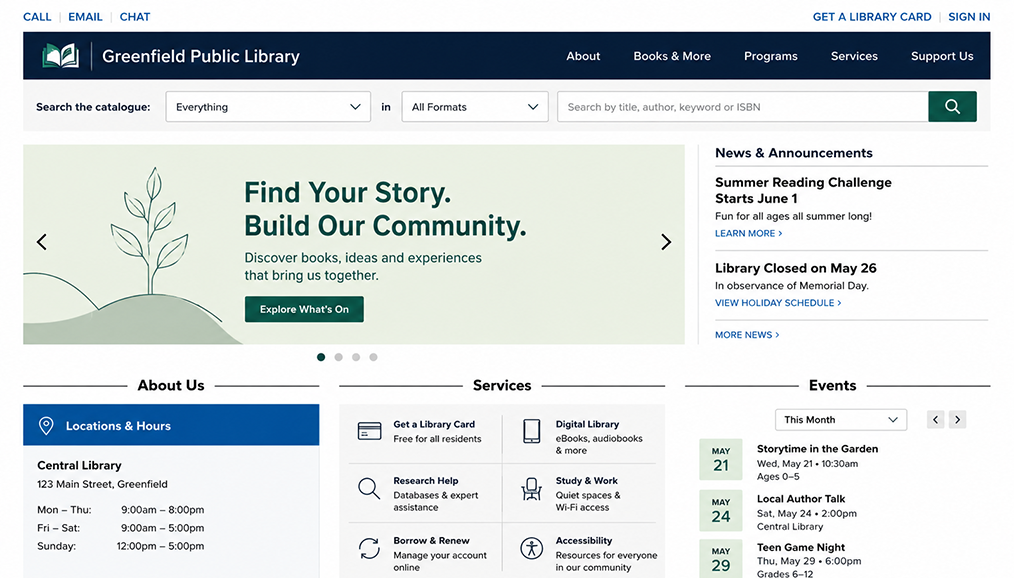

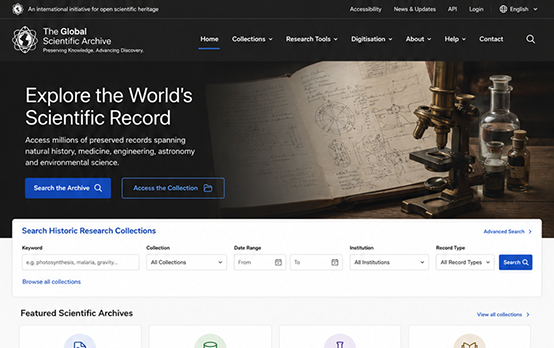
Custom Library Web Design & Website Development.
Library visitors arrive with a specific task in mind, not time to browse. They may search the catalogue, check opening hours, find a branch, access e-resources, register for events, apply for a library card or use account tools. Webpop Design plans those journeys so each task is quick to complete and easy to follow.
Many library websites become harder to use as content grows. Catalogue links can get buried, events fall out of date, PDFs may be inaccessible, mobile layouts can feel awkward and service information is often repeated across too many pages. Webpop Design plans each library website around the way people use it, so important information is easier to find and easier to trust.
Webpop Design has launched more than 300 custom websites across sectors including charities, higher education, government and culture. That experience shapes how we approach public, academic and specialist library websites that need readable content, accessible journeys, multilingual support where needed and a WordPress CMS their team can manage long term.
Start a Web Project
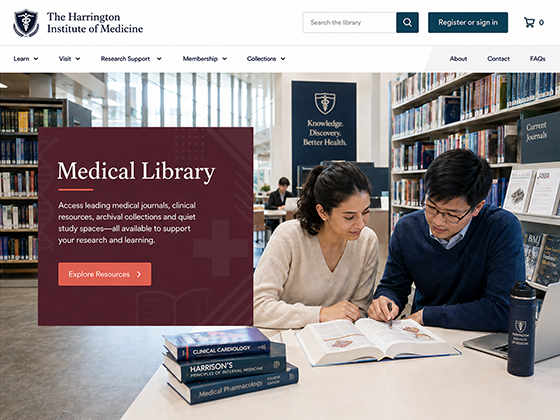
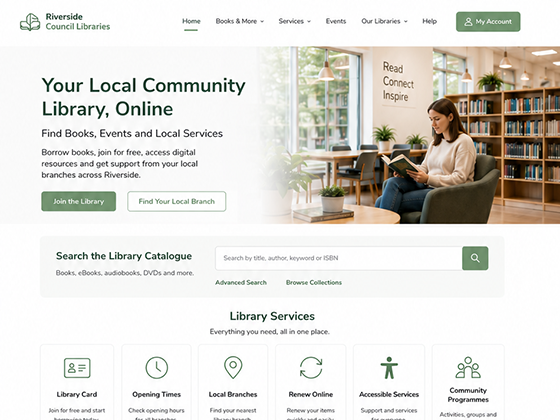
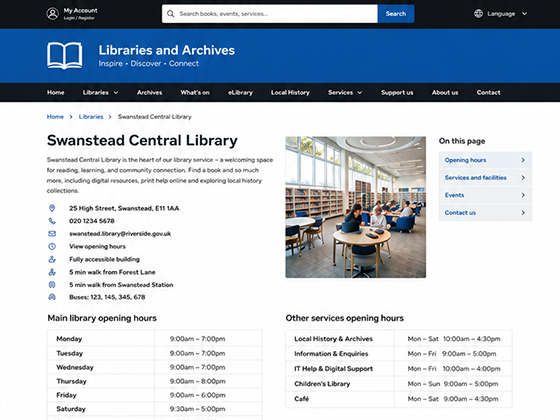
What Library Website Visitors Need To Find Quickly.
Library users rarely arrive to browse a website for long. They usually need to search the catalogue, check opening hours, find a branch, renew an item, register for an event or access an online resource. Webpop Design makes those tasks obvious, with navigation and page content planned around the way real visitors use the site.
Students, researchers and regular library users often need more than basic service information. They may be looking for journals, archives, databases, reading lists, account tools or forms with ecommerce-style functionality behind them. Parents may need children’s events, school holiday activities, membership details and straightforward ways to access local services.
We plan library websites around how visitors behave, not just how pages look. With team experience across professional websites for UK organisations, including public-facing and complex content projects, we structure library websites around genuine users and the small in-house teams that manage them, whether the brief covers one library, several branches or a wider service.
Our Library Web Design & Development Process.
Every build starts with structure, accessibility and a WordPress CMS your team controls, so the library website works well for both visitors and staff.

Research & Discovery
We begin by understanding your library, users, content and systems. This includes catalogue pathways, branch information, events, e-resources, account journeys and the needs of users, students, researchers, parents and staff. Where relevant, we can factor in public-sector procurement, G-Cloud, DDAT requirements and approval stages.

Information Architecture
Strong library information architecture turns complex services into an ordered structure. We map collections, service pages, audiences, branches, events and online resources into logical navigation, helping users find what they need without digging through duplicated pages, confusing labels or buried catalogue links.

UX & Wireframing
Before visual design starts, we plan the core journeys in wireframes. This covers catalogue access, account login, opening hours, event discovery, branch pages and e-resource forms, making sure each journey is shaped by how real visitors use a library site rather than how it looks on every device.

Figma Design
We design the key page templates in Figma, so your team can review layouts, content hierarchy and responsive behaviour before development begins. The design is bespoke and accessibility-conscious, planned around library content and built for your team rather than dropped onto a generic theme or layout pattern.

Production & Development
Our developers build the website in WordPress with clean, responsive and SEO-aware code. The CMS is structured so library teams can update events, branch pages, opening hours, service pages, booklists, e-resources and public notices without needing developer help for every change or routine update.

Project Handover & Launch
We test performance, accessibility, responsive layouts, forms, redirects, SEO migration and key integrations before launch. Your team receives a website built for long-term flexibility, with migration handled properly, plus WordPress training and support after the site goes live and settles into regular use.
Building Library Websites Around Access, Discovery & Trust.
Webpop Design builds library websites to do what the library itself does: help people reach the information and services they came for. Visitors need to search the catalogue, use account tools, check branch information, browse services, find events and access digital resources without feeling sent in circles.
That means access and discovery sit at the centre of every structural decision. Catalogue pages should be obvious. Events should be current. E-resources should be easy to understand. Branch pages should show opening hours, facilities and accessibility details. Service pages should help different users understand what is available before they call, visit or submit a form.
For library teams, the website also needs sensible content governance. Staff should be able to update public notices, opening hours, booklists, service pages, events and resource links without breaking the layout or relying on web developers for every small change. A well-planned library website cuts down frustrated users and gives in-house staff a system they can update with confidence, day to day.
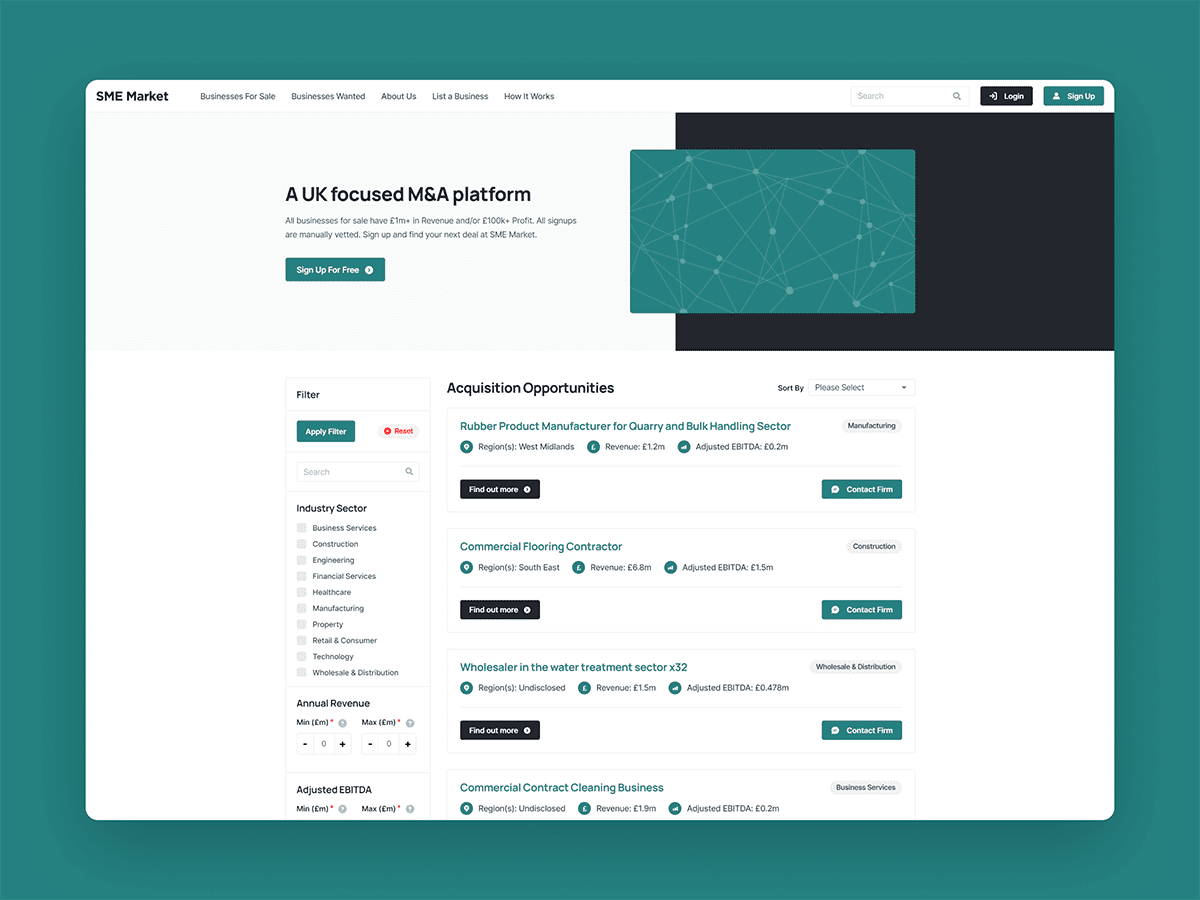
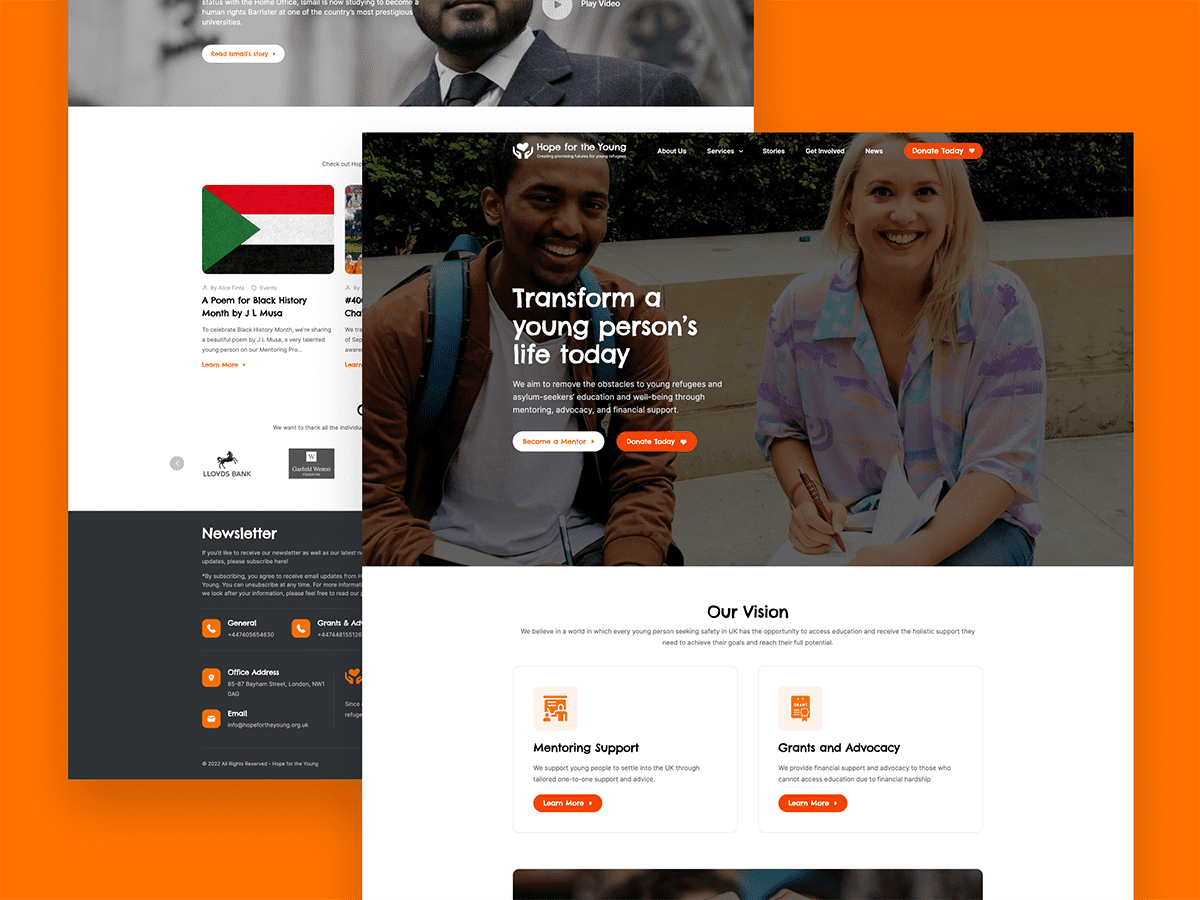
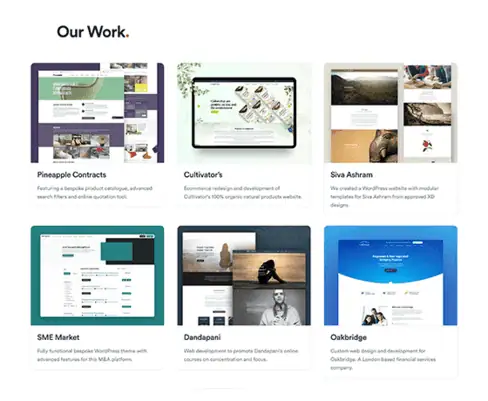
Selected Client Projects.
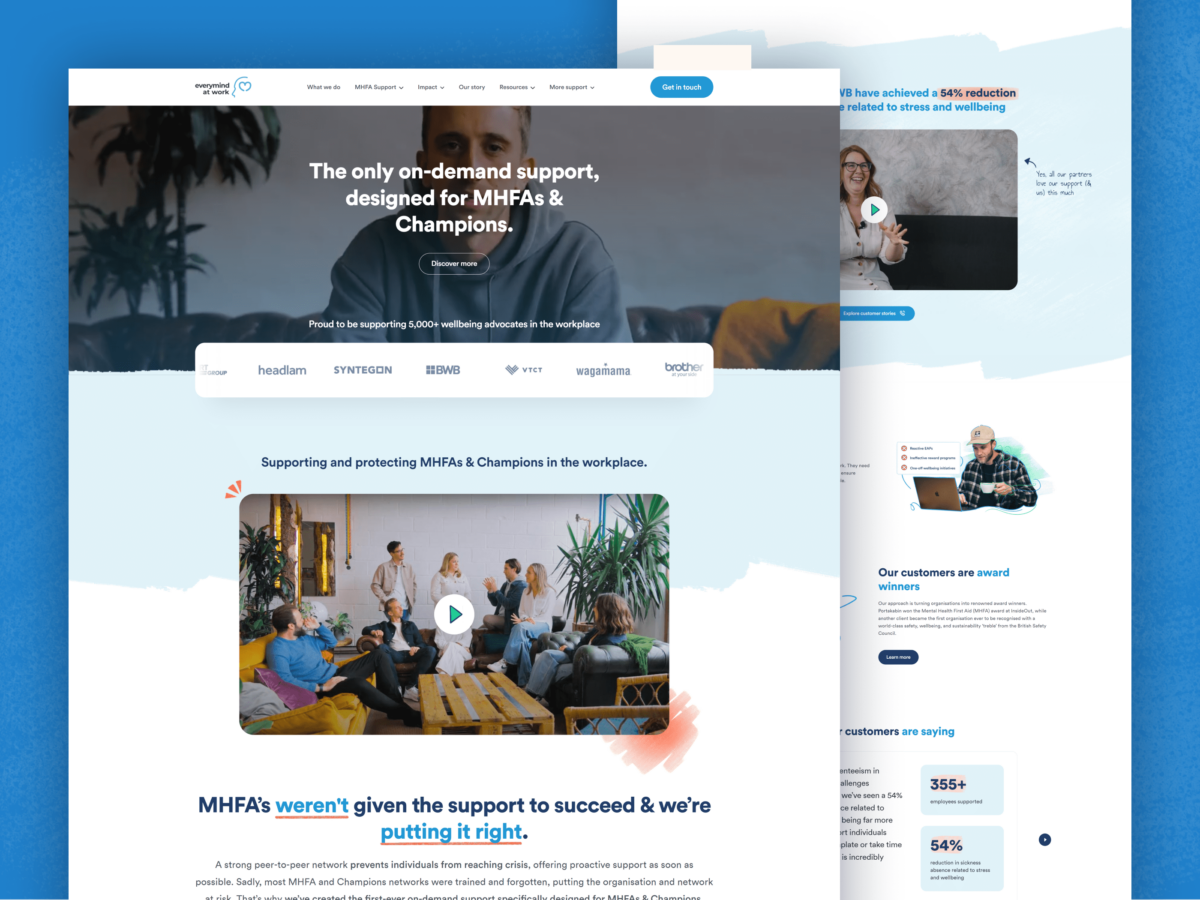
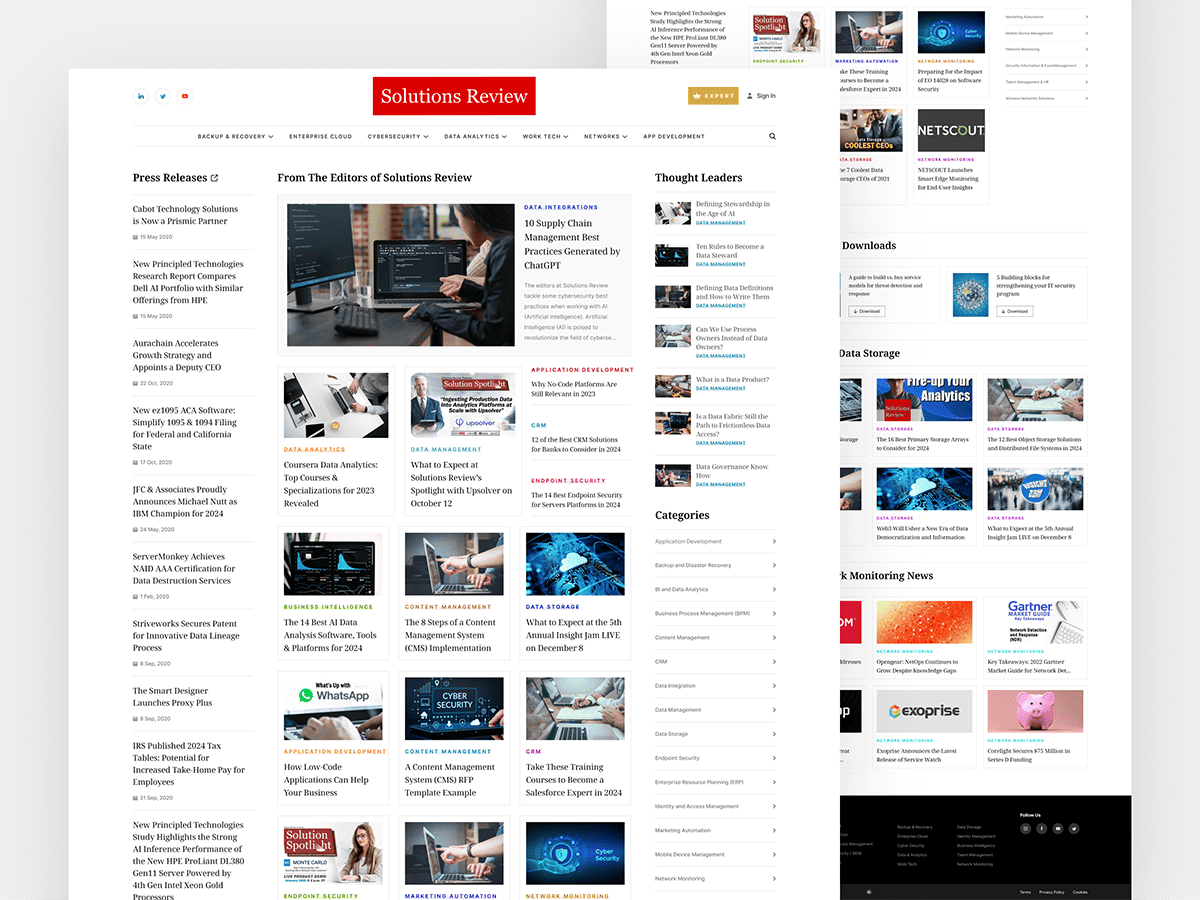
Relevant WordPress and content-led projects inform how we plan library websites.

Library Web Design For Different Library Organisations.
Different libraries need different structures, with the same focus on access and everyday usability.

Public Libraries
Local and council library services with branches, events, opening hours, catalogue pathways and community information.

Academic Libraries
University and college libraries supporting students, researchers, journals, databases, archives and account tools.

School Libraries
School library websites for reading lists, curriculum resources, pupil access and parent-facing information.

Specialist Libraries
Subject-specific, subscription or professional libraries with focused collections, member access and structured resources.

Law & Medical Libraries
Research-led libraries where users need authoritative resources, secure access and clear information pathways.

Heritage Libraries & Archives
Historic collections, archives, charity libraries, community libraries and cultural institutions with searchable resources.

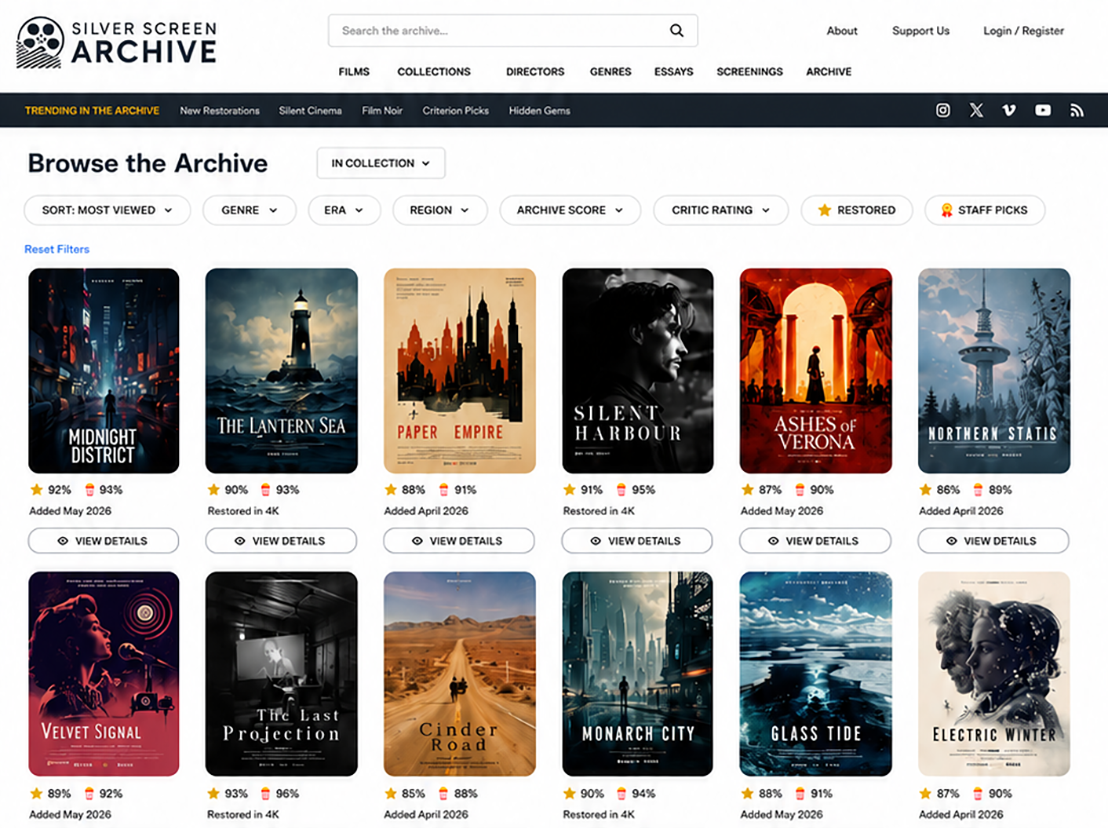
Your London Partner for Custom Library Web Development.
Choosing a website partner for your library shapes the next several years. The site needs to support changing collections, events, opening hours, digital resources, accessibility requirements and different user groups, while staying simple for visitors and manageable for your internal team.
Webpop Design is a London agency that pairs hands-on design, bespoke WordPress development, practical UX, SEO-aware structure, fast performance and maintainable content systems. Our work makes catalogue access visible and organises services so important library information is never buried in a generic template. You get straight advice and a realistic scope, with the same experienced people on the project from planning through to launch.
Contact the TeamCredentials & Awards.
Included across recognised web design, web development and digital industry platforms.










Trusted by Clients Across Serious Projects.
Feedback from clients who needed clear thinking, careful delivery and a website partner they could rely on.

Tim Marshall
Allegiant Finance
Emma Griffiths
Synchtank

Emily De Jesus
LS Tractor USA

Alan Harder
Tango Financial

Dan Garner
Xibo
Library Website Tools, Software and Integrations.
A modern library website rarely works as a standalone system. It may need to connect with catalogue pathways, OPAC links, account login, SSO, booking tools, event platforms, e-resource directories, payment services and newsletter tools.
We plan those requirements before making promises, so the website fits the systems your library uses. This could include platforms such as Koha, Alma, SirsiDynix, Symphony, OCLC WorldShare, LibGuides, OpenAthens, Shibboleth, GOV.UK Pay, Stripe, Notify, Mailchimp, Microsoft 365 and other third-party tools. Where a standard connection is not enough, our WordPress plugin development experience can help scope a cleaner route, subject to discovery, access, documentation and feasibility.














Frequently Asked Questions.
Answers to the most popular questions libraries ask before beginning a website build with Webpop Design.



How much will library web design cost?
Custom library website design projects with Webpop Design start from £8,000, depending on build complexity, integrations, content volume, accessibility requirements and design scope. We provide a clear estimate after discovery, so there are no surprises later. Smaller library sites may cost less, while larger multi-branch, academic or council library projects usually need a higher budget.
How long can a library website project take?
A typical bespoke library web design project runs from around twelve to sixteen weeks from kick-off to launch, although larger builds with complex integrations, multiple branches, stakeholder approvals or content migration can take longer. We give you a realistic timeline from the start, with clear stages for discovery, information architecture, design, development, testing, content work and launch, so your team always knows where things stand.
What is included in your library website design service?
Every project includes discovery, structure planning, bespoke design, WordPress development, responsive layouts, accessibility-conscious design, SEO-aware setup, testing, training and launch support. Depending on the brief, we can also help with content migration, catalogue navigation, event sections, e-resource directories, branch pages, forms, redirects and third-party integrations. The aim is to give your library a website that is clear for users and manageable for your internal team after launch.
Do you build library websites on WordPress?
Yes. WordPress is our primary platform for bespoke CMS-based library websites because it gives library teams strong control over content without forcing them into a rigid template. It works well for events, opening hours, service pages, branch information, booklists, news, public notices and resource directories. We build custom WordPress themes rather than relying on off-the-shelf templates, so the admin can be planned around how your library operates.
Can you connect our website to our catalogue or OPAC system?
Yes, catalogue links and OPAC pathways can be planned into the website so users can search, browse or move into the right system quickly. The exact approach depends on the catalogue platform, access requirements, available documentation and whether the integration needs to be a simple link, embedded search, API-based connection or custom development. We would scope this properly before making fixed promises about what is technically possible.
Can you help with events, e-resources and library card forms?
Yes. We can create structured WordPress sections for events, workshops, talks, reading groups, children’s activities, e-resources, digital loans, databases, public notices and service updates. We can also plan library card application forms, enquiry forms and account pages. Where forms or events need to connect with third-party systems, we check the technical requirements carefully before confirming the right approach.
Are your library websites WCAG accessible?
Accessibility is treated as part of the planning, design and build process, not something added at the end. We consider colour contrast, keyboard use, readable layouts, semantic structure, accessible forms, screen reader support, document handling and mobile usability. For public-facing and public-sector library websites, accessibility expectations are especially important, so we discuss the required standard during scoping and test key templates before launch.
Can you redesign a library website without losing SEO?
Yes. A library website redesign should be handled carefully because useful content, indexed URLs, local visibility and service pages can easily be disrupted. Before migration, we review the existing site structure, map important URLs, plan redirects and preserve useful content where it still serves users. This helps protect existing search visibility while giving the new site a clearer structure for collections, events, services, branches and resources.
Do you offer WordPress support and hosting for library websites?
Yes. After launch, we can provide WordPress support, managed hosting, updates, backups, performance monitoring, security checks and ongoing improvement work. Some library teams only need technical maintenance, while others want help with new sections, content improvements, accessibility fixes or feature updates. We can shape the support around your internal team, budget and how actively the website will be managed.
Do you work with public, academic, school and specialist libraries?
Yes. This page is relevant for public libraries, academic libraries, university libraries, school libraries, college libraries, specialist libraries, archives, community libraries and cultural organisations. Each type of library has different users, content and access needs, so we do not approach the website as a generic template. The structure, design and WordPress setup are planned around your audience, services and team.
Start Your Next Library Web Design Project With a Trusted Partner
Need a library website that helps users find collections, services, opening hours, events and online resources quickly? Tell us about your library through our Project Planner or call our London team on 0207 998 3935, and we’ll reply with clear next steps.
Start Your ProposalIndustries We Work With.
Explore more Webpop Design services for organisations with complex content, clear user journeys and long-term website needs.
-
 Aerospace
 -
 Banks
Banks -
 Car Dealerships
 -
 Charities
 -
 Churches
 -
 Construction
 -
 Corporate
 -
 Dating Agencies
 -
 Dental Practices
 -
 Entertainment
 -
 Estate Agents
 -
 Farm Shops
 -
 Finance
 -
 Florists
 -
 Garden Centres
 -
 Government
 -
 Healthcare Providers
 -
 Higher Education
 -
 Home Care
 -
 Hospitals
 -
 Hostels
 -
 Hotels
 -
 Industrial Companies
 -
 Insurance Firms
 -
 Law Firms
 -
 Libraries
 -
 Locksmiths
 -
 Membership Websites
 -
 Model Agencies
 -
 Theatres
 -
 Pubs & Bars
 -
 Recruitment Agencies
 -
 Removal Companies
 -
 Restaurants
 -
 Retailers
 -
 Schools
 -
 Self Storage Companies
 -
 Small Businesses
 -
 Tattoo Studios
 -
 Travel Agents