
Hospital Web Design
Hospitals need websites that help patients, families and internal teams find the right information quickly. Webpop Design creates bespoke hospital websites that make services, departments, consultant information, admissions guidance and booking options easier to understand across desktop and mobile.
View Our Work Get a Quote

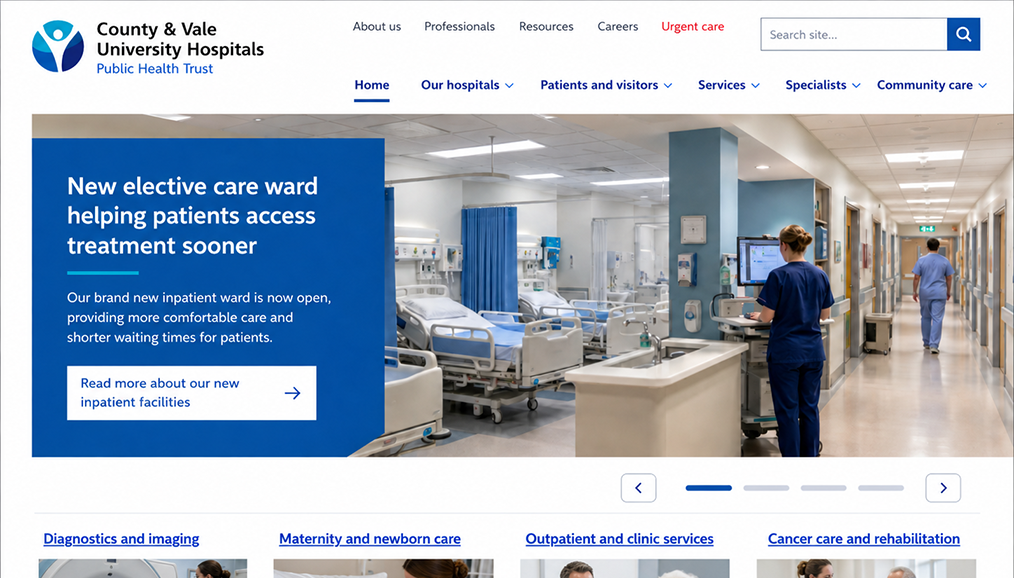


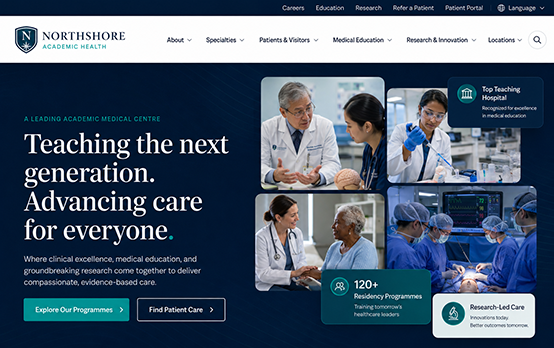
Why Clear Hospital Website Structure Matters to Patients.
Patients reach a hospital website needing a specific answer, often at a stressful moment. One may be checking a treatment, another reviewing consultant details, finding admissions guidance or trying to book the right appointment quickly.
Problems usually appear when the site has grown around internal structures rather than user needs. Services become buried, consultant profiles fall out of date, contact options are unclear, and mobile visitors have to work too hard to find practical information.
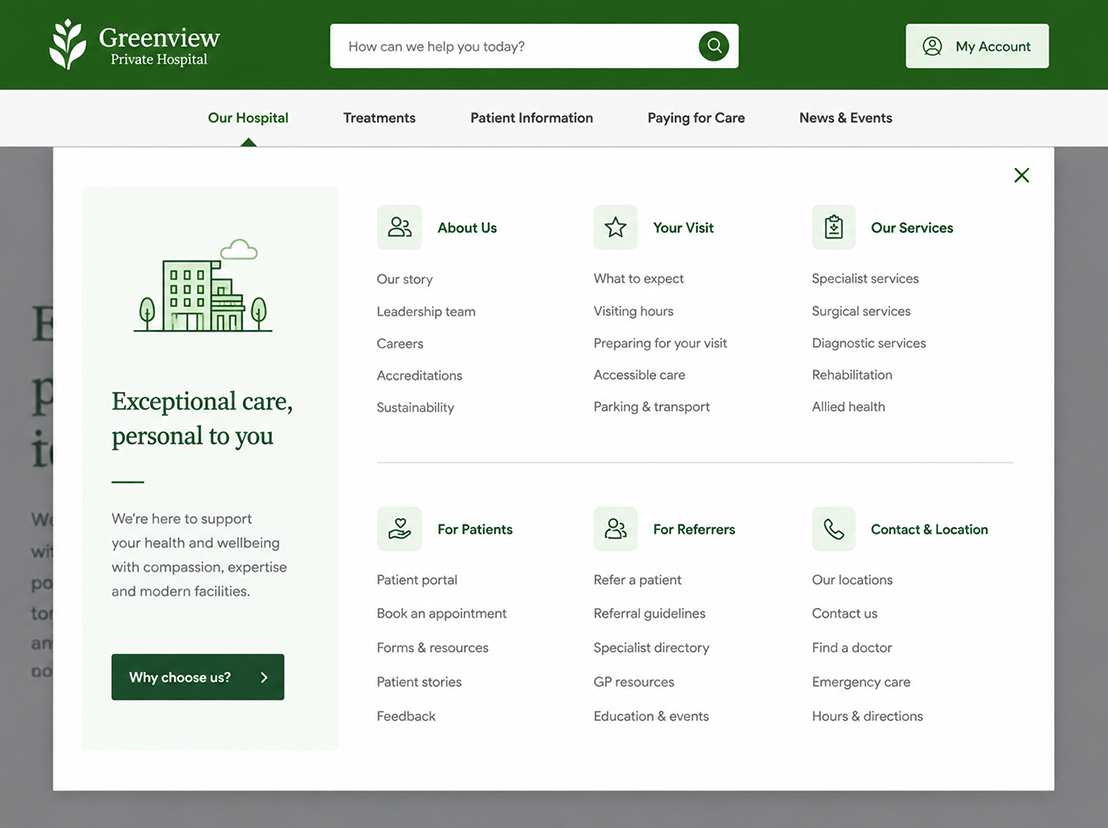
Webpop Design brings that content into a clearer structure. We organise services, departments, locations, consultant pages, patient information and booking options around how patients search, while giving your team a WordPress website that is easier to manage over time.
Start Your Project
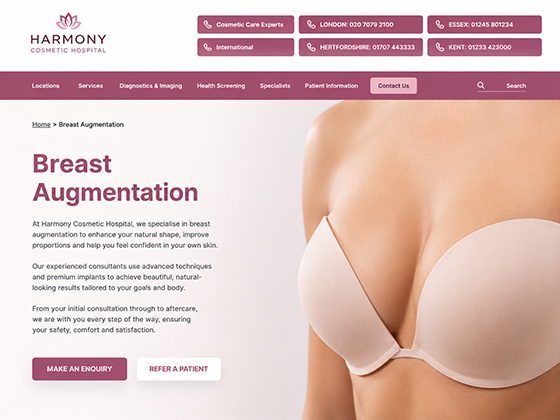
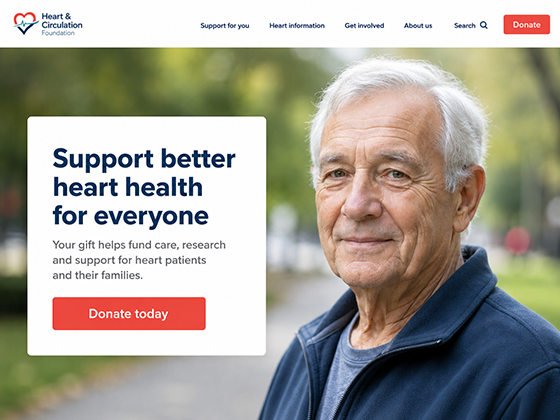
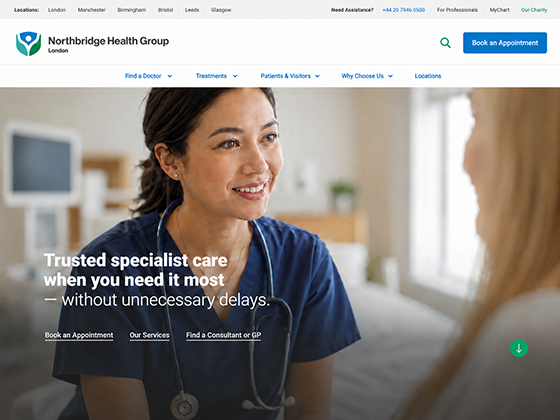
Hospital Website Design for Patients, Families & Referrers.
A patient usually arrives with one practical question in mind. They may want to understand a service, compare treatment options, check consultant expertise, see whether they are paying privately or through insurance, or feel reassured before choosing a hospital. We structure the site to answer those questions clearly before asking anyone to enquire, book, call or visit.
Families often need fast access to visiting information, admissions guidance, directions, parking, ward details and the right contact method. Referrers, insurers and corporate users need the fastest way to find out who treats a condition, at which location, and how to refer, without being passed between pages or left behind the patient journey.
This is where hospital websites differ from broader healthcare web design. We plan that structure based on how hospitals actually operate, with services, consultants, departments, locations, patient resources and enquiry paths mapped to how patients search, compare and choose, often under real pressure.
Our Hospital Website Design Process.
We plan hospital websites around patient journeys, content structure, accessibility, performance and long-term control.

Insight & Discovery
We begin by understanding your hospital, departments, services, patient groups, referrers and the website goals you need to achieve. This stage looks at how people use it, where content is hard to find, and what internal teams need from the structure. The aim is to ground the project in real hospital behaviour before design begins.

Strategy & Structure
Hospital websites often carry a large amount of content, from service pages and consultant profiles to admissions guidance, visiting information and location details. We plan the sitemap, page hierarchy, content relationships and SEO structure carefully, so patients can find key information and your team can manage the site easily.

Page Planning & UX
Before visual design starts, we create wireframes to map the user journeys. This includes how patients find services, how referrers reach the right department, how families access practical information, and how enquiry or booking options are presented throughout the site. Wireframing helps solve structural problems before design begins.

Bespoke Design
Every hospital website is designed in Figma with your branding, content and audience at the forefront. We do not use off-the-shelf templates. We handle typography, spacing, accessibility, mobile layouts, proof points and the reassurance hospital audiences expect, while keeping every key action clear.

Build & Development
We build bespoke websites with scalable code and a clear content management structure. Internal teams can update service pages, consultant profiles, admissions content, visiting guidance, location pages and notices without relying on developers for every change. The build supports speed, accessibility, SEO, security and flexibility.

Website Handover & Launch
Before go-live, we test the website across devices, browsers and important user journeys. We also handle redirects, content migration and technical SEO checks carefully to protect existing rankings. Once live, your team receives a clear WordPress back end, with the structure needed to keep improving the website.
Managing Complex Hospital Content With Clarity.
Hospital website design becomes more difficult when a site has to support many departments, services, consultants, locations and patient information pages at once. A private hospital may need pages for treatments, diagnostics, surgery, rehabilitation, admissions, consultants, payment options, visiting details and referrals, all with clear ownership inside the CMS.
The harder part is keeping that information accurate, useful, CQC-aware and easy to manage. Trust comes from accurate information and plain wording, backed by practical ways to access support. Consultant details change, services expand, admissions guidance needs updating, support content grows and location pages often become outdated.
A professional hospital website gives every content type a clear role. Service pages explain the offer, consultant profiles help establish confidence, patient guidance reduces uncertainty, contact options support better-fit enquiries, and editable WordPress templates help teams keep information current. That gives you a website that performs as a long-term hospital asset and keeps earning enquiries.
Featured Client Projects.
Projects showing relevant structure, UX thinking and build quality for complex hospital websites.
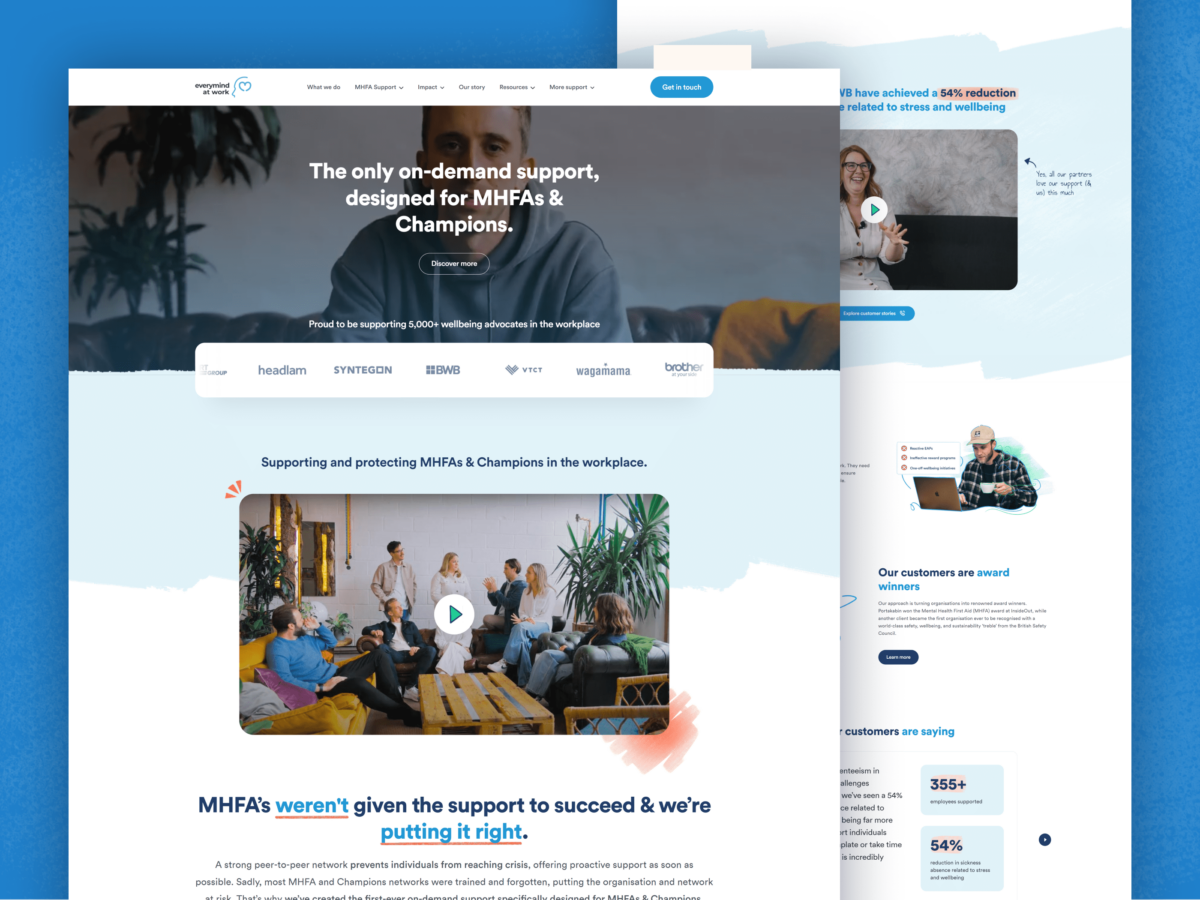
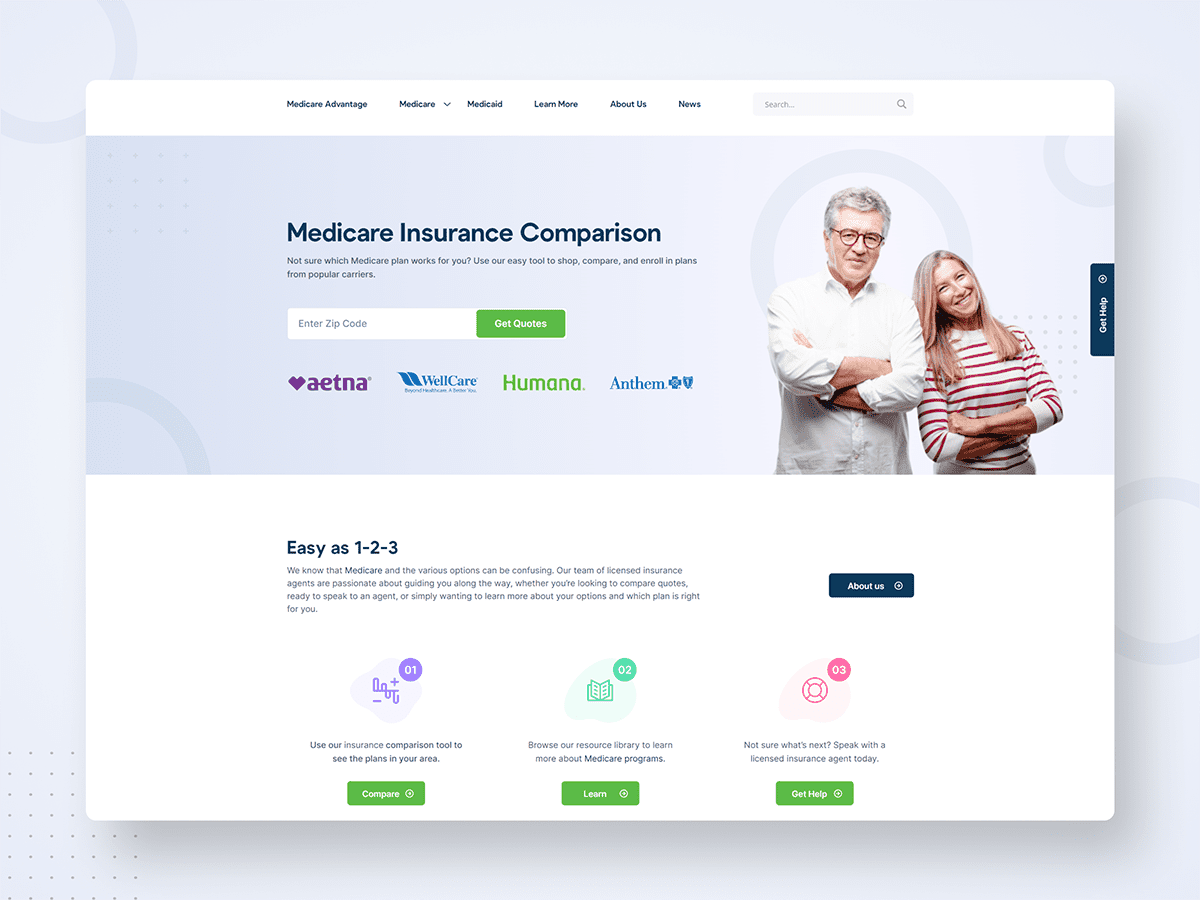
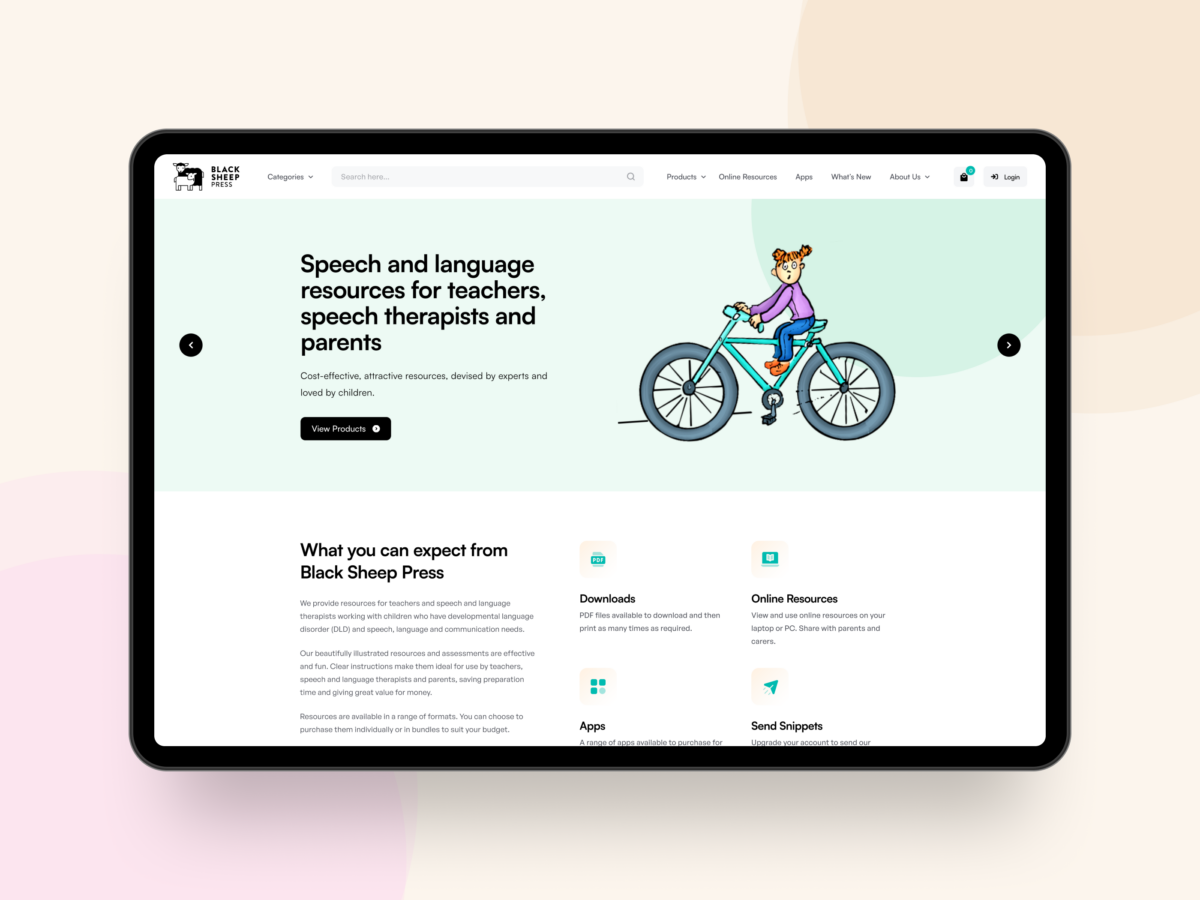
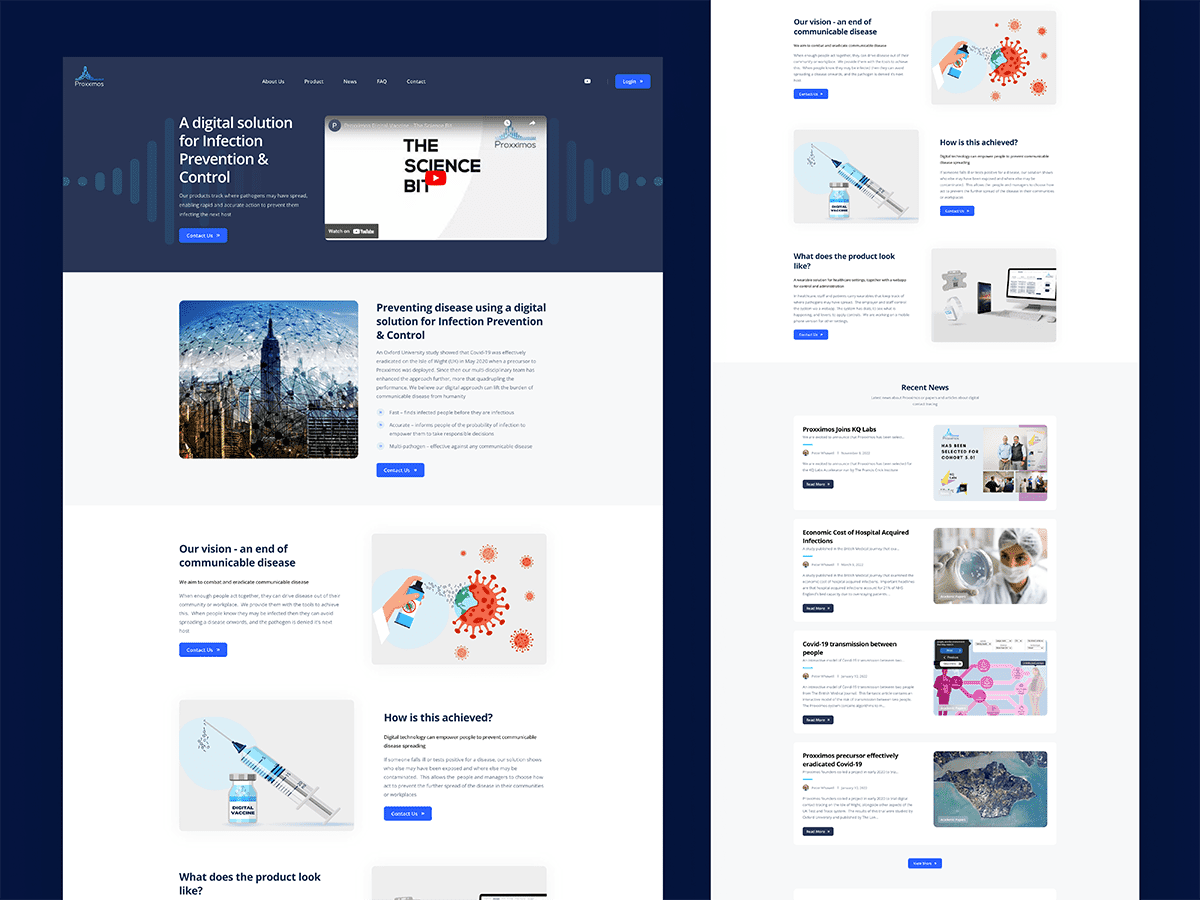
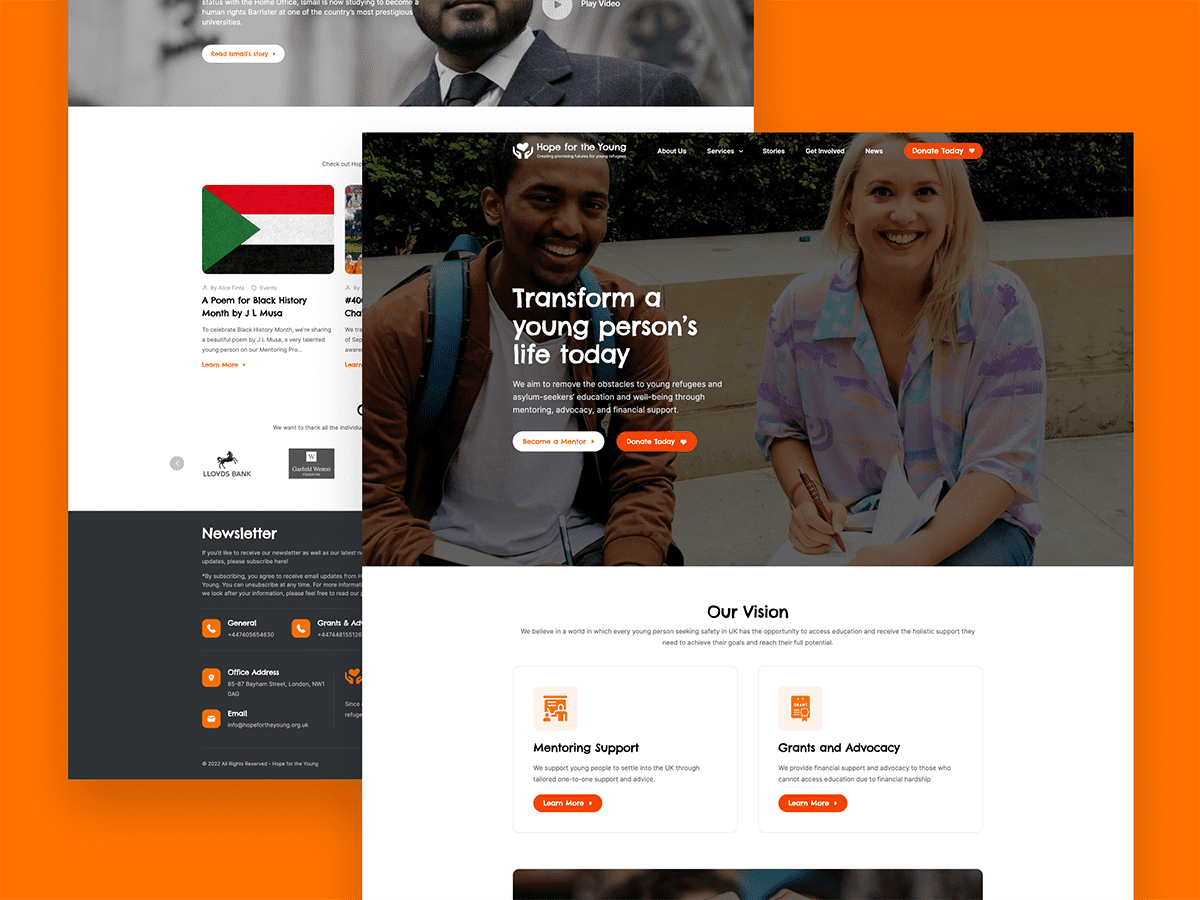
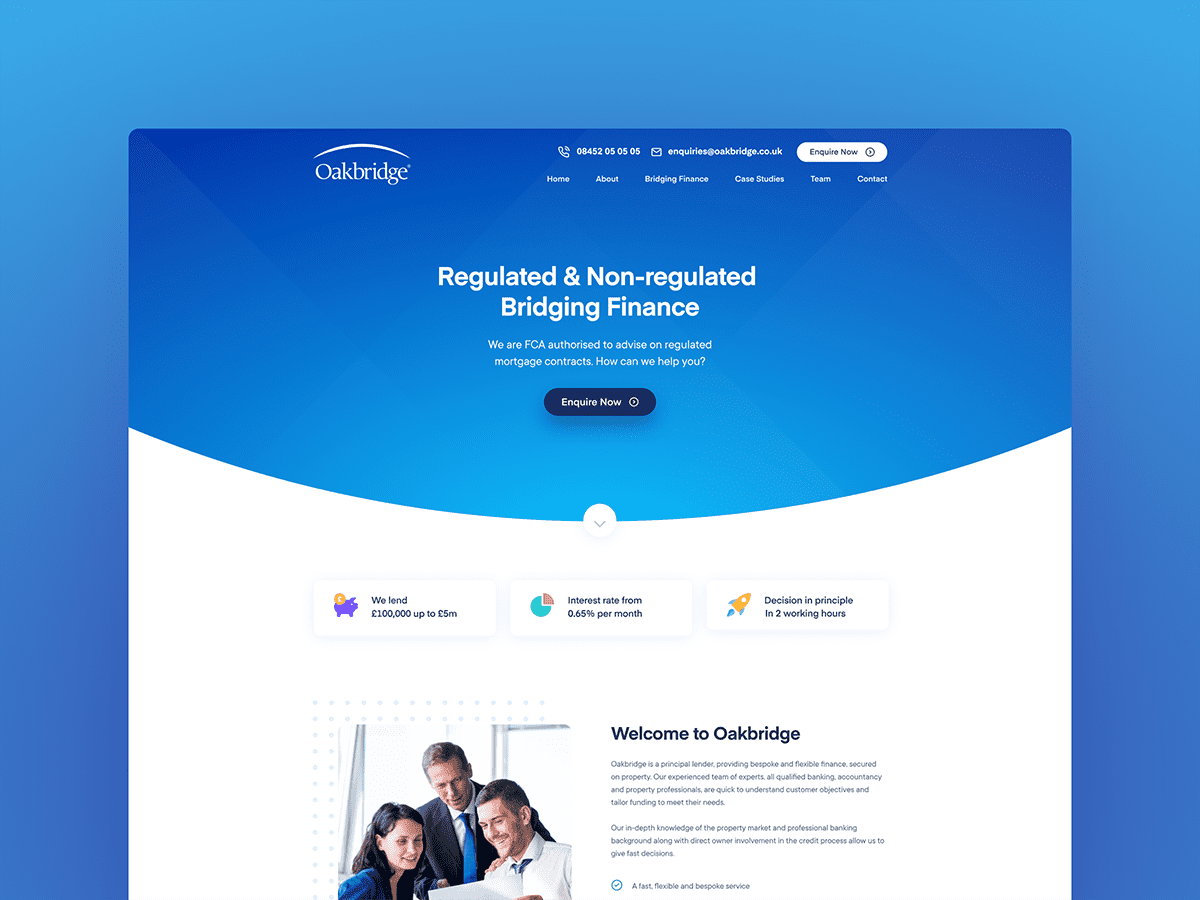
Hospital Web Design for Specialist, NHS & Multi-Site Organisations.
Hospital websites need clear structure for services, consultants, locations and patient information.

Private Hospitals
Clear websites for presenting services, consultants, pricing guidance, patient information and private enquiry journeys.

NHS Hospitals & Trusts
Accessible, practical websites for public information, departments, services, patient support and content teams.

Teaching Hospitals
Structured websites for balancing patient care, clinical education, research content and multi-audience information.

Specialist Hospitals
Focused websites for cardiac, oncology, orthopaedic, rehabilitation, diagnostic and other specialist hospital services.

Cosmetic & Surgical Hospitals
Trust-led websites for presenting procedures, consultants, outcomes, patient guidance and ways for patients to get in touch clearly.

Multi-Site Hospital Groups
Scalable WordPress websites for hospital groups with multiple locations, departments, brands and content teams.

Why Partner With Webpop Design for Hospital Web Design.
Hospital web design leaves little room for error. Patients, families, referrers and regulators form an opinion quickly, so the site has to read as credible and easy to use from the first visit. Expectations are as high as the trust families place in home care providers, and hospital websites carry even deeper service, consultant and patient information demands.
After delivering 300+ WordPress website projects, with team members working together since 2008 for regulated, multi-location and enquiry-led businesses, we know how to structure credible hospital websites. We plan content, structure and publishing tools around how people choose care, so your website supports search visibility and drives local enquiries.
Plan Your ProjectRecognition, Reviews & Credentials.
Recognised across respected website design, development and digital industry platforms.












Trusted by Clients Who Care About Detail & Delivery.
Read what clients say about Webpop Design’s planning, design quality, WordPress development and reliable delivery.

Tim Marshall
Allegiant Finance

Emma Griffiths
Synchtank

Emily De Jesus
LS Tractor USA

Alan Harder
Tango Financial

Dan Garner
Xibo
Hospital Website Systems, Tools & Integrations.
Hospital websites often need to work alongside booking systems, portal links, enquiry forms, referral pathways, consultant directories, payment links, location tools, analytics platforms and patient resources already used by the hospital.
Webpop Design scopes integrations carefully before making fixed promises. Some tools may only need clear links or embedded journeys, while others may require API work, form routing, CRM mapping or technical discovery. We plan the website as the clear front door to those systems, not the clinical platform or patient record behind them.














Frequently Asked Questions.
Answers to the most popular questions hospital teams ask before beginning a new website project with Webpop Design.



How much should a hospital website cost?
Hospital website costs depend on size, content volume, integrations, migration work and how much custom functionality is required. Bespoke hospital website projects with Webpop Design start from £10,000, with larger projects quoted after discovery so the scope, timeline and budget are clear before work begins.
How long will a hospital web design project take?
Most hospital web design projects take between twelve and twenty weeks, depending on content, approvals, integrations and migration requirements. Larger hospital groups, multi-location websites or complex redesigns can take longer, especially where service pages, consultant profiles, patient information and SEO migration need careful planning.
Can you redesign an existing hospital website?
Yes. We often help organisations replace hospital websites that have become cluttered, dated, difficult to update or hard for patients to use. We review the existing structure, content, traffic, rankings and user journeys before recommending changes, so the redesign protects what already works while improving clarity and performance.
Do you build hospital websites on WordPress?
Yes. Webpop Design specialises in WordPress design, which works well for hospital websites that need flexible content management. We can create editable templates for service pages, departments, consultant profiles, patient guidance, admissions content, visiting information, location pages and key notices.
Will our SEO survive a hospital website migration?
SEO migration is planned carefully from the start of a hospital redesign. We review existing URLs, rankings, high-value pages, metadata, redirects and content structure before launch. The aim is to protect existing search visibility while improving the structure of important hospital service and information pages.
Are hospital websites built with accessibility and WCAG in mind?
Yes. Accessibility is important for hospital audiences because patients and families may have different needs, devices and levels of confidence online. We plan hospital websites with accessible layouts, readable content, keyboard-friendly journeys, colour contrast and WCAG-conscious design decisions from the wireframe stage.
How do you handle security and GDPR-sensitive forms?
Hospital enquiry forms, appointment requests and referral forms need careful planning. We structure forms around the information required, avoid unnecessary fields, support clear consent where needed and plan data handling with the client’s internal requirements in mind. We do not replace clinical systems or patient record platforms.
Can you add booking forms or secure portal links?
Yes, where suitable. A hospital website may need booking buttons, enquiry forms, referral forms, payment links, secure portal links or links to existing third-party systems. We scope these carefully before making fixed promises, as some integrations need API work, CRM mapping or technical discovery.
Can you create hospital service, consultant and department pages?
Yes. These are often central to a hospital website. We can structure service pages, treatment content, department pages and consultant profiles so patients can understand what is offered, who provides the care, where services are available and what the next step should be.
Do you work with private hospitals, groups and specialist hospitals?
Yes. Webpop Design can support private hospitals, specialist hospitals, surgical centres, diagnostic centres, rehabilitation hospitals, hospital groups and multi-location hospital brands. The approach is adapted around the organisation’s services, patient journeys, content structure, internal teams and long-term website management needs.
Can Patients Find the Right Hospital Information Before They Call?
Webpop Design creates bespoke hospital websites that make services, consultants, admissions guidance, visiting information and ways to get in touch easier to understand, while giving your internal team a clear WordPress back end to manage.
Discuss Your ProjectIndustries We Work With.
Related services for organisations needing structured content and clearer user journeys.
-
 Aerospace
 -
 Banks
Banks -
 Car Dealerships
 -
 Charities
 -
 Churches
 -
 Construction
 -
 Corporate
 -
 Dating Agencies
 -
 Dental Practices
 -
 Entertainment
 -
 Estate Agents
 -
 Farm Shops
 -
 Finance
 -
 Florists
 -
 Garden Centres
 -
 Government
 -
 Healthcare Providers
 -
 Higher Education
 -
 Home Care
 -
 Hospitals
 -
 Hostels
 -
 Hotels
 -
 Industrial Companies
 -
 Insurance Firms
 -
 Law Firms
 -
 Libraries
 -
 Locksmiths
 -
 Membership Websites
 -
 Model Agencies
 -
 Theatres
 -
 Pubs & Bars
 -
 Recruitment Agencies
 -
 Removal Companies
 -
 Restaurants
 -
 Retailers
 -
 Schools
 -
 Self Storage Companies
 -
 Small Businesses
 -
 Tattoo Studios
 -
 Travel Agents