
 Webpop Design Marketing Team
Not every business needs a custom WordPress website. If you only need a simple online presence, have a limited budget or want to launch quickly, a template-based site may be enough to get started.
A bespoke WordPress build makes more sense when your site has a bigger commercial role. That might mean generating enquiries, supporting SEO, handling complex content, connecting with third-party systems, improving trust or giving your team a more flexible way to manage pages as the business grows.
WordPress stays popular with businesses because you own the platform, it is flexible enough for most requirements and your team can usually manage it day to day. The important decision is how your site is built. A cheap theme, a page builder setup and a bespoke theme can all sit on the same CMS, but in quality, speed and long-term value they are worlds apart.
Key Essentials for Custom WordPress Websites
- Custom WordPress suits sites needing growth, enquiries, sales, content or bespoke functionality.
- Template-based WordPress suits simpler businesses needing a lower-cost website launched quickly.
- The right choice depends on budget, brand, content, integrations and long-term goals.
- A bespoke WordPress theme gives control over design, journeys, performance, editing and conversions.
- Templates become restrictive when you need custom layouts, structure or unsupported functionality.
- Professional bespoke WordPress builds cost around £8,000 to £20,000+, depending on complexity.
- Webpop Design builds bespoke WordPress websites around structure, editing, UX and maintainability.
What is a Custom WordPress Website?
A custom WordPress website is built around your business rather than forced into a pre-made theme. The design, templates, content structure and functionality are planned around your brand, users, goals and internal requirements.
For many businesses, this means a bespoke WordPress theme designed from scratch and developed with flexible editing controls. At Webpop Design, this usually means custom page templates, structured content blocks and a CMS setup that gives clients practical control without relying on a bloated off-the-shelf theme.
This is different from using a ready-made design and changing the logo, colours and images. A proper theme build gives you real control over the design, the routes visitors take through the site, the way content is managed and how well the website drives enquiries, sales or everyday operational tasks.
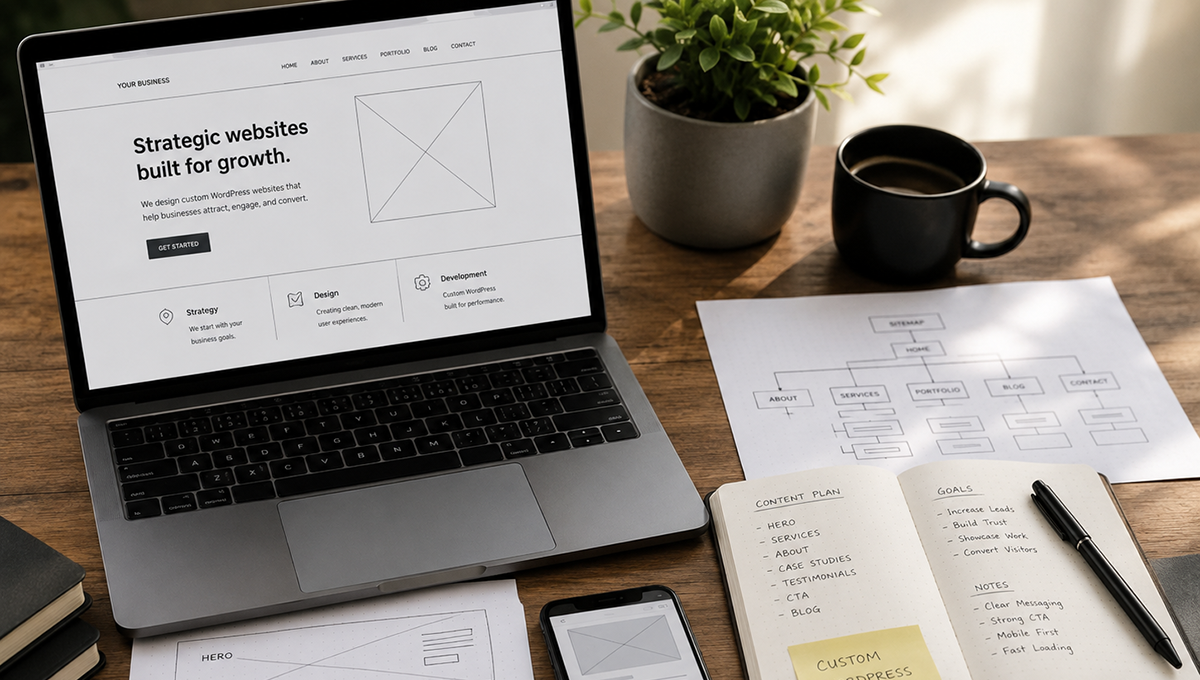
Custom builds start with planning, structure and clear business goals.
Custom WordPress Website vs Template Website
Template-based WordPress sites rely on pre-built themes or page layouts. They can be useful when the priority is speed, affordability and getting something online without a large design or theme development phase.
The trade-off is that your website is limited by the theme’s structure. You may be able to change colours, swap images and move sections around, but deeper changes usually mean another plugin, a workaround or a design compromise. A year in, that often shows up as a slower site, fiddlier updates and a layout that no longer matches how the business runs.
A tailored WordPress project takes more planning, but it gives you a cleaner foundation. Instead of squeezing your content into a pre-made layout, the site is shaped around your services, the journeys customers actually take, the pages that win enquiries and the systems you need to connect to.
| Template WordPress Site | Custom WordPress Website |
|---|---|
| Usually quicker and cheaper to launch. | Requires more planning, design and development time. |
| Works well for simple brochure websites and early-stage ideas. | Better suited to established businesses with clearer commercial goals. |
| Design flexibility depends on the theme or page builder. | Layouts can be designed around your content, brand and user journeys. |
| Extra features often rely on plugins or workarounds. | Functionality can be planned properly around the way your business works. |
| Can become harder to manage as the site grows. | Can be structured for flexible editing, new sections and long-term growth. |
| May include unused theme features that affect speed and maintainability. | Can be built with cleaner templates and fewer unnecessary dependencies. |
If you are weighing up both options, our guide to custom web design vs templates explains the main differences in more detail.
When a Template Website May Be Enough
A bespoke WordPress build is not always the right first move. A template can be enough if your website only needs to explain who you are, list a few services and provide a simple contact route.
This can suit early-stage businesses, small local companies, internal projects or brands that are still testing an idea. If the website is not yet central to sales, enquiries or marketing, it may be more sensible to keep the first version simple and invest properly once the business case is clearer.
The risk comes when a template site is pushed beyond what it was designed to do. If you keep adding plugins, forcing awkward layouts, duplicating pages manually or struggling to create the content you need, the lower upfront cost can quickly become a false economy.
When to Choose a Bespoke WordPress Website
A bespoke WordPress website is a better fit when your site needs to support more than a basic online presence. That could mean stronger enquiry generation, more detailed service pages, ecommerce, booking journeys, directories, dashboards, gated content or integrations with CRM, email, inventory or third-party systems. On Black Sheep Press, that meant an intelligent product search and filtering system built into a WooCommerce site, which gave users a simple route to the right products.
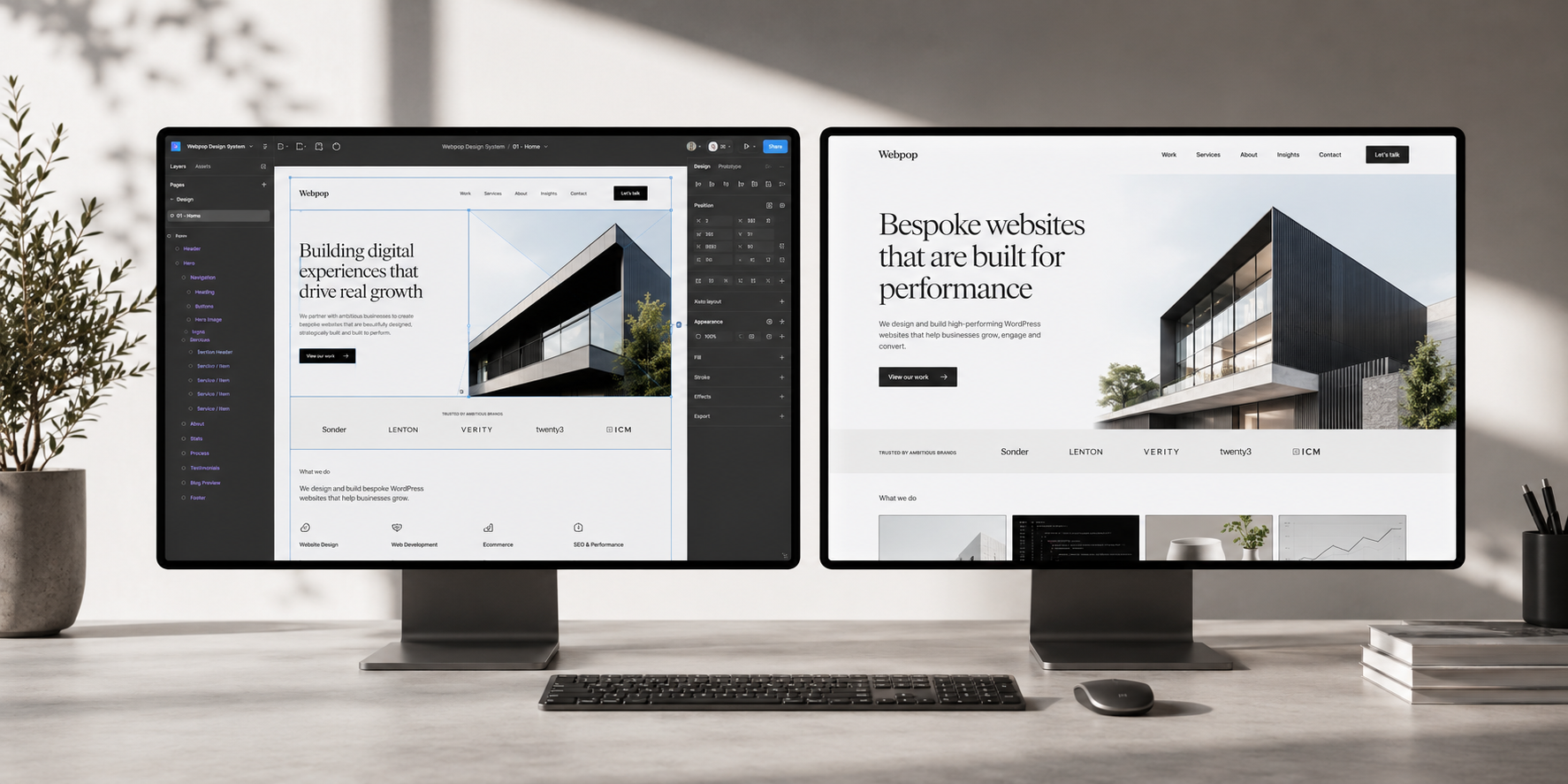
Bespoke WordPress is best when a website needs stronger design, structure and flexibility.
It also matters if your brand needs to look more credible than the businesses you compete with. A template can produce a presentable site, but it rarely reflects how you are positioned or how your customers actually decide to buy.
For established businesses, the real payoff usually comes after launch. A bespoke build can be set up so new sections, landing pages and content types are added as the business changes, rather than forcing another redesign every couple of years.
Webpop Design’s WordPress website design work is usually built around this type of requirement: clear design, structured content, practical editing control and a website that can continue to develop after launch.
Signs You Have Outgrown Your WordPress Theme
Many businesses start with a theme and only realise its limits later. The warning signs are usually practical rather than cosmetic.
- Your team struggles to create new pages without breaking the design.
- The site relies on too many plugins for basic functionality.
- Important service pages feel thin, repetitive or difficult to structure.
- The website looks similar to competitors using the same theme.
- Performance has dropped because the theme loads features you do not use.
- Your enquiry forms, calls to action or landing pages are awkward to manage.
- You keep paying for fixes instead of improving the website strategically.
At that point, moving to a bespoke WordPress theme is not just a design upgrade. It can remove the structural problems that are holding back your content, SEO, user experience and conversion rate.
Custom WordPress vs Fully Custom-Coded Websites
It is worth separating custom WordPress from a fully custom-coded platform, because the two get confused and they solve different problems.
A fully custom-coded website or application may be right for highly complex platforms, SaaS products or systems that need completely bespoke architecture. For many business websites, however, that can be more than is needed.
A tailored WordPress site sits in a useful middle ground. You can still have a bespoke design, custom templates, flexible content and specific functionality, while keeping the benefits of a proven CMS that your team can manage.
This is why WordPress remains a strong choice for many established businesses. The quality depends less on WordPress itself and more on how the website is planned, designed and developed.
Editing, Maintenance & Long-Term Control
A good bespoke WordPress site should not leave you dependent on a developer for every small change. The editing experience should be planned carefully so your team can update key pages, add content and manage core information without damaging the layout.
That does not mean everything should be endlessly editable. Give your team control over every element and pages drift out of shape within months. In our builds, the layout and spacing stay locked while text, images and whole content sections remain editable, so you can add a service page or landing page inside the existing templates without a developer and without breaking the design.
Maintenance is also important. WordPress needs updates, security checks, backups, hosting oversight and occasional technical support. Webpop Design includes 30 days of free post-launch support and also offers ongoing WordPress support plans for businesses that want continued help after launch.
Roadmap for Custom WordPress Development
A successful WordPress project starts with planning, not design. Before any visual work begins, you need to understand what the website has to achieve, who it needs to serve and what content, functionality and integrations are required.
- Define the commercial goals, audience needs and key actions the website must support.
- Map the main user journeys, including service discovery, trust-building, enquiries, bookings or purchases.
- Plan the content structure, page templates and editing controls before development begins.
- Design the key layouts around your brand, content hierarchy and conversion paths.
- Develop a bespoke WordPress theme with clean templates and practical CMS controls.
- Migrate important content and SEO data carefully to protect existing search visibility where relevant.
- Test the site across devices, browsers, forms, integrations and key user journeys before launch.
- Put support, updates and maintenance in place so the site remains reliable after launch.
Follow it and you end up with a site that looks stronger, is easier for your team to manage and does a better job for the people using it.
How Much Does a Custom WordPress Website Cost?
The cost of a custom WordPress website comes down to scope, the number of templates and how much custom functionality and integration the project needs. As a realistic guide, professional bespoke WordPress builds typically start from around £8,000 and often range between £8,000 and £20,000. Larger or more advanced projects can exceed £20,000.
That investment usually covers planning, design, development, testing and launch. More complex requirements, such as ecommerce, booking systems, directories, dashboards, API integrations or advanced content structures, will increase the scope.
You should also budget for ongoing costs such as hosting, maintenance and support. Good WordPress hosting may cost more than basic shared hosting, but it is an important part of keeping a business website fast, stable and secure.
The question is not only what the website costs. It is whether the site is important enough to your business to justify a stronger foundation. If it needs to generate enquiries, support marketing, build trust or scale with your content, a bespoke WordPress build can offer better long-term value than repeatedly adapting a theme that was never designed around your business.
How Webpop Design Builds Bespoke WordPress Sites
Webpop Design has been building bespoke websites for 18 years. Our focus is on custom websites for established businesses that need something more considered than a basic template setup.
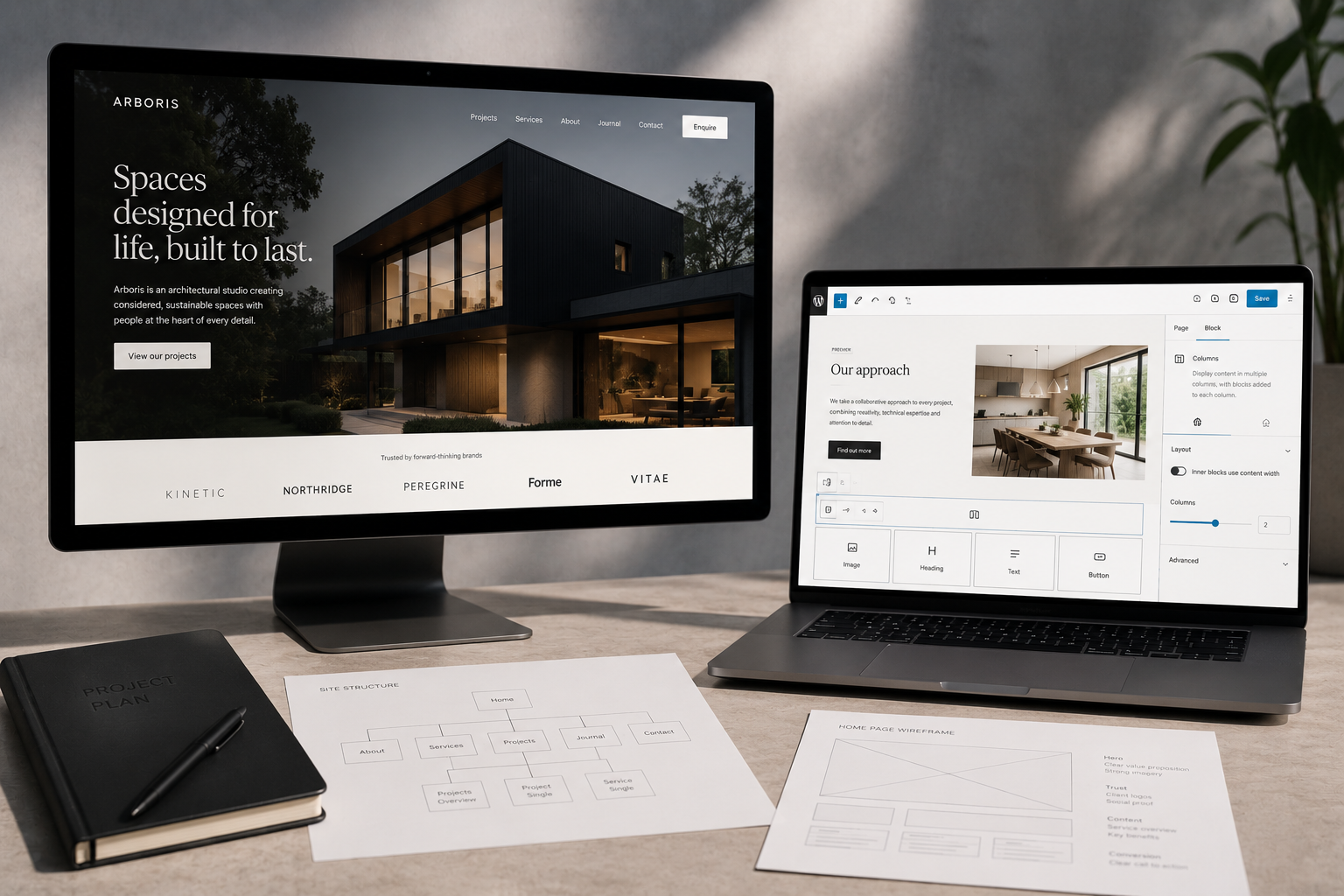
A bespoke WordPress build gives your team flexible control without relying on a generic theme.
Most of our WordPress projects are designed from scratch and developed as custom themes, often using flexible content structures so clients can continue building useful pages after launch. In practice that means keeping the build light, structuring content so it is easy to edit, and making sure the site is still straightforward to look after a few years after launch.
Our work has included bespoke functionality such as booking systems, directories, dashboards, ecommerce and advanced content structures, alongside content-led websites for businesses that need stronger brand presentation and clearer enquiry journeys.
- All Response Media: a redesigned performance marketing agency website with clearer services, case studies, testimonials and a scalable content hub.
- Everymind at Work: a redesigned mental health platform website with resource pages, performance improvements and HubSpot CRM integration.
- UK Home Interiors: a bespoke WordPress and WooCommerce build with intelligent search, advanced third-party logic and a clearer buying journey.
If you are not sure whether your business needs a custom WordPress website, the best next step is to define what the site needs to do. If the answer is simple, a template may be enough. If the website needs to support growth, enquiries, content, integrations or a more serious brand position, a bespoke build is likely to be the stronger route.
To discuss your requirements, budget and whether custom WordPress is the right fit, complete our project planner and tell us what you need the website to achieve.
Frequently Asked Questions
Do I need a custom WordPress website for my business?
You may need a custom WordPress website if your site has to support serious enquiries, sales, content growth, integrations or bespoke functionality. If you only need a simple brochure site with a few pages, a template may be enough to begin with.
Is a custom WordPress website better than a template?
It depends on what the website needs to do. A custom build usually gives established businesses more control over design, structure, performance and user journeys. A template can still work well for simpler sites where budget and launch speed matter most.
How much does a custom WordPress website cost?
A professional custom WordPress website typically starts from around £8,000 and often ranges between £8,000 and £20,000. Larger projects with ecommerce, booking systems, directories, dashboards, integrations or advanced content structures can cost more.
Will I be able to edit my custom WordPress website?
Yes. A well-planned WordPress site should give your team clear editing controls, so you can update key pages, add content and manage important information. The aim is useful control without making the site easy to break.
Is custom WordPress good for SEO?
Custom WordPress can be strong for SEO when the site is planned properly. Clean templates, fast loading, structured content, clear page hierarchy, editable metadata and flexible landing page layouts all help support long-term search visibility.
Is WordPress secure enough for a business website?
WordPress can be secure when it is built, hosted and maintained properly. Security depends on the quality of the theme, plugins, hosting, updates, backups and access controls. Poorly maintained sites are risky; well-managed bespoke builds are much safer.
How long does a custom WordPress website take to build?
Timelines depend on the size and complexity of the project. A smaller bespoke website may take several weeks, while a larger site with more templates, content, integrations or ecommerce functionality can take several months.
What is the difference between custom WordPress and a custom-coded website?
Custom WordPress uses WordPress as the CMS but has a bespoke design, custom templates and tailored functionality. A fully custom-coded website is built without a standard CMS and may suit complex platforms or software products. For many business websites, WordPress offers the right balance of flexibility, control and usability.
When is a template website enough?
A template website may be enough if your business needs a simple online presence, has a limited budget or wants to launch quickly. It can work well for early-stage businesses, small local services or projects where the website is not yet central to sales or marketing.
When should I replace my current WordPress theme?
You should consider replacing your current theme if it is hard to edit, slow to load, reliant on too many plugins or limiting the way you present your services. If your team keeps working around the theme instead of improving the site, a bespoke build may be the better long-term option.
Can a custom WordPress website support ecommerce or booking systems?
Yes. A bespoke WordPress site can support ecommerce, booking journeys, directories, dashboards, gated content, CRM connections and third-party integrations. These features need careful planning so they work cleanly for users and for the team managing the website.
Why choose Webpop Design for a custom WordPress website?
Webpop Design has been building bespoke websites for 18 years. We create WordPress sites for established businesses that need clear design, structured content, flexible editing, strong user journeys and practical long-term maintainability.