
 Webpop Design Marketing Team
When planning a new website, one of the first decisions is whether to use a template website or invest in professional website design services. Both routes can produce a working website, but they are not built for the same type of business, budget or long-term goal.
A template can be a practical starting point when speed, simplicity and cost matter most. Custom web design from a web design agency in London usually makes more sense when the website needs to support enquiries, sales, trust, SEO, content depth, integrations or future business growth.
Quick Summary: Custom Web Design vs Templates
- Templates are usually best for simple, low-cost websites that need to launch quickly.
- Custom web design is better suited to businesses that need stronger branding, clearer user journeys, better flexibility and more control over SEO and performance.
- A template may be enough if your website only needs to present basic information.
- A custom website is usually the stronger investment if the site needs to generate enquiries, explain services clearly, build trust, support integrations or grow with the business.
Template Websites: What They Give You
What a Template Website Is
A template website uses a pre-designed layout as the foundation for the site. Website builders, WordPress themes and content management systems often provide templates so businesses can get online without designing every page from scratch.
Most templates include ready-made page layouts, mobile-responsive sections, navigation styles and editable colours, fonts or images. Many also include common features such as contact forms, blog layouts, galleries and ecommerce blocks, which can help a simple website launch quickly.
When a Website Template Can Be Enough
Templates are often useful for small businesses, start-ups, personal brands and early-stage projects with limited budgets. They can work well when the website only needs to explain basic information, display a small portfolio, publish simple articles or sell a limited number of products.
The trade-off is that the business has to work within the structure of the template. That may be fine at the start, but it can become limiting when the site needs more distinctive branding, stronger service pages, better enquiry journeys, custom functionality or more control over SEO and performance.
Custom Websites: What Changes
What Custom Web Design Means
Custom web design, often called bespoke website design, means planning and designing a website around the business itself. The structure, layouts, content blocks, user journeys and functionality are shaped around the brand, audience and commercial objectives.
Unlike a template, a custom website is not forced into a pre-made layout. It can be designed around how the business explains its services, builds trust, handles enquiries, presents proof and guides people towards the next step.
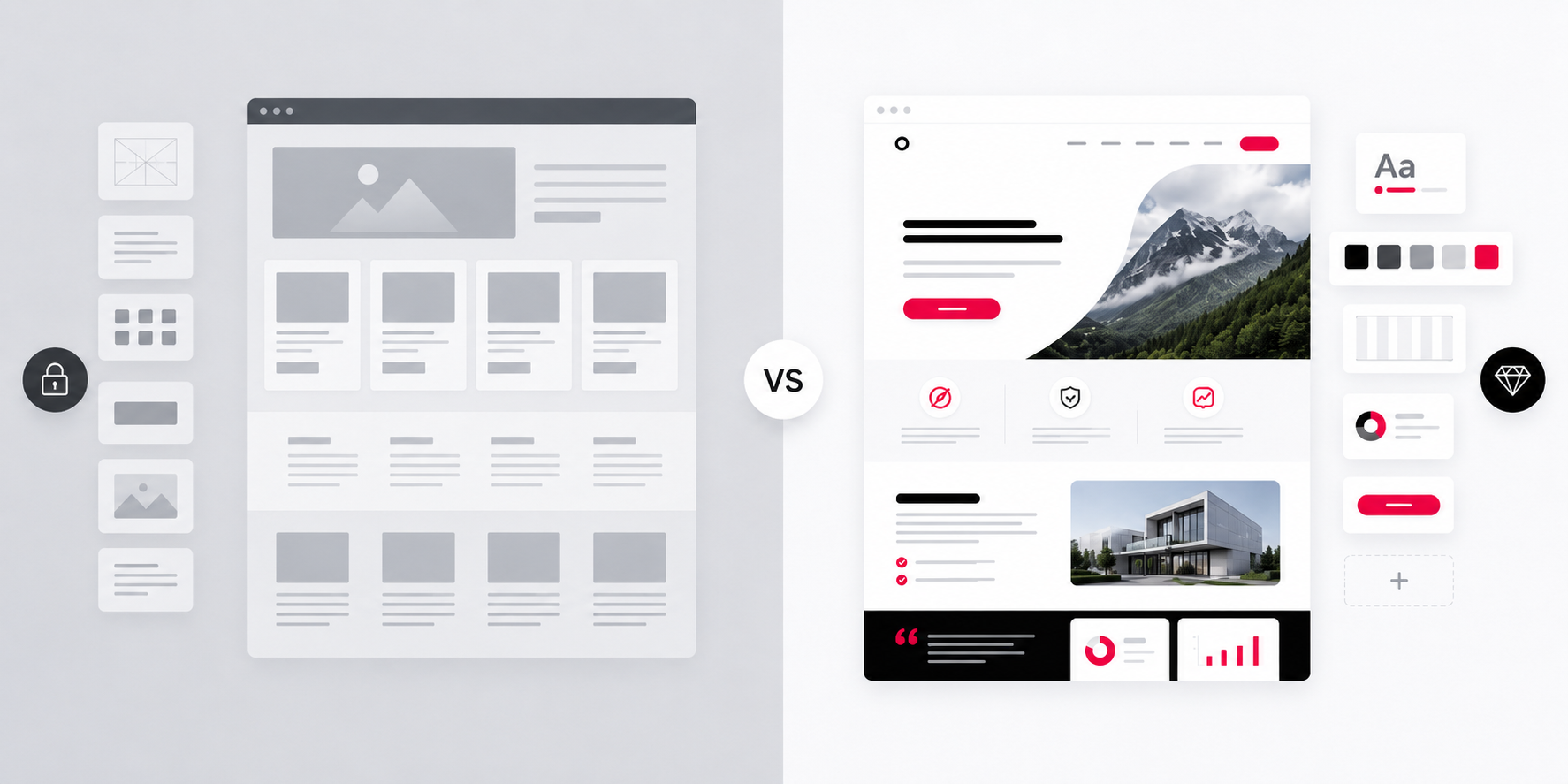
Templates start with fixed blocks, while custom design shapes the structure around the business.
Why Bespoke Design Gives More Control
- Stronger Brand Presentation: A custom design gives the website its own look and feel, rather than relying on a layout used by many other businesses.
- Clearer User Journeys: Pages, calls to action and content sections can be planned around how real customers compare options before they enquire.
- More Useful Functionality: Custom features can be built around the way the business operates, from booking systems and ecommerce to directories, dashboards and forms.
- Better Content Structure: Service pages, case studies, landing pages and conversion routes can be organised around search intent and customer decision-making.
- Greater Technical Control: A custom build can give more control over speed, layout quality, code, metadata, schema, accessibility and technical SEO foundations.
- Long-Term Flexibility: The website can be improved, expanded and adapted over time without fighting against a rigid theme or template structure.
Custom Website vs Template Website: Direct Comparison
| Area | Template Website | Custom Website |
|---|---|---|
| Initial Cost | Usually lower upfront, especially for simple websites with limited requirements. | Higher upfront investment because strategy, design, development and testing are planned around the business. |
| Launch Speed | Can be quicker to launch when the structure is simple and the business can work within the template. | Takes longer because the site is planned, designed and built around specific goals, content and functionality. |
| Design Control | Limited by the original layout, theme settings and available template sections. | Designed around the brand, audience, services, content and conversion journey. |
| SEO Control | May include basic SEO settings, but technical control can be restricted by the theme or builder. | Allows stronger control over page structure, content layouts, performance, schema, metadata and technical SEO foundations. |
| Performance | Can become slower if the theme includes unused features, heavy scripts or too many plugins. | Can be built more cleanly around the features the website needs. |
| Content Flexibility | Often works well for simple pages, but can become awkward when content needs are more detailed. | Can include reusable sections, flexible templates and custom content structures for different page types. |
| Functionality | Usually relies on built-in features, third-party plugins or workarounds. | Can support bespoke functionality such as booking systems, dashboards, directories, ecommerce and CRM integrations. |
| Long-Term Value | Can be cost-effective at the start, but may need replacing if the business outgrows it. | Better suited to businesses that need a scalable, flexible and commercially useful website over time. |
Templates, Themes & Page Builders
Not every template website looks basic. Some premium WordPress themes and page builders can produce good-looking results, especially when they are used by an experienced designer. They can be a practical middle ground for smaller projects, tighter budgets or websites with fairly standard requirements.
The issue is that the design and structure are still heavily influenced by the tool. As the website becomes more important to the business, those restrictions can start to show. Service pages may need layouts the theme does not handle well. Conversion sections may feel forced into the wrong places. Extra plugins may be needed for features that should have been planned into the build from the start.
For a business that relies on its website for enquiries, sales, trust or organic search, a good-looking template only gets you part of the way. The site also has to be shaped properly around the business, the content and the customer journey.
Custom Website vs Template: Cost & Long-Term Value
The Upfront Cost of Template Websites
The upfront cost of a template website can be attractive. Many templates are free or cost a few hundred pounds, which makes them appealing for businesses that need a simple website quickly.
The hidden cost usually appears later. Premium plugins, paid extensions, theme restrictions, design fixes, performance issues and custom development can all add up. In some cases, a low-cost template site eventually becomes expensive because the business has to work around its limitations.
The Cost of a Custom Website
A custom website usually requires a larger initial investment, often starting in the thousands depending on the size, design detail, functionality and level of planning involved. If you want a clearer breakdown of what affects pricing, read our guide on how much web design costs.
The value is in more than how the site looks. A well-planned custom website can support better enquiries, clearer content, faster loading, better scalability and a more professional experience for the people using it.
Performance, SEO & Technical Control
SEO Limits of Many Template Websites
Many templates include basic SEO features such as editable page titles, meta descriptions, headings and mobile-responsive layouts. For smaller websites with simple needs, that may be enough.
The limitations often appear when the site needs a more serious SEO strategy. Templates can include bloated code, unnecessary scripts, rigid page sections, poor heading control, limited schema options and layouts that make it harder to build strong service pages. Custom web design will not rank a site on its own. It gives far more control over the foundations that help SEO work properly.
How Custom WordPress Themes Support Stronger Foundations
With custom WordPress themes, developers can build the website around the site’s real content, functionality and performance requirements. The theme can be kept lighter and more focused than an off-the-shelf setup filled with unused features.
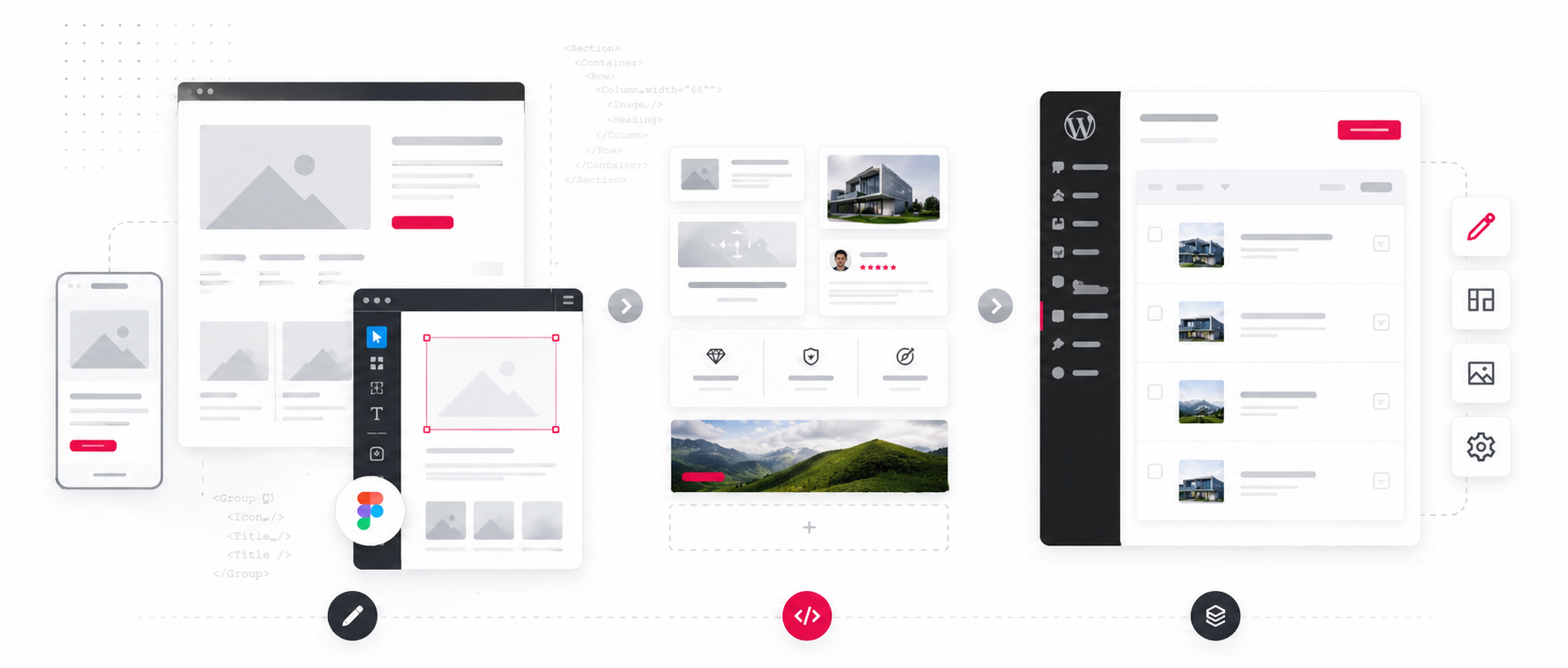
Custom websites can be planned from design through to reusable content sections and CMS editing.
At Webpop Design, we usually build bespoke websites as custom WordPress themes, with the page sections built on Advanced Custom Fields so the client edits text, images and whole blocks through clear fields rather than a page builder. That removes the trade-off most people assume comes with custom work: a bespoke build does not have to leave you with a site only a developer can update.
User Experience & Mobile Conversion
Why Mobile-Friendly Templates Can Still Feel Awkward
Many standard templates are described as mobile-friendly, but that does not always mean they are properly optimised for real users. A site may technically fit a smaller screen while still feeling awkward to use, with cramped layouts, oversized sections, slow-loading elements or calls to action that are harder to find and tap.
This creates friction for mobile visitors. When navigation, readability or page speed suffers, businesses can lose enquiries from people who would otherwise have taken action.
Responsive Design Built Around Real Journeys
Custom web design allows responsive behaviour to be planned properly from the start. Layouts, menus, content blocks, forms and calls to action can be shaped around how people browse on mobiles, tablets and desktops.
That detail matters when the website has to generate enquiries or sales. A clearer mobile journey can support stronger conversion rates, reduce friction and make the site feel more professional across every screen size.
The Hidden Cost of Outgrowing a Template
Templates can hold up well in the early stages. The strain tends to show as the business grows. New service pages may not fit the original layout. Extra plugins may slow the site down. Important calls to action may be difficult to position properly. The editing experience may become clumsy for the team managing the site.
These issues do not always look serious at first, but they can affect enquiries, trust, SEO performance and day-to-day management. Many of the rebuilds we take on begin exactly here, with a template or page builder that worked at launch and then slowed the site down or became awkward to edit once there was more to manage. The business then faces a choice between patching the template again or rebuilding the website properly.
When Custom Web Design Is Worth It
Custom web design is usually worth considering when the website has an important commercial role. That could mean generating qualified enquiries, supporting paid campaigns, improving organic search visibility, selling products, taking bookings or connecting with other business systems.
It is also a better fit when the brand needs to look more established, the website has several important user journeys, or the business wants a platform it can continue improving over time. For these projects, cost matters less than what the website needs to help the business achieve.
How Webpop Design Builds Custom Websites
Webpop Design has been designing and building bespoke websites for 18 years. We usually design our custom website projects from scratch in Figma, then develop them as lightweight custom WordPress themes with structured templates, reusable sections and flexible content management.
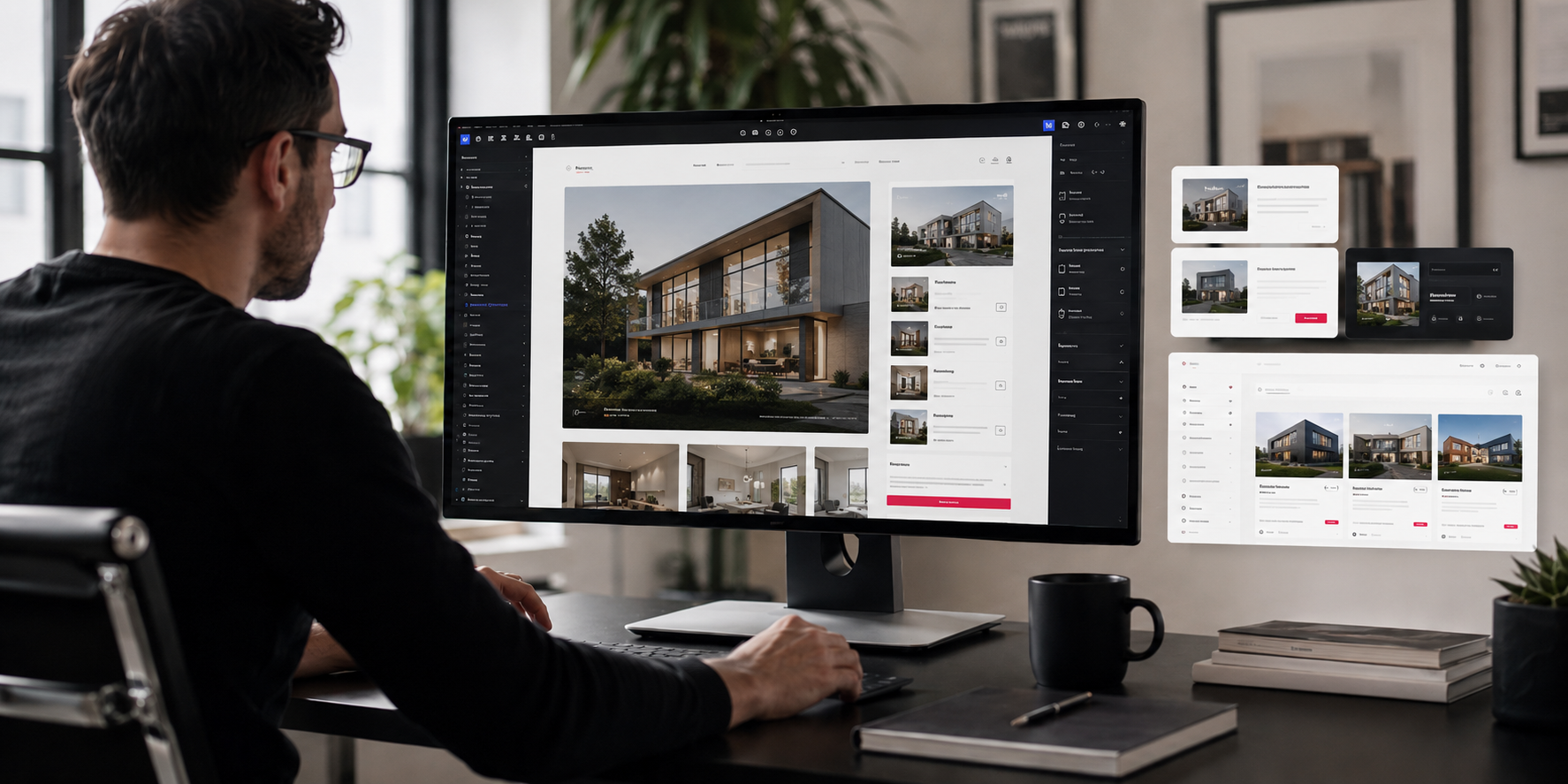
A custom website starts with design decisions made for the business, not a fixed template structure.
This approach gives clients a website that feels custom while staying straightforward for the team to run. It also avoids the common problem of relying on a heavy off-the-shelf theme where unused features, rigid layouts and plugin workarounds can make the site harder to improve over time.
Our work includes bespoke websites and custom functionality for businesses such as Bloomridge, Cygnus Instruments and UK Home Interiors, alongside projects involving ecommerce, booking systems, dashboards, directories, forms and more advanced WordPress development. You can see examples of work in our portfolio.
Choosing the Right Approach for Your Business
The right choice depends on your budget, stage of business and how much responsibility the website needs to carry. A template can be a sensible option for a simple, low-cost website that needs to launch quickly. A custom website is usually the stronger route when the site needs to support trust, search visibility, conversions, flexible content and long-term growth.
For established businesses, the website often needs to do more than look presentable. It may need to explain services clearly, support different customer journeys, generate qualified enquiries, integrate with other tools, publish useful content and continue improving over time. That is where a custom website usually becomes the better long-term investment.
Start by completing our project planner. It gives us the information we need to understand your goals, recommend the right approach and advise whether a template-based route or a bespoke website is the better fit.
Frequently Asked Questions
Is custom web design better than a template?
Custom web design is usually better when the website needs to support enquiries, sales, SEO, trust, bespoke functionality or long-term growth. A template can still be a sensible option for a simple website with a smaller budget and fewer requirements.
Are template websites bad for business?
Template websites are not automatically bad. They can work well for simple projects, early-stage businesses or temporary websites. The problems usually appear when the business needs more control over design, content structure, performance, user journeys or functionality.
Is a custom website better for SEO?
A custom website does not rank better just because it is custom. The advantage is control. A bespoke build can make it easier to plan strong page structures, improve loading speed, manage metadata, add schema, create better service pages and avoid the limitations of a bloated theme.
Why do custom websites cost more than templates?
Custom websites cost more because they involve strategy, design, development, testing and build decisions made around the business. Instead of adapting a pre-made layout, the site is planned around the brand, content, users, functionality and commercial goals.
When is a template website enough?
A template website may be enough if the site only needs to present basic information, show a small portfolio, publish simple content or sell a limited number of products. It is often a practical choice when speed and budget are more important than flexibility or differentiation.
When is custom web design worth the investment?
Custom web design is worth considering when the website has an important commercial role. That might include generating qualified enquiries, supporting paid campaigns, improving organic search, explaining a complex service, taking bookings, selling online or integrating with other systems.
Can a template website look professional?
Yes, a template website can look professional, especially when it is set up by an experienced designer. Appearance is only part of it. A website also needs the right structure, content, user journey, performance and editing experience if it is going to support the business properly.
How does a WordPress theme differ from a custom WordPress website?
A WordPress theme gives you a pre-made structure, layout system and design options. A custom WordPress website is built around your own design, content sections and functionality, giving you more control over how the site looks, works and grows.
Can I move from a template website to a custom website later?
Yes. Many businesses start with a template and move to a custom website once they have clearer goals, stronger content needs or a larger budget. A rebuild can also be a good opportunity to improve SEO structure, user journeys, conversion paths and the way the website is managed.
Does Webpop Design use templates?
Webpop Design mainly focuses on bespoke website design and custom WordPress development for businesses that need more than a standard template. When a project is a single-page launch, a short-term campaign site or an early idea being tested before there is budget to build properly, we will say so and point you towards a template-based route rather than sell you a custom build you do not need yet.