
 Alan Carr
Website costs in the UK vary widely, but rarely without reason. A basic template site, a professionally designed small business website and a complex ecommerce build may all be called “websites”, but they involve very different levels of planning, design, development, content work and testing.
In 2026, the cost of a website depends on what the site needs to achieve. A simple online presence costs far less than a website built to generate leads, support SEO, take payments, manage bookings, connect with third-party systems or serve different user journeys. The more responsibility the website has, the more work is needed behind the scenes.
For most UK businesses, the important question is not just how much a website costs, but what level of website is actually suitable. A cheaper route may be fine for testing an idea, while an established business that relies on enquiries, sales or credibility will usually need a more professional website design build.
Website Costs in the UK: Quick Summary
In 2026, a professional website in the UK can cost anywhere from a few hundred pounds for a DIY template site to £25,000+ for a complex bespoke build. Most serious small business websites sit somewhere between £5,000 and £10,000, while ecommerce, booking systems, integrations and custom functionality usually push the budget higher.
The biggest cost factors are scope, content readiness, design quality, functionality, SEO structure, testing and who builds the site. A cheap website can be fine for a proof of concept, but once a site has to bring in enquiries, sales or search traffic, it needs more planning behind it.
- DIY/template website: £0–£1,000
- Freelancer-built website: £2,000–£6,000
- Agency-built small business website: £5,000–£10,000
- Ecommerce or feature-rich website: £10,000–£25,000
- Large bespoke platform: £25,000–£100,000+
The right budget depends less on page count and more on what the website needs to do. If it needs to generate leads, support SEO, take payments, handle bookings, integrate with other systems or scale over time, the build needs more planning, development and testing from the start.
In 2026, typical UK website costs are:
| Website type | Typical UK cost | Best suited to |
|---|---|---|
| DIY/template website | £0–£1,000 | Personal projects, test ideas and very early-stage businesses |
| Freelancer-built website | £2,000–£6,000 | Simple brochure websites with limited functionality |
| Agency-built small business website | £5,000–£10,000 | Professional service businesses that need enquiries, trust and a stronger brand |
| Ecommerce or feature-rich website | £10,000–£25,000 | Online stores, booking systems, integrations and more advanced user journeys |
| Large bespoke platform | £25,000–£100,000+ | Complex websites with custom functionality, large content structures or multiple systems |
Most people ask “how much does a website cost?” expecting a single answer. The honest answer is that a website can cost a few hundred pounds or well over £100,000, depending on scope.
The better question is: what does the website need to achieve?
A brochure site that just needs to exist is a far smaller job than one expected to win enquiries, rank in search, take payments or connect to the tools a business already runs on. Most of the price gap comes from that commercial workload, not the page count.
There are real reasons why some websites cost £1,000 and others cost £20,000+. Time, complexity, content, design depth, technical quality and testing all affect the final quote. So let’s walk through what you should expect to pay a web design agency in 2026, what drives the cost, and how to tell whether a quote is realistic.
If you already have a rough brief and want a realistic estimate, you can send Webpop Design your project details and we’ll point you towards the right budget range.
What Affects the Cost of a Website?
A few key things affect website pricing more than anything else:
- How many pages, templates or layouts need designing
- Whether the website is based on a template or designed from scratch
- How much content already exists
- Whether copywriting, photography or content planning is needed
- Whether functionality is custom or off-the-shelf
- Whether the website needs ecommerce, booking, membership or payment features
- How much SEO structure is needed before launch
- How much testing and quality assurance is required
- Who builds it: DIY platform, freelancer, small studio or larger agency
- How quickly the project needs to be delivered
Scope and quality drive most of the cost. A five-page brochure website with supplied content is a very different project from a 40-page service website with custom templates, SEO migration, forms, integrations and several rounds of stakeholder feedback.
Website costs vary by scope, functionality, content, design quality and planning.
What You Get at Different Website Budget Levels
Under £1,000
DIY platforms, student projects and basic template tweaks.
This is the lowest-cost route and usually means building the website yourself using platforms like Wix, Squarespace or a pre-made WordPress theme. You get access to drag-and-drop tools, basic templates and standard features.
It can be fine for personal projects, temporary landing pages or proof-of-concept ideas. The trade-off is that you are usually responsible for the structure, copy, design, SEO setup, technical decisions and ongoing fixes yourself.
At this level, the website is unlikely to have a unique design, proper content strategy, strong SEO foundations or much long-term flexibility. Support is often limited, and scaling the site later can be difficult without rebuilding it.
We have rebuilt a lot of DIY websites for clients who outgrew them after six months. They can be useful for getting started, but they are rarely the best choice for a business that needs to compete in search, build trust or generate regular enquiries.
£2,000–£6,000
Freelancer-built websites with simple custom design.
At this level, you are usually working with a freelancer who handles design, development and launch. Depending on their process, you may get a semi-custom design, a modified theme or a simple bespoke layout built around your content.
Most websites in this range include core pages such as home, about, services and contact, along with a CMS like WordPress and some basic on-page SEO. The site should look more professional than a DIY build and feel more relevant to your brand.
The main limitation is capacity. Freelancers often work alone and may be balancing several projects at the same time. Timelines can stretch if content is delayed, feedback rounds expand or another client project becomes urgent. Post-launch support also varies.
This range can work well for simple brochure websites, provided you do not need complex functionality, deep SEO planning or a fast turnaround. Before starting, make sure the quote clearly states what is included, what counts as extra work, who owns the website, and what support is available after launch.
£5,000–£10,000
Bespoke small business websites built by a professional studio or agency.
This is the range where many serious small business websites sit. You are usually working with a small studio or agency that can plan the site properly, design around your brand, build a more flexible CMS and test the website before launch.
The website should be planned around your services, audience, content and commercial goals. Key templates such as the homepage, service pages, contact page, blog or case study layouts are designed for a specific purpose rather than forced into an existing theme.
If you are not sure what that means in practice, we have explained it in more detail here: what is custom web design?
At Webpop Design, this kind of project is usually built as a custom WordPress website with a clean editing experience, often using Advanced Custom Fields rather than a bloated off-the-shelf theme.
We design these sites to look the part on the front end and stay easy to manage behind the scenes.
Most websites in this range include bespoke design, mobile optimisation, page templates, on-page SEO basics, performance work, testing and launch support. It is a good fit for service-based businesses, consultants and established companies that rely on their website to generate enquiries or build credibility.
It will not usually include ecommerce, complex integrations or advanced custom functionality at this price. But for many small business websites, this is the most practical budget range if you want a site that is well built and won’t need replacing in a year.
£10,000–£25,000
Websites with ecommerce, booking, integrations or more advanced functionality.
In this range, you are paying for more than design. These websites do things: sell products, take bookings, filter content, manage enquiries, connect with CRMs, process payments or support more complex user journeys.
This might include complete ecommerce websites, booking systems, advanced forms, gated content, multilingual content, product filtering, membership areas, API integrations or custom dashboards.
There is more planning involved, more testing, and often more decision-making. Projects in this range may include stakeholder sign-offs, custom interface design, structured content modelling, user testing and well-planned CMS fields so internal teams can manage the website properly.
We have spent over 40 hours on quality assurance alone for websites in this bracket. Not because the site was problematic, but because when a website includes moving parts, you need to test it across devices, browsers, user journeys and edge cases.
If your website is part of how your business sells, books, manages enquiries or serves customers, this is usually where the budget needs to sit.
£25,000+
Large or complex bespoke websites and digital platforms.
At this level, the website becomes more than a marketing tool. It may support multiple departments, large content structures, high traffic, complex functionality or several user types.
You might need dozens of unique templates, multilingual support, complex permissions, live data feeds, CRM integrations, advanced search and filtering, migration planning, legacy data handling or internal training.
Projects like this involve a longer discovery phase, structured content planning, staged releases and heavier testing. The build can span months and involve designers, developers, SEO specialists, content strategists, project managers and client-side stakeholders.
Costs can rise quickly if requirements change mid-project or if internal approval rounds are not controlled. But when a complex website is planned properly, it can support the business for years and reduce the need for constant rebuilding.
If your website needs to connect to other systems, scale across multiple regions or support a more complex operation, this is the kind of budget you should expect when working with a web design agency in London.
How Much Does a Small Business Website Cost in the UK?
A professional small business website in the UK usually costs between £2,000 and £10,000, depending on the route you choose.
A freelancer may be suitable for a simple brochure website with a small number of pages. A professional agency build usually costs more, but should give you stronger design, better structure, clearer project management, more reliable testing and better support after launch.
For a business that depends on enquiries, the website needs to do more than look acceptable. It needs clear service pages, strong trust signals, simple contact routes, mobile-friendly layouts, sensible SEO foundations and a CMS that your team can manage.
A cheaper website can still be the right choice if the business is very early-stage. But if the website needs to win work, support paid traffic, rank in Google or explain a higher-value service, it is usually worth investing in a build that is planned around those goals.
How Much Does a WordPress Website Cost?
A WordPress website in the UK can cost anything from a few hundred pounds for a theme-based setup to £10,000+ for a bespoke design and development project.
A bespoke WordPress build gives businesses flexible templates and cleaner content management.
The price depends heavily on how WordPress is used. A basic theme installation is very different from a custom WordPress build with bespoke templates, flexible content blocks, custom fields, performance optimisation and a well-structured editing experience.
A lower-cost WordPress site may use a pre-built theme or page builder. That can reduce the upfront cost, but it may also create limitations around speed, design flexibility, editing control and long-term maintenance.
A bespoke WordPress website costs more because the design, templates and content management setup are created around the business. For established companies, this usually gives a better long-term result: cleaner pages, easier editing, stronger performance and more flexibility as the website grows.
How Much Does a Website Redesign Cost?
A website redesign can cost less than a completely new project, but only if the existing site has a strong foundation.
If the content, structure, branding, SEO setup and CMS are already in good shape, a redesign may focus mainly on visual design, layouts and front-end improvements. In that case, the cost may sit close to a standard small business website build.
If the current website has weak content, poor page structure, technical issues, outdated templates or SEO problems, the redesign becomes a more involved project. It may need content planning, migration, redirect mapping, new templates, performance work and a full CMS rebuild.
This is why redesign quotes can vary so much. Two websites may look similar on the surface, but one may need a light refresh while the other needs deeper structural work.
A good redesign should not throw away what is already working. When we redesign a site, the priority is protecting search visibility, improving user journeys and modernising the design without making it harder to manage.
Why Content Affects Website Cost More Than People Realise
Content holds everything up or speeds everything up. It is rarely neutral.
If your content is final, structured and ready to use, the project moves faster. The team knows what goes where, which sections are needed, how long the pages are, and what the design needs to support.
If the copy is still being written, half-written or constantly changing, it slows everything down. Design files need reopening. Layouts need adjusting. Page builds need reworking. Missing sections need chasing. Content has to be copied from emails, PDFs or scattered documents.
The difference in time can be significant. On a five-page website, unready content might only add a day or two. On a larger build with multiple templates, it can add weeks.
We have had clients deliver content in a clean Google Doc with clear headings, calls to action, image notes and alt text. That can save 10+ hours straight away. We have also had projects where content arrives in fragments across emails, PDFs and messages, which burns time and budget quickly.
If you want to reduce cost and keep the project moving, prepare content early. Or ask the agency to handle copywriting and content structure as part of the project. What you should not do is underestimate how much content affects the final cost.
How Much Does an Ecommerce Website Cost in the UK?

Ecommerce websites cost more because they need secure checkout, stock logic and testing.
Ecommerce adds complexity, even when the shop seems simple. A website that takes payments needs a secure, stable and properly tested foundation.
At the very least, an ecommerce website needs:
- Product templates with images, descriptions and variation options
- A checkout flow that works across devices and browsers
- Integration with a payment gateway such as Stripe or PayPal
- Secure setup with SSL and sensible data handling
- Order confirmation emails and transactional messages
- Tax, shipping and stock logic
- Clear account, basket and checkout pages
That is before you add features such as:
- Discount codes
- Abandoned cart recovery
- Subscriptions or memberships
- Product filtering
- Integration with accounting or fulfilment tools
- Custom reports or admin workflows
A proper ecommerce website, whether built with WooCommerce, Shopify or another suitable platform, usually starts at around £10,000. The more functionality you add, the higher the cost.
Cutting corners on ecommerce often causes problems later. If the site is responsible for taking money, it needs to be fast, secure, stable and properly tested from day one.
Agency vs Freelancer: How Does It Change the Cost?
Freelancers usually charge less per hour, often somewhere between £40 and £80. Agencies are more expensive, often around £80 to £150+ per hour, but the work is usually split across people with different skills.
That usually means:
- Designers focus on design and user experience
- Developers handle the build and technical decisions
- Project managers keep the work moving
- Testers or developers check the site before launch
- Support is more structured after the website goes live
The higher rate does not always mean a higher total cost for the same outcome. A good team can often make better decisions earlier, avoid rework and produce a more robust result.
Freelancers can be a strong fit for smaller projects. Agencies are usually the safer choice when the website is business-critical, the deadline matters, the content structure is more involved, or you need long-term support.
The decision is not just about price. It is about risk, quality, capacity, communication and what happens after launch.
If you are weighing up who to work with, we have written a short guide on choosing a web design agency.
What Should Be Included in a Website Quote?
A professional website quote should make it clear what you are paying for. If two quotes look very different, it is often because they include different levels of planning, design, development, content support, testing and post-launch care.

A clear website quote should explain what is included, what affects the cost and where extra work may be needed.
A clear website quote should usually cover:
- Discovery, planning and project scope
- Website structure or sitemap planning
- Design work and the number of page templates included
- Responsive layouts for desktop, tablet and mobile
- CMS setup and content editing controls
- Development approach, including whether the site is bespoke or theme-based
- Forms, integrations or functional requirements
- Basic on-page SEO setup
- Performance considerations
- Browser and device testing
- Launch support
- Training or handover notes
- Post-launch support period
It should also explain what is not included. Copywriting, photography, branding, SEO campaigns, plugin licences, hosting, ongoing support and third-party tools are not always part of the build cost.
A cheap quote may look attractive because it leaves several of these items out. That does not always make it bad, but it does mean you need to compare quotes carefully.
Hidden Website Costs to Watch For
The build cost is only part of the picture. Some costs appear later, especially if the original quote was unclear.
Common hidden or separate costs include:
- Hosting
- Domain names
- Premium plugins or software licences
- Stock photography or custom photography
- Copywriting
- Branding or logo work
- SEO migration and redirects
- Cookie consent tools
- Third-party integrations
- Ongoing maintenance
- Future design or content changes
None of these costs are unusual, but they should be discussed early. The problem is not that websites have ongoing costs. The problem is when those costs are not explained before the project starts.
A good agency should help you understand the full first-year cost, not just the upfront build cost.
First-Year Website Costs
When budgeting for a new website, it helps to separate the build cost from the first-year cost.
The build cost covers the planning, design, development, testing and launch of the website. The first-year cost may also include hosting, support, licences, content writing, SEO migration, analytics setup, tracking tools and minor improvements after launch.
For a professional small business website, a realistic first-year budget might include:
- Website build: £5,000–£10,000
- Hosting: £20–£60/month
- Maintenance and support: £80–£400/month
- Premium plugins or licences: varies depending on the website
- Copywriting or content support: quoted separately if required
- SEO migration or additional SEO work: quoted separately if required
Looking at the first-year cost gives you a more realistic view of the investment. It also helps you avoid choosing a cheaper build that becomes expensive once essential extras are added.
Hosting & Maintenance Costs
Once your website is built, it needs a reliable home and ongoing care. Hosting and maintenance are not always included in the build cost, but they are important if you want the site to stay secure, stable and easy to manage.
Typical UK costs are:
- Hosting: £20–£60/month for many small business websites, depending on traffic, storage, platform and performance requirements
- Maintenance and support: £80–£400/month, depending on what is included
A decent support plan may cover:
- Plugin and CMS updates
- Daily or weekly backups
- Security monitoring and patching
- Minor content or layout tweaks
- Emergency fixes if something breaks
- Advice when you need to change or extend the website
You do not have to pay for maintenance. But if something goes wrong and you are not covered, it is usually your responsibility to sort it.
For businesses that rely on their website for enquiries, sales or day-to-day credibility, support is often worth budgeting for from the start.
Why Cheap Websites Often Cost More Later
A cheap website is not always a mistake. If you are testing an idea, building a temporary page or launching with very limited funds, a lower-cost route can make sense.
The problem comes when a cheap website is expected to do the job of a professional one.
Common issues include weak page structure, slow performance, limited editing control, poor mobile layouts, thin service pages, unclear calls to action, plugin conflicts, missing SEO basics and no reliable support after launch.
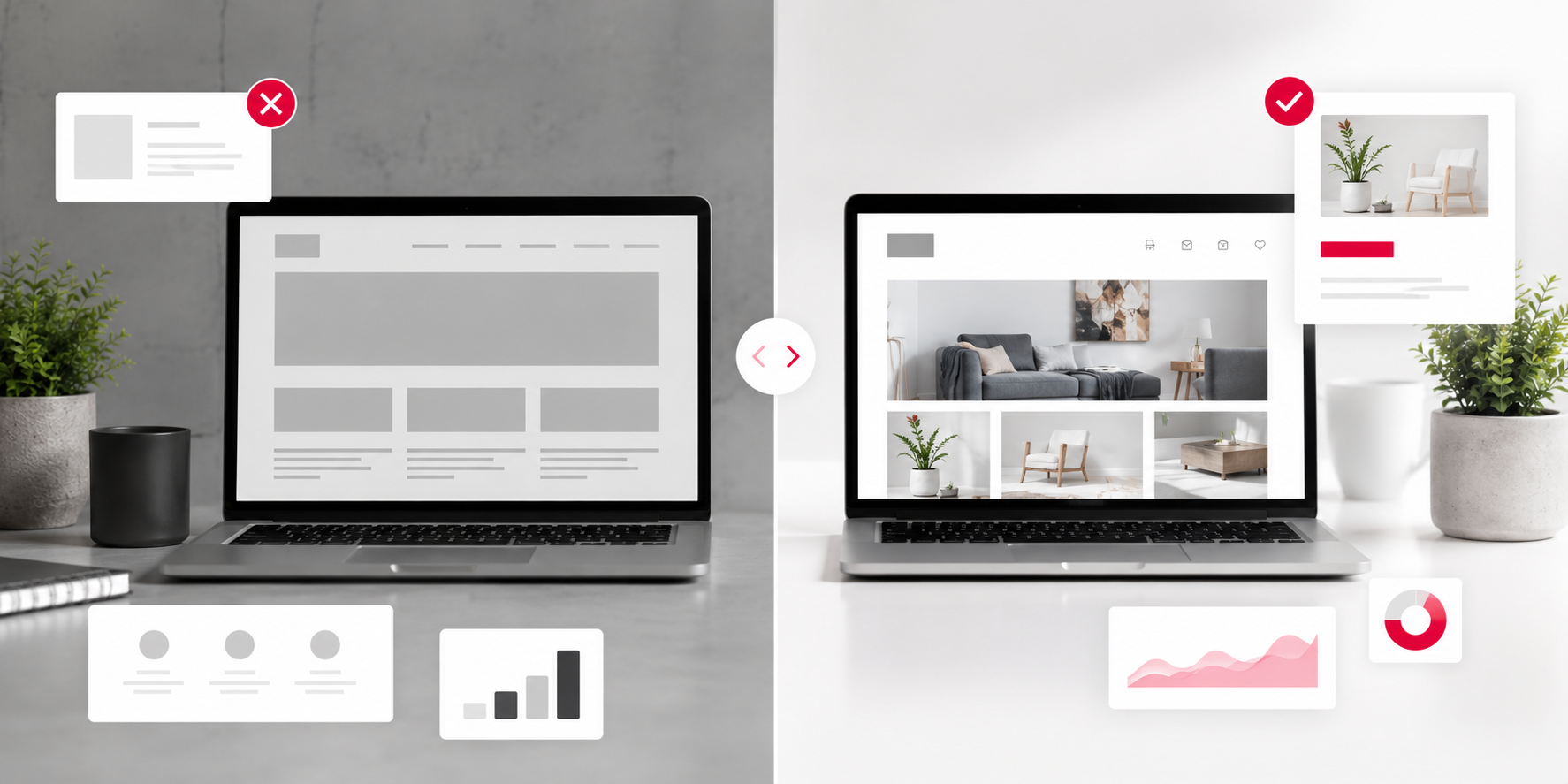
A professional build gives stronger structure, design quality and long-term flexibility.
These issues can reduce enquiries, make the website harder to improve and create extra cost later. In some cases, the site has to be rebuilt much sooner than expected.
Cygnus Instruments came to us with a site that had been built badly by a previous developer. It relied heavily on plugins and large parts of it did not work as they should. We rebuilt it on a custom foundation, which removed the plugin dependency and gave them a site that finally worked properly.
That is why price should not be judged in isolation. A £1,000 website that needs replacing in a year can be more expensive than a properly planned £6,000 website that supports the business for several years.
How Webpop Design Prices Website Projects
Our team has nearly two decades of experience and more than 300 launched websites behind it. Most of our projects are custom-designed and built around the client’s services, content, audience and commercial goals. The projects that go over budget are rarely the largest ones. They are almost always the ones where the scope was vague at the start.
We are usually a better fit for businesses that need more than a basic template site. That might mean a clearer service structure, a better enquiry journey, bespoke design, a more flexible CMS, ecommerce, booking functionality, custom templates or a website that can keep growing over time.
Our builds are often custom WordPress websites, designed from scratch and developed with flexible content management in mind. We use the right approach for the project, but we do not position ourselves as a cheap template provider.
For examples of the kind of bespoke website work we produce, you can view our web design portfolio.
We price on time, not page count. Before quoting, we estimate how many hours a project will realistically take, based on having built similar sites many times before. An eight-page site that has to convert paid traffic or handle bookings can take more hours than a twenty-page brochure site that only needs to exist, which is why two sites of similar size can carry very different quotes.
The cost depends on the scope, but the main factors are usually:
- How many templates need designing
- How much content planning is required
- Whether copywriting support is needed
- How much custom functionality is involved
- Whether ecommerce, booking or integrations are required
- How much testing and migration work is needed
- How quickly the project needs to be completed
We prefer to give realistic quotes rather than low starting prices that grow later. If you know what the website needs to do, we can usually give a clear recommendation on the right budget range.
Example Website Budgets
Every project is different, but these examples show how website costs can vary in practice.
1
Service Business Website
A professional service business may need a homepage, service pages, about page, case studies, contact page, blog templates, enquiry forms and a clean CMS. If the website is designed from scratch and built professionally, a realistic budget is usually around £5,000–£10,000.
2
Consultancy or B2B Website
A consultancy or B2B website may need stronger messaging, clearer service architecture, team profiles, case studies, insight content, gated downloads, CRM forms and more stakeholder input. A realistic budget is often around £8,000–£15,000+, depending on depth.
3
Ecommerce Website
An ecommerce website may need product templates, checkout, payment setup, shipping rules, tax logic, transactional emails, product filtering and order management. A realistic starting point is usually around £10,000+, rising with catalogue size and functionality.
4
Custom Platform or Membership Website
A website with user accounts, dashboards, subscriptions, booking systems, gated content, custom workflows or integrations is closer to a digital platform than a standard website. These projects often start from £25,000+ because they require deeper planning, development and testing.
Final Thoughts
There is no one-size-fits-all price for a website. That is not a sales tactic; it is the reality of different requirements.
The real question is not just “how much does a website cost?” It is “what does this website need to do?”
- Do you want leads to come in through forms or phone calls?
- Do you need customers to buy directly through the site?
- Do you want to edit content yourself without stress?
- Does the website need to support SEO growth?
- Does it need to connect with other systems?
- Does it need to grow with your business?
We have built £6,000 websites that outperform sites costing far more. We have also built £30,000+ platforms that support larger teams, custom workflows, ecommerce, booking systems and more complex content structures.
The right budget depends on what the website needs to achieve, not just how many pages it has.
If you are serious about getting your website built properly, let us know what it needs to do and what you want it to achieve. Use our project planner and we’ll give you a realistic cost that matches your requirements.
Frequently Asked Questions
How much does a basic website cost in the UK?
A basic website in the UK can cost anywhere from a few hundred pounds to around £2,000, depending on how it is built. DIY platforms and template websites sit at the lower end, while a simple freelancer-built brochure website usually costs more because design, setup, content and launch support are involved.
How much does a small business website cost?
A professional small business website usually costs between £2,000 and £10,000. A simple freelancer-built site may sit at the lower end, while a bespoke agency-built website with stronger design, content structure, SEO basics and launch support is more likely to sit between £5,000 and £10,000.
How much does a WordPress website cost?
A WordPress website can cost a few hundred pounds for a theme-based setup, or £5,000–£10,000+ for a bespoke WordPress design and build. The price depends on whether the site uses a pre-made theme, a page builder or a custom WordPress setup with flexible templates and a cleaner editing experience.
How much does an ecommerce website cost in the UK?
A professional ecommerce website in the UK usually starts from around £10,000. The cost rises when the site needs product variations, filtering, payment setup, shipping rules, stock logic, subscriptions, memberships, accounting integrations or custom checkout functionality.
Why do web design quotes vary so much?
Web design quotes vary because different suppliers include different levels of planning, design, development, content support, SEO setup, testing and post-launch care. A cheaper quote may not include everything you need, so it is important to compare the scope rather than the headline price alone.
What should be included in a website design quote?
A clear website design quote should explain the project scope, number of templates, design process, CMS setup, functionality, responsive design, SEO basics, testing, launch support and post-launch support. It should also state what is not included, such as copywriting, hosting, licences, maintenance or third-party tools.
How much does website maintenance cost?
Website maintenance in the UK commonly costs between £80 and £400 per month, depending on the level of support. A maintenance plan may include CMS updates, plugin updates, backups, security monitoring, small fixes and advice when you need to make changes to the website.
Is a cheap website worth it?
A cheap website can be worth it if you only need a simple online presence or want to test an idea. It is less suitable if the website needs to generate enquiries, rank in Google, support paid traffic, take payments or grow with the business. In those cases, a properly planned build is usually better value over time.