
 Alan Carr
What Does Bespoke Website Design Actually Mean?
Custom web design is the process of planning, designing and building a website around a specific business, audience and set of goals. Instead of starting with a pre-made theme or template, the structure, page layouts, content areas, user journeys and functionality are created around what the website needs to achieve.
This does not mean every part of the website has to be unusual or complicated. A custom-built site still feels clear, familiar and easy to use. The difference is that the design is shaped around the business, rather than squeezed into a layout made for hundreds of other companies.
At its best, a custom-built website covers the full digital experience. That includes the sitemap, navigation, page structure, visual design, calls to action, CMS setup, technical build, performance and any features needed to support the way the business works. If you are planning a project, see our bespoke web design agency for pricing, scope and the commercial detail.
This is different from a template approach, where a generic starting point is edited with new colours, images, fonts and content. Templates can work for simple or early-stage websites, but they often become restrictive when a company needs stronger design control, better content structure, custom functionality or room to scale.
What You’ll Learn in This Guide
This guide explains what custom web design means, how it differs from templates and when a custom-built website may be the better option for your business. Unlike a template site, a tailored website is not forced into a pre-made layout, structure or set of features.
- What bespoke design means – A clear explanation of how custom websites differ from templates, themes and off-the-shelf builds.
- When a custom build is worth it – How to decide whether your business needs a tailored website or whether a simpler template route may be enough.
- The business benefits – How a custom-built site can improve user journeys, conversion paths, performance, SEO foundations and long-term flexibility.
- What the process involves – The key stages of a proper custom website project, from discovery and structure through to design, development, testing and launch.
- How to choose the right agency – Practical signs to look for when comparing web design partners, portfolios, reviews and development approaches.
What Makes a Website Genuinely Custom?
The word “custom” is often used loosely in website projects. A site is not genuinely custom-built just because a template has been restyled, a page builder has been adjusted or a few sections have been moved around.
A genuinely custom website is shaped around the business from the start. That means the agency has considered the audience, the services being sold, the buying journey, the content hierarchy, the conversion points and the practical requirements of the team who will manage the site after launch.
- Original structure: The sitemap and page layouts are planned around the business, not copied from a theme demo.
- Purpose-led design: Each key page is designed around the action the user needs to take, whether that is making an enquiry, booking a call, buying a product or reading more detail.
- Flexible content management: The CMS is set up so the team can update useful content without breaking the design.
- Custom functionality: Features such as forms, booking paths, ecommerce flows, filters, dashboards or integrations are built around the project requirements.
- Cleaner development: The site avoids unnecessary theme bloat and only includes what the project actually needs.
A custom website can still be built on WordPress. At Webpop Design, most tailored builds use a custom WordPress theme with ACF flexible content, custom page templates and an editing experience built around the project. The key difference is that the website is not relying on an off-the-shelf theme with surface-level changes.
Custom-Built Websites vs Template Websites
The main difference between custom-built and template websites is control. A tailored website starts with the business, its users and its goals. A template website starts with an existing design and asks the business to fit into it.
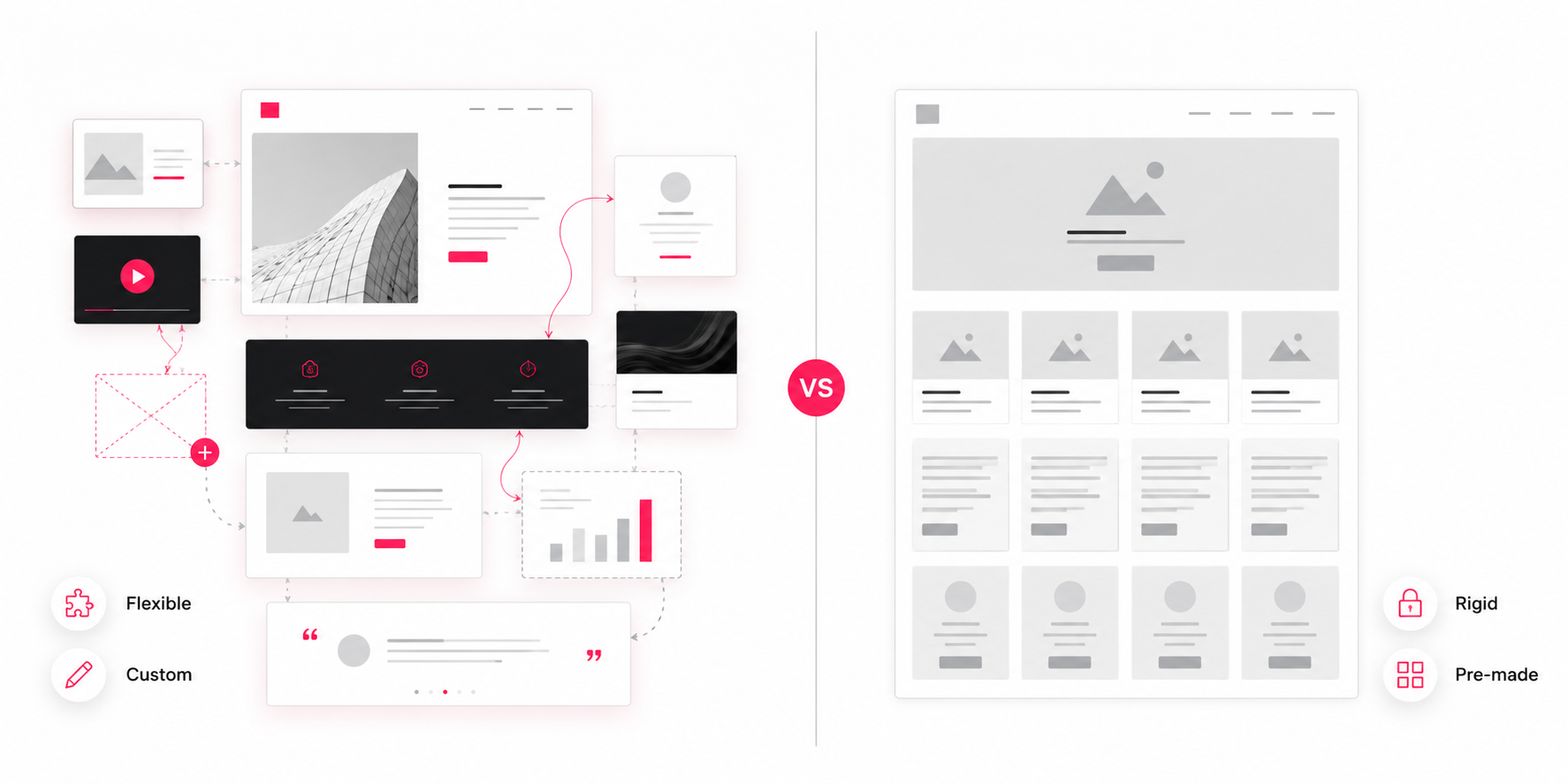
Custom-built websites offer more flexibility and control than rigid pre-made templates
That does not make one option right for everyone. A template can be a sensible choice for a new business with a small budget, a simple brochure site or a short-term landing page. A custom-built website is usually stronger when the site needs to support lead generation, detailed service pages, ecommerce, bookings, integrations, complex content or long-term SEO growth.
If you are comparing custom web design vs templates, the right choice usually comes down to how important the website is to your business. If it needs to generate enquiries, support sales or act as a core marketing asset, a tailored approach often makes more commercial sense.
| Area | Custom Website | Template Website |
|---|---|---|
| Design | Created around the brand, content and user journey. | Based on a pre-made layout with visual edits. |
| Flexibility | Can be shaped around specific services, features and workflows. | Limited by the structure and options of the theme. |
| Performance | Can be built with cleaner code and fewer unnecessary features. | May include unused sections, scripts or plugin dependencies. |
| Content Management | Editing areas can be planned around how the team manages content. | Editing is usually controlled by the theme or page builder. |
| Scalability | Better suited to long-term growth, new features and structured content. | Can become restrictive as requirements become more complex. |
| Cost | Higher upfront investment, but more control and long-term flexibility. | Lower initial cost, but may need replacing sooner. |
The Benefits of a Custom-Built Website
The benefits of a custom-built website are strongest when the site has a clear commercial role. A tailored site gives you more control over how the business is presented, how visitors move through the site and how each page supports enquiries, bookings or sales.
- Stronger brand presentation: A custom-built site gives your brand more room to feel distinctive, credible and consistent. It can support your visual identity, tone of voice, photography, messaging and logo design without being restricted by a generic template.
- Clearer user journeys: Each page can be structured around what the visitor needs to understand next. This can reduce friction, make services easier to compare and guide users towards the right action.
- Better conversion paths: Calls to action, forms, booking routes, enquiry journeys and sales pages can be designed around the way your customers make decisions.
- More useful functionality: Custom development makes it easier to support features such as custom forms, ecommerce journeys, booking systems, dashboards, filters, calculators or CRM integrations.
- Improved SEO foundations: A custom website can be planned around search intent, page structure, internal linking, performance and technical SEO from the start.
- Long-term flexibility: A custom-built site can grow with the business, making it easier to add new services, landing pages, integrations and content sections over time.
For competitive businesses, the real value is not just having a site that looks different. It is having a website that is easier to use, easier to manage and better aligned with how the business wins work.
When Is a Bespoke Website Worth It?
A custom website is usually worth considering when the site needs to do more than act as a simple online brochure. If your website plays a direct role in generating enquiries, selling products, explaining complex services or supporting a wider marketing strategy, a custom approach can be a better long-term investment.
It is especially useful for companies with detailed service pages, multiple audiences, complex buying journeys, ecommerce, booking systems, lead generation funnels, member areas, custom forms or integrations with other platforms.
It can also be the right choice when an existing website has become difficult to manage. Many companies outgrow their original template site because it becomes slow, restrictive, hard to edit or unable to support new content properly.
At Webpop Design, we usually work with businesses that have moved beyond needing a basic template site. They need a website that can support serious content, custom functionality, performance requirements and future development without becoming difficult to maintain.
The question is not simply whether a custom website looks better. The better question is whether your business needs more control over structure, content, functionality, performance and conversion.
When Might a Template Website Be Enough?
A custom website is not always the right choice. For a new business, a short-term idea, a basic holding page or a very simple brochure site, a template can be enough.
Templates are often cheaper and quicker to launch. They can work well when the website only needs a few standard pages, simple content and no unusual functionality. For some businesses, that is a perfectly sensible starting point.
The problems usually begin when the website becomes more important to the business. A template may start to hold things back if you need custom page layouts, faster performance, more detailed SEO pages, better conversion journeys, specific integrations or a CMS that works in a particular way.
A good agency should be honest about this. A tailored website is not about choosing the most expensive option. It is about choosing the right level of design and development for the role the website needs to play.
Why Custom Website Design Matters for Competitive Businesses
Businesses in competitive markets need websites that communicate quickly, build trust and make the next step clear. In crowded sectors, customers often compare several companies before making contact, so the website has to work hard on first impressions.
A custom-built website gives you more control over that first impression. Instead of relying on a generic layout, the site can be structured around the questions, concerns and decision points your visitors actually have.
- More relevant content: Pages can be planned around the services, locations, sectors and customer questions that matter most.
- Sharper mobile journeys: Navigation, content order, forms and calls to action can be designed properly for mobile users.
- Better trust signals: Reviews, case studies, accreditations, team details, process information and portfolio work can be placed where they support the decision-making journey.
- More room for growth: The site can be expanded with new landing pages, service sections and features without fighting against a restrictive theme.
f you are competing in a busy local market, working with an agency that understands your sector can help, but the principle is broader than location. A custom-built website should help any serious business present itself clearly, earn trust and turn the right visitors into enquiries.
How a Custom Website Is Created
Hiring a custom web design agency is not just about choosing the lowest price. You need to understand how the agency works, how they plan the site, how they handle feedback and how the finished website will be managed after launch.
A solid custom website process is design-led and practical, with each site planned and designed from scratch before moving into development rather than dropped into a ready-made theme.
- Discovery: We learn about the business, audience, goals, services, competitors and current website problems before planning the new site.
- Structure and Planning: We map out the sitemap, key pages, content priorities and user journeys so the site has a clear foundation.
- Wireframes and Design: We plan the layout and visual direction before creating polished Figma designs that support the brand and conversion goals.
- Development: We build the website around the approved designs, with custom page templates, flexible content areas, responsive layouts and the required functionality.
- Testing and Launch: We test the site across browsers, devices and screen sizes, then handle the launch details carefully before the site goes live.
The right process should remove guesswork. By the time a site is being developed, there should already be a clear understanding of what the website needs to say, how users will move through it and what the business needs to manage after launch.
Custom WordPress Website Design
Many custom websites are built on WordPress because it provides a strong CMS foundation without forcing the project into a fixed template. The important distinction is how WordPress is used.
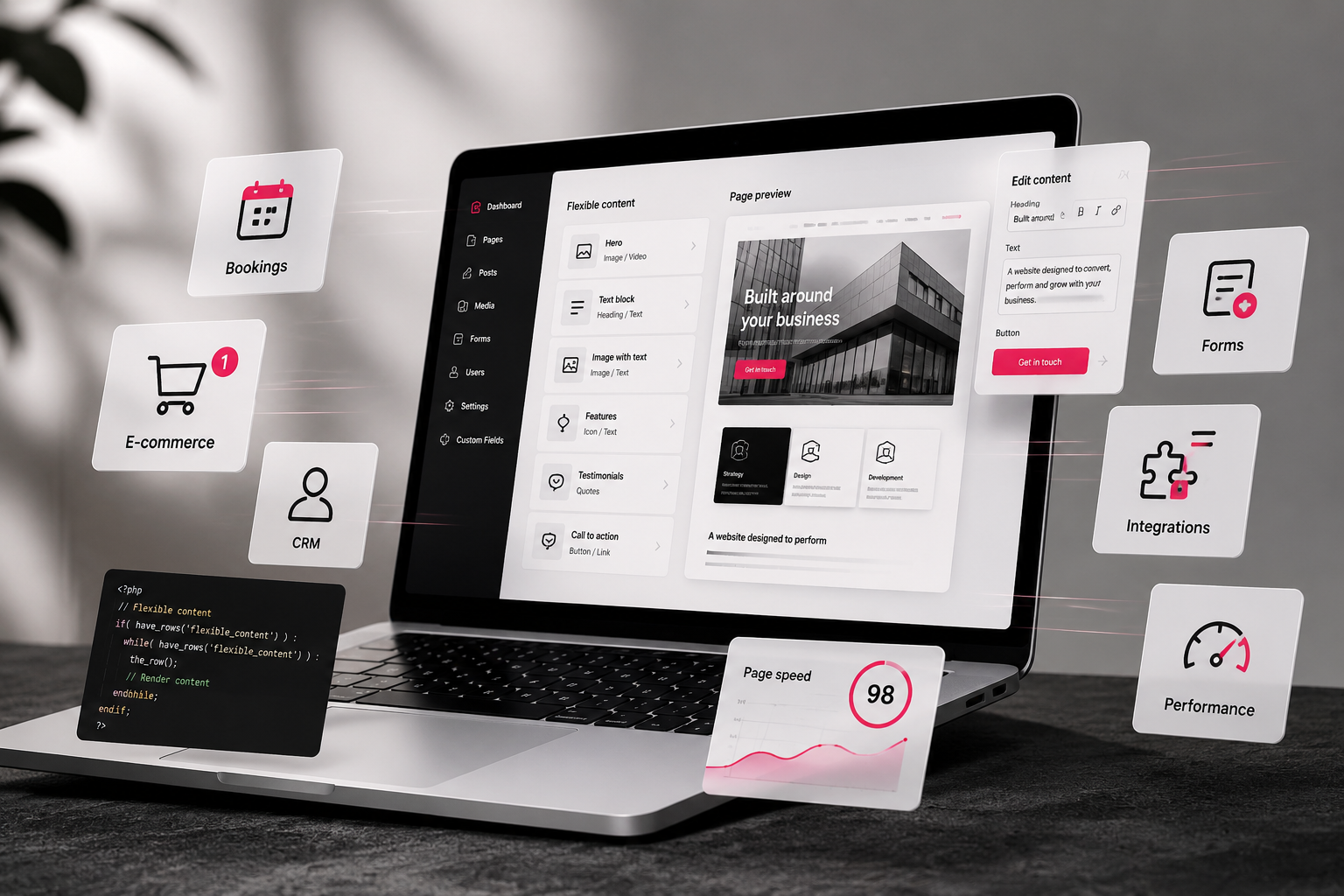
Flexible content helps custom websites stay easier to update and extend
A custom WordPress website should not depend on a bloated off-the-shelf theme. It should use custom templates, carefully planned content fields and a clear editing structure that suits the site. This makes the website easier to update, easier to extend and less dependent on unnecessary theme features.
At Webpop Design, this often means building custom WordPress themes with ACF flexible content. Clients can manage pages using structured, reusable content sections while the design remains controlled and consistent. That balance matters because a good CMS should give teams flexibility without letting the website become messy over time.
We can also work with other methods where a project specification requires it. The platform should serve the project, not the other way around.
What Custom Functionality Can Include
A tailored website becomes especially valuable when it needs features that a standard template cannot handle properly. These features do not always need to be complicated, but they do need to fit the way the business works.
- Booking systems: Useful for businesses that need appointment, consultation, event or service booking journeys.
- Directories: Suitable for websites that need searchable listings, filters, categories, profiles or location-based content.
- Dashboards: Helpful when users, clients, members or internal teams need access to controlled information or tools.
- Ecommerce: Useful when the buying journey needs more than a standard product grid and checkout.
- Integrations: Important when the website needs to connect with CRMs, email platforms, payment tools, booking platforms or other business systems.
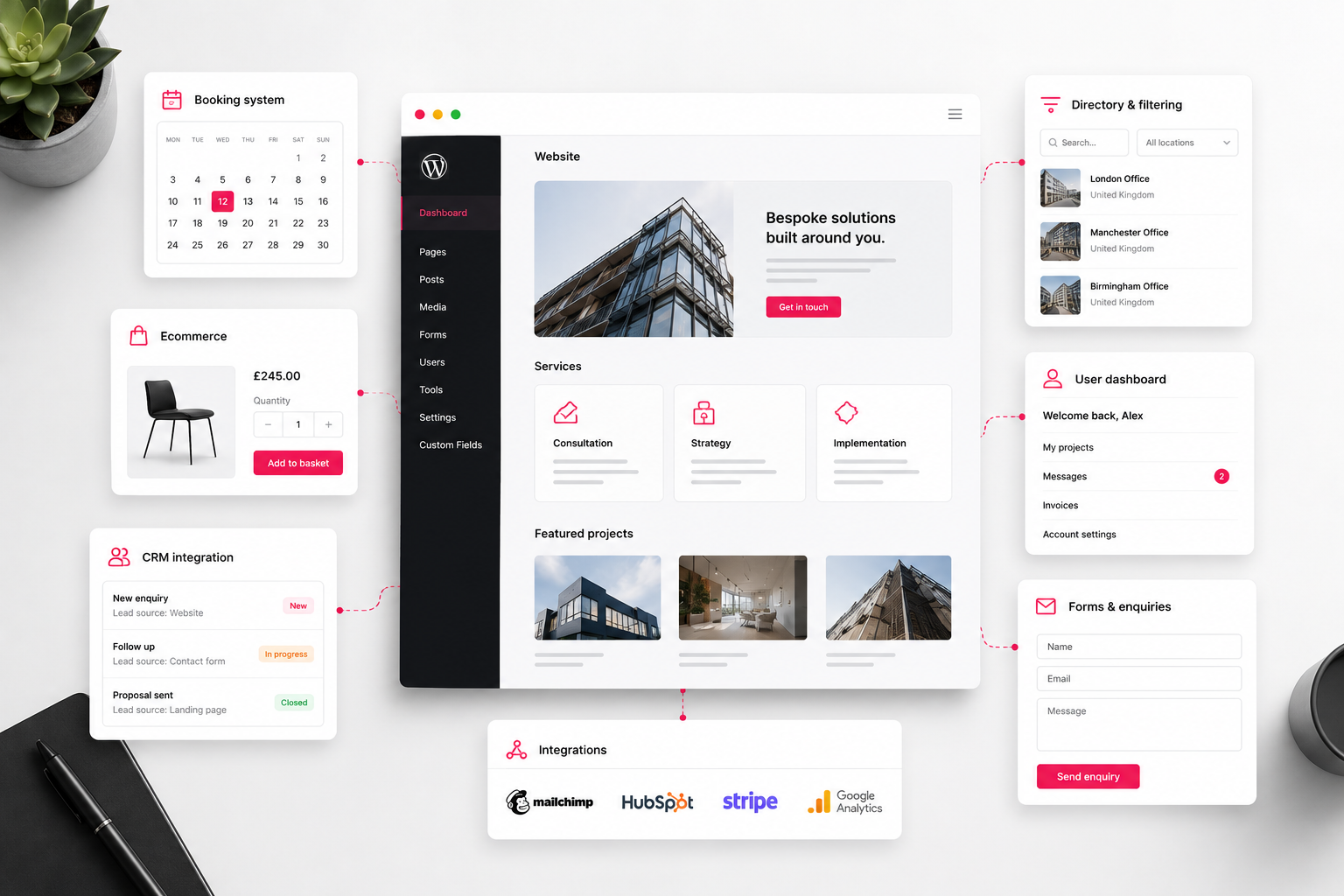
Custom functionality can be shaped around your business goals, users and workflows
This is where custom development becomes more than a visual choice. It gives the website the ability to support real business processes, rather than relying on a theme or plugin setup that only partly fits.
What Affects the Cost of a Custom Website
The cost of a custom website depends on the size, complexity and functionality of the project. A smaller custom website with a few page templates usually costs less than a larger site with ecommerce, booking tools, integrations, advanced content structures or custom user journeys.
The biggest cost factors are usually the number of unique page designs, the level of UX planning, the amount of content support required, the complexity of the CMS, and whether the site needs custom functionality beyond standard pages.
Custom sites cost more upfront than template websites because more thinking, design and development work happens before launch. The value is in creating a site with stronger structure, cleaner development, better flexibility and a longer useful life.
A lower-cost template can become expensive later if the site has to be rebuilt once the business needs better content, faster performance, stronger SEO pages or more advanced functionality. For many companies, the useful question is less about the cheapest way to launch a website and more about which approach will hold up as the business grows.
Choosing the Right Web Design Partner
With so many agencies offering custom website services, it helps to have clear selection criteria. The right partner should be able to explain how they plan, design and build tailored websites, not just show attractive visuals.
- A relevant portfolio: Look for a web design portfolio that shows strong design, clear structure and technical range across different sectors.
- Client reviews: Reviews help show whether the agency communicates clearly, handles projects properly and delivers what was agreed.
- A clear process: The agency should be able to explain how they move from discovery and planning through to design, development, testing and launch.
- Technical understanding: A good custom site needs more than visual design. The build needs to support performance, editing, SEO and future development.
- Commercial thinking: The agency should understand how the website will support enquiries, sales, bookings or content growth.
Be cautious if an agency describes a site as custom but cannot clearly explain what is tailored about the structure, design, CMS or development approach. Real custom work is designed around the business, not simply dressed up to look different.
Final Thoughts
Custom design is about building a website around the business, not forcing the business into a pre-made structure. It gives you more control over the design, content, user journey, functionality and long-term direction of the site.
For simple projects, a template may be enough. But if your website needs to generate enquiries, support detailed services, improve trust, scale with your business or integrate with other tools, a custom approach is often the stronger long-term choice.
Webpop Design provides bespoke website design services for businesses that need more than a standard template build. We create lightweight, performance-conscious websites with clear structure, considered design, flexible content management and practical functionality built around the way each business works.
If you are considering a custom website, the best next step is to discuss what your current site needs to do, where it is falling short and whether a custom build is the right fit for your goals
Frequently Asked Questions
What does bespoke website design mean?
Bespoke website design means creating a website around a specific business, audience and set of goals, rather than starting with a pre-made theme or template. The structure, design, content areas, user journeys and functionality are planned around what the site needs to achieve.
How is a custom-built website different from a template website?
A template website starts with an existing layout and adapts your content to fit it. A custom-built website starts with your business, your users and your goals, then creates the structure and design around them. This gives you more control over the user journey, content management, performance and future functionality.
Is a custom website worth it?
A custom website is usually worth it when your site plays an important role in generating enquiries, selling products, explaining services or supporting growth. It is less suited to very simple, low-budget or short-term websites where a template may be enough.
Can a WordPress website be custom-built?
Yes. A WordPress website can be custom-built if it uses a custom theme, custom page templates and a content management setup designed around the project. The important difference is that the website should not rely on an off-the-shelf theme with surface-level changes.
What affects the cost of a custom website?
The cost depends on the size, complexity and functionality of the website. A smaller custom website with a few page templates costs less than a larger site with ecommerce, booking tools, integrations, advanced content structures or custom user journeys. Custom websites cost more upfront than templates, but they usually offer more control, flexibility and long-term value.
How long does a custom website take to build?
The timescale depends on the scope of the project. A smaller custom website may take a few weeks, while a larger build with detailed design, content, functionality and testing can take several months. The process usually includes discovery, structure planning, design, development, testing and launch.
What are the main benefits of a custom-built website?
The main benefits are stronger brand presentation, clearer user journeys, better conversion paths, more flexible content management, improved performance potential and the ability to add custom functionality. A tailored website is also easier to scale as the business grows.
When is a template website enough?
A template website may be enough for a very small brochure site, a temporary landing page, an early-stage business or a project with limited functionality. Templates can be quicker and cheaper to launch, but they often become restrictive when the website needs to support more serious content, SEO, conversion or functionality.
What makes a website genuinely custom-built?
A genuinely custom-built website is planned from the ground up. The sitemap, page layouts, design system, CMS structure and functionality should all be created around the business. Simply changing colours, fonts and images on a pre-made theme does not make a website truly tailored.
What should you expect from a good bespoke website agency?
A bespoke website agency designs each project from scratch and builds it as a custom WordPress theme with flexible content management, custom page templates and practical functionality, rather than restyling an off-the-shelf theme. The focus should be on lightweight, performance-conscious websites that can be developed further over time.