
 Alan Carr
Bespoke web design gives your website a clearer purpose than simply looking different. It allows the structure, design, content and functionality to be planned around your business, your users and the actions you want people to take.
That matters because most business websites have to do more than present information. They may need to generate enquiries, support sales, explain complex services, build trust or connect with third-party tools.
Unlike template-based design, a bespoke website is not limited by a pre-made layout or a generic set of features. It gives you more control over how the site looks, works, performs and grows over time.
At a Glance: The Key Benefits of a Bespoke Website
Bespoke web design gives your business a website planned around your goals, users, content and functionality, rather than forcing everything into a pre-made template.
- Stronger brand presentation: the design, layout and content structure can reflect your business properly instead of relying on a generic theme.
- Clearer user journeys: pages can be planned around how visitors compare, trust, enquire, book or buy.
- Better SEO foundations: bespoke builds give more control over site structure, page speed, technical setup, internal linking and content hierarchy.
- More flexible functionality: the site can support custom features such as ecommerce, booking systems, dashboards, CRM integrations or structured service pages.
- Easier content management: a custom CMS setup can give your team flexible editing controls without the clutter of a bloated page builder.
- Long-term scalability: bespoke websites are easier to adapt as your services, content, marketing and business requirements grow.
- Better long-term value: the upfront cost is usually higher than a template, but the website is built around performance, ownership and long-term use.
Understanding Bespoke Web Design
Bespoke web design means creating a website around a business’s specific goals, users, content and functionality, rather than adapting everything to fit a generic template. The design, page structure, user journeys and editing controls are planned from the ground up.
This does not mean every element needs to be complicated. A good bespoke website should feel clear, focused and easy to use. The difference is that each part of the site has been planned properly, from the homepage structure and service pages through to forms, navigation, calls to action and content management.
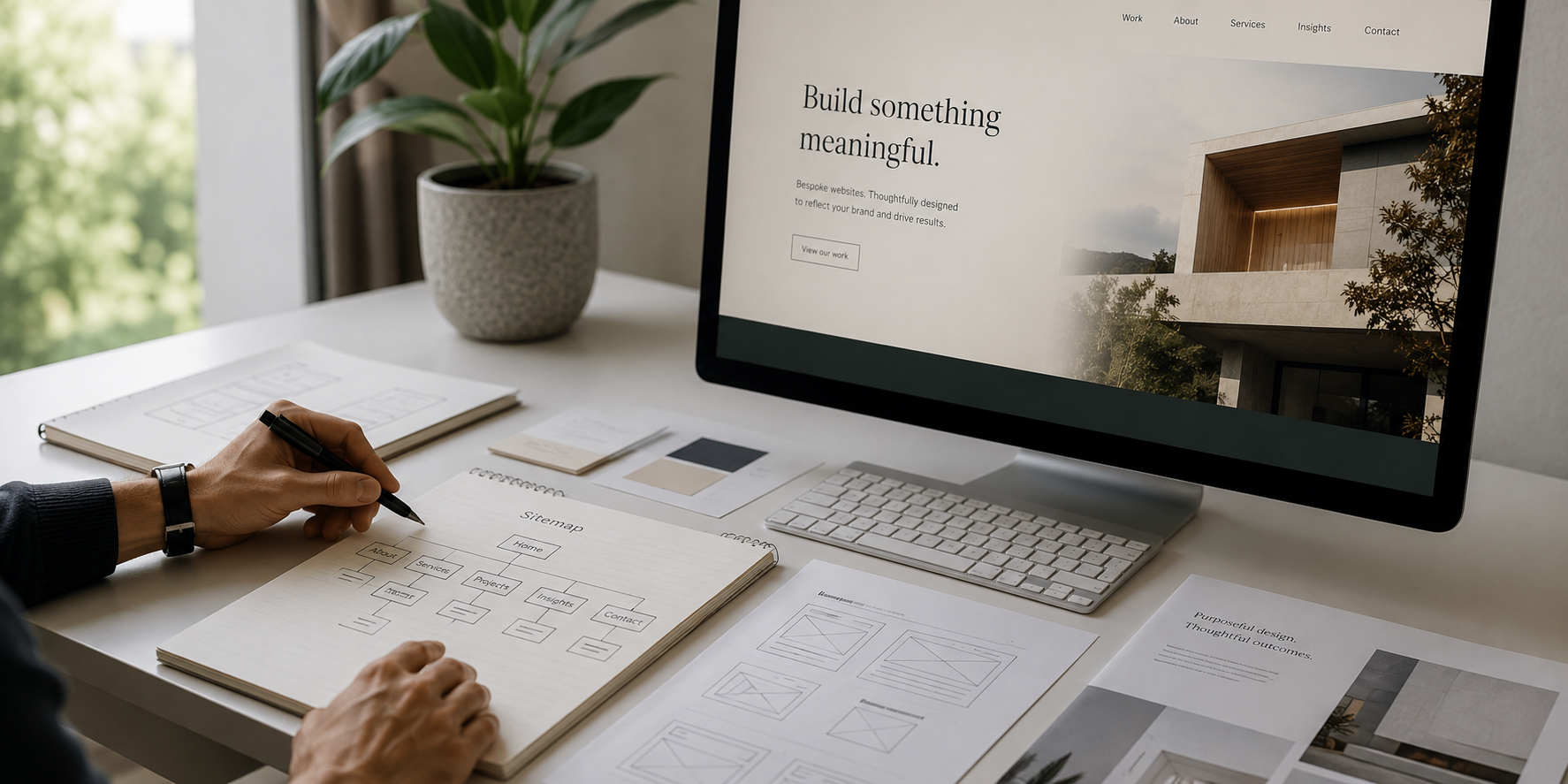
Planning structure, content and user journeys before website design begins.
The difference between custom website design and templates is usually clearest when a business has specific requirements. Templates can be useful for simple websites, tight budgets or early-stage ideas. Bespoke design becomes more valuable when the website needs to support brand trust, SEO, lead generation, ecommerce, custom functionality or long-term growth.
Bespoke Website Design vs Template Websites
One of the easiest ways to understand the benefits of bespoke web design is to compare it with a template website. A template can be a practical starting point, but it comes with limits. A bespoke website gives you more control over the parts of the site that affect brand perception, usability, search visibility and long-term flexibility.
| Area | Template Website | Bespoke Website |
|---|---|---|
| Design | Starts from a pre-made layout that may be used by many other businesses. | Designed around your brand, content, audience and commercial goals. |
| User Journey | Often shaped around the structure of the template. | Planned around how visitors compare, enquire, book or buy. |
| SEO | Can be optimised, but may be restricted by theme structure, code quality or layout limitations. | Gives more control over structure, speed, content hierarchy and technical SEO foundations. |
| Functionality | Usually depends on existing theme features or third-party plugins. | Can include custom functionality, integrations and workflows built around the business. |
| Content Management | Can become cluttered or restrictive, especially with page builders and unused theme options. | Can be set up around the content your team needs to manage. |
| Scalability | May become harder to adapt as requirements become more specific. | Can be structured to support future services, landing pages, ecommerce, content areas or integrations. |
| Cost | Usually cheaper upfront. | Usually higher upfront, but often stronger value when the website has an important business role. |
Why Bespoke Web Design Delivers Stronger Benefits
The main benefit of bespoke web design is control. You start with the business case for the website, then shape the design and build around it, instead of working backwards from a ready-made theme.
That control affects almost every part of the finished site. It shapes how the brand is presented, how content is structured, how users move through the site and how easily your team can manage it.
For established businesses, this can make the website much more useful. Instead of acting as a brochure, the site can become a commercial tool that explains your offer and supports the wider sales or marketing process.
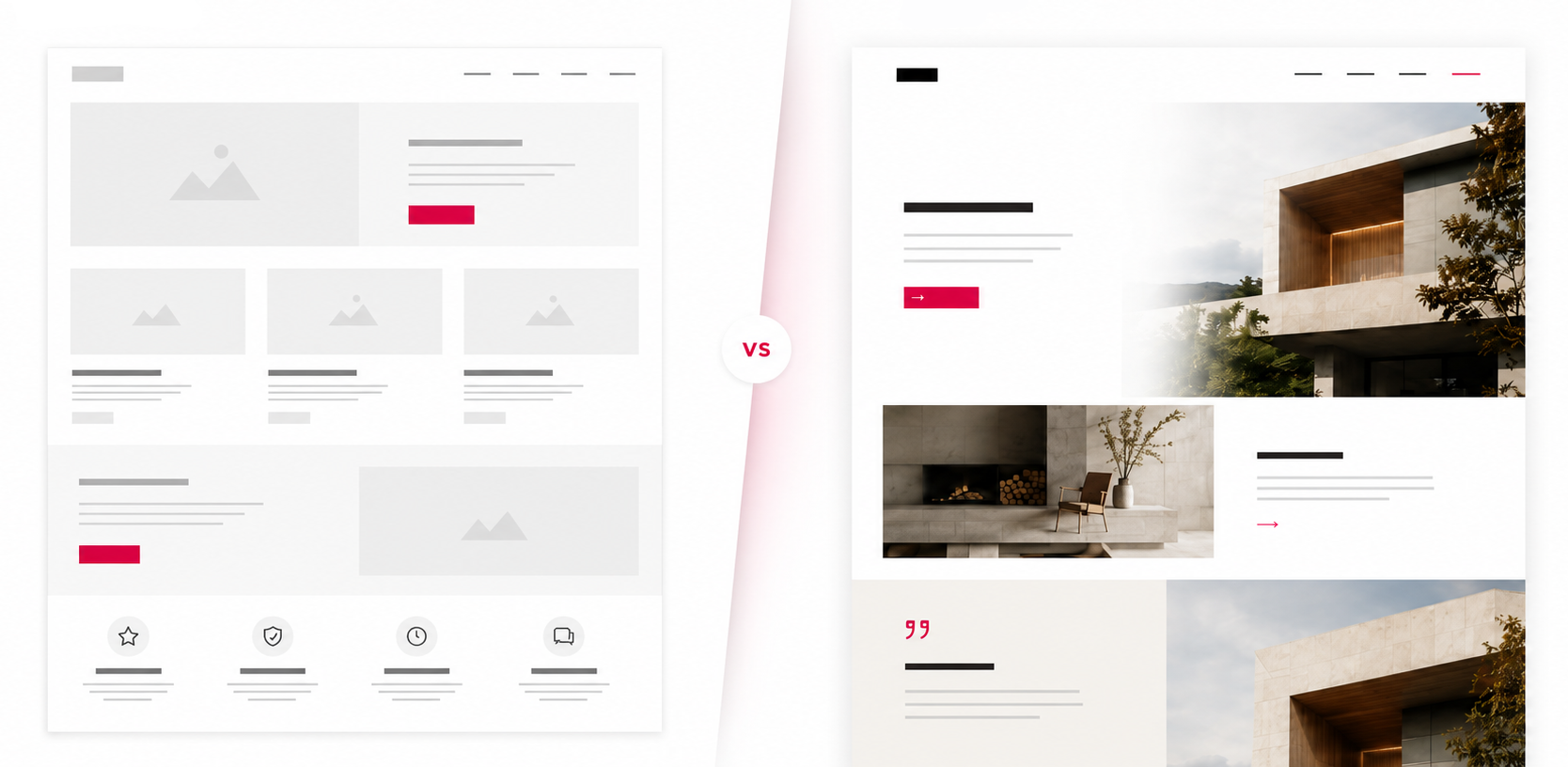
A visual comparison of template limitations and bespoke design flexibility.
Brand Presentation & Trust
A bespoke website gives your brand more room to feel distinct. The layout, typography, imagery, spacing, page flow and content hierarchy can all be designed around how your business should be perceived.
This is especially important for companies where trust matters. A professional services firm, manufacturer, healthcare provider, ecommerce brand or B2B supplier often needs more than a tidy-looking website. The site needs to communicate credibility and quality within the first few seconds.
Templates can look the part, but they often carry the same patterns and compromises as thousands of other websites. Bespoke design allows the site to feel more specific to the business, without relying on overused layouts or generic visual choices.
Clearer User Journeys & Conversion Paths
Bespoke web design shapes more than appearance. It helps users find the right information and take the right next step.
A bespoke site can be planned around the way your customers make decisions. That might mean clearer service pages, better comparison content, simpler booking paths or forms that collect the right information without creating friction.
Bespoke design can directly support conversion here. The website can be built around specific actions such as enquiries, bookings, quote requests or consultation calls. Instead of placing a generic button on every page, the user journey can be shaped around context and intent.
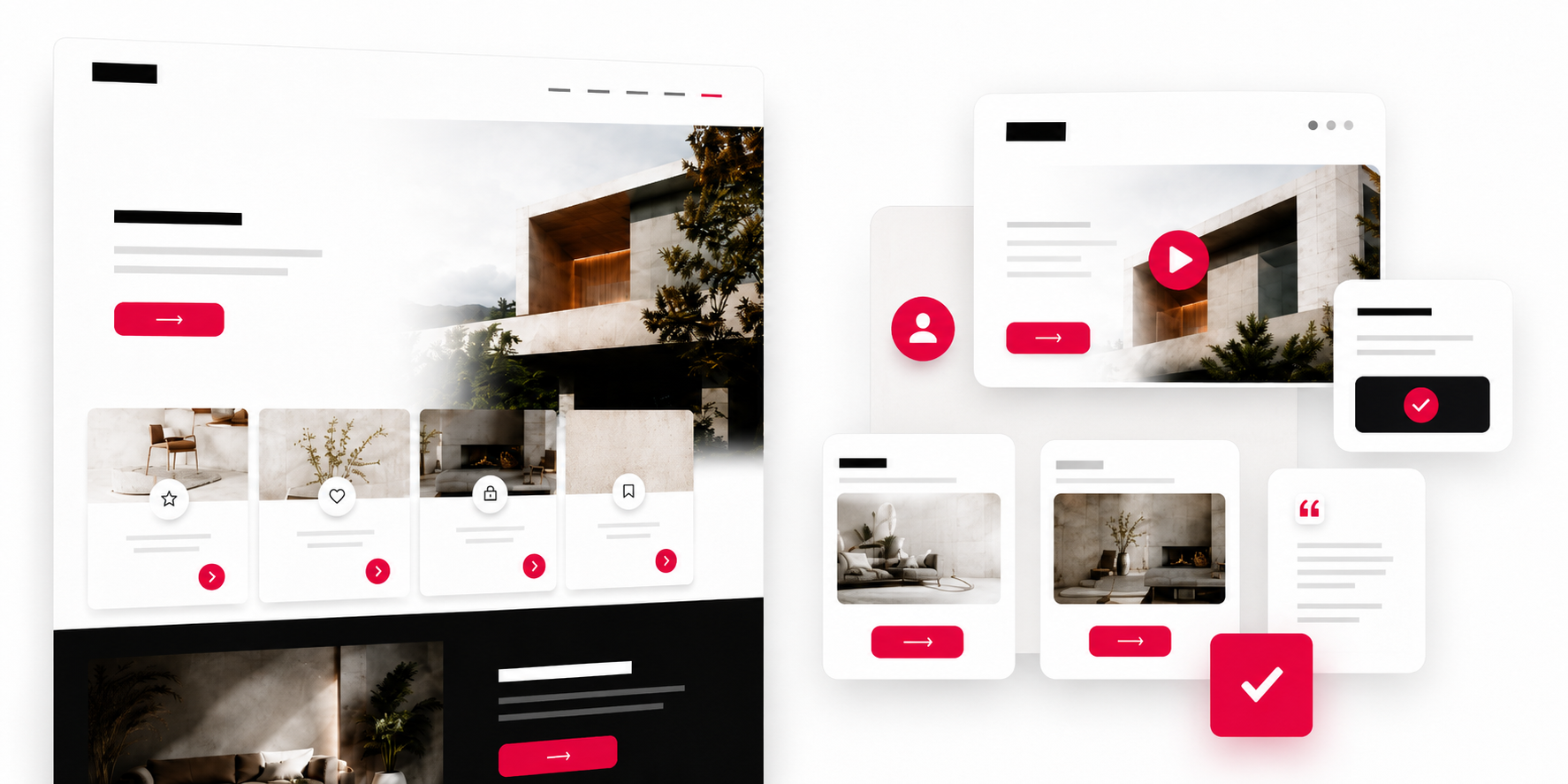
Clearer user journeys help turn visitors into enquiries, bookings or sales.
Better SEO Foundations
Bespoke web design can give you stronger control over the technical and structural parts of SEO. That includes page structure, internal linking, heading hierarchy, page speed and how easily new content can be added over time.
Bespoke design does not automatically guarantee better rankings, but it gives you a stronger foundation to build on. A clean, well-structured website makes it easier to support search visibility, improve usability and create content that matches how people search.
SEO is about more than keywords. Google also needs to understand the structure of the site, users need to move through it easily, and your team needs the flexibility to add useful content without fighting the CMS.
For Webpop Design, this is one of the reasons we often build custom WordPress themes rather than relying on off-the-shelf page builders. A bespoke WordPress setup can give clients flexible editing control while keeping the front-end cleaner, lighter and more focused.
More Flexible Content Management
A bespoke website should not leave your team dependent on a developer for every small content update. The editing experience can be planned around the type of content your business manages.
For example, a service business may need flexible service page sections, case study layouts, team profiles, FAQs, testimonials and landing page blocks. An ecommerce business may need stronger product content, buying guides and category page controls. A B2B company may need document areas, resource libraries, technical content or structured sector pages.
At Webpop Design, many bespoke WordPress builds use Advanced Custom Fields, and in particular its flexible content field. Instead of giving editors a blank canvas, we build a set of predefined section types for each project, a hero, a text and image block, a stats row, an FAQ accordion and so on, and the client composes pages by adding and reordering those sections. Each one is coded to render inside the site’s design system, so the markup and styling stay under our control.
We prefer this to a page builder for client sites because it keeps the editing experience simple and hard to break. A page builder offers near-unlimited freedom, but that freedom is usually how a site drifts off-brand and slows down under shortcode bloat. With ACF, the front end stays lightweight and the content stays structured, while the client still gets real control over what goes on each page. The trade-off is that the sections have to be built up front, so it suits businesses that want to manage content within a defined design rather than redesign pages themselves.
Custom Functionality That Fits the Business
One of the biggest benefits of bespoke web design is the ability to build functionality around the business, rather than adapting the business around a plugin or template.
That might include booking systems, ecommerce functionality, member areas, dashboards, CRM integrations or custom workflows. Not every bespoke website needs complex functionality, but the option is there when the business case supports it.
Bespoke design often becomes more valuable here over time. A template may be fine for a simple brochure site, but it can become restrictive when the website needs to connect with other systems, handle more complex content or support a more specific user journey.
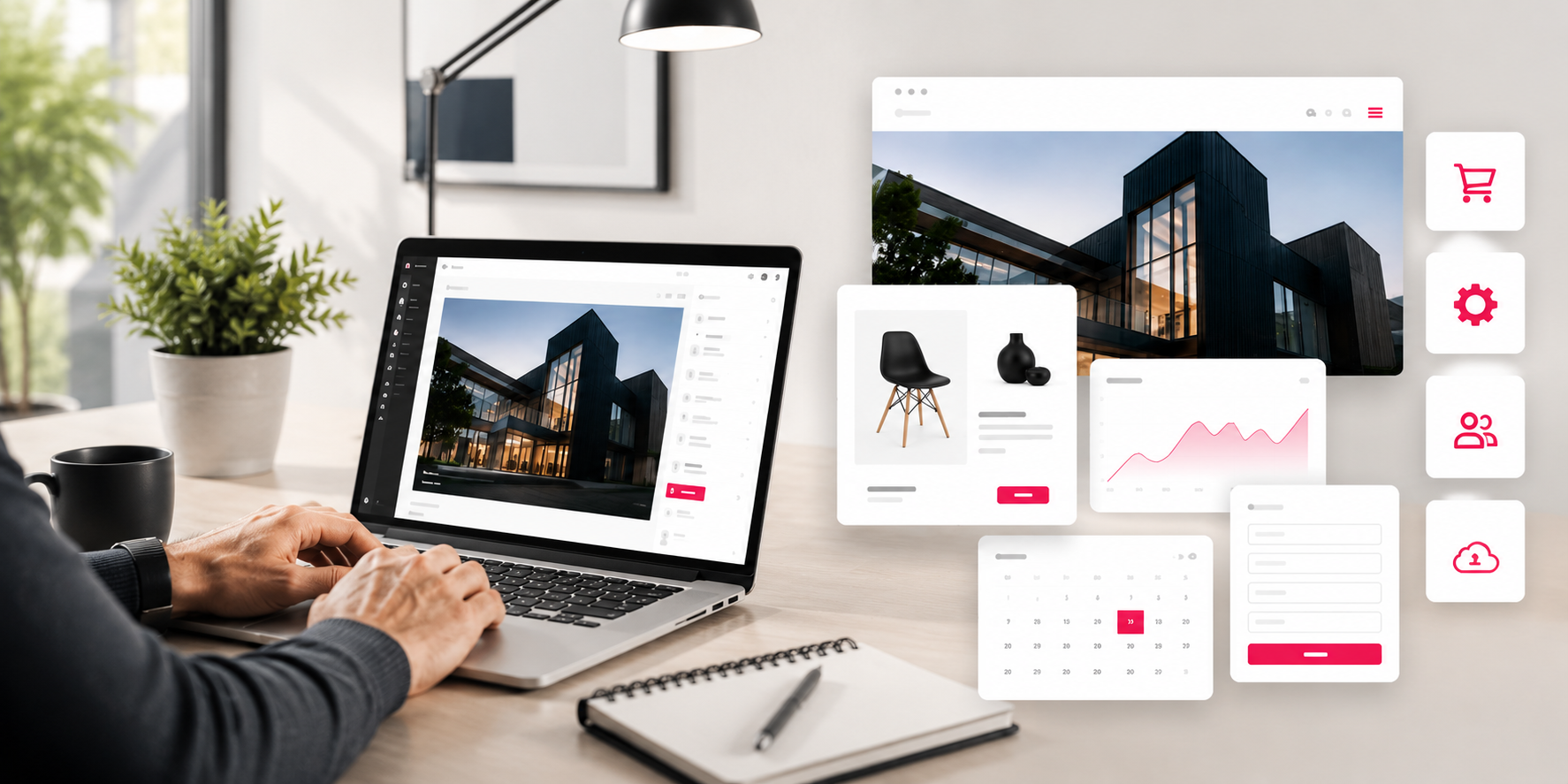
Bespoke websites can support tailored functionality, integrations and content tools.
Stronger Performance Potential
Website performance affects user experience, SEO and conversion. A slow or heavy website frustrates users and weakens trust, especially on mobile.
Bespoke design gives developers more control over how the site is built. Instead of loading unnecessary theme features, unused scripts or excessive plugin code, the website can be developed around the features it needs.
This does not mean every bespoke website is automatically fast. Performance still depends on good planning, development, hosting, images and ongoing maintenance. But a custom build gives you a better starting point because the site is not carrying as much unnecessary weight from a generic theme.
Greater Scalability Over Time
Services expand, teams grow and content needs become more complex over time. A bespoke website can be built with that movement in mind.
Scalability might mean adding landing pages, introducing ecommerce, connecting new systems or creating new content types. With a well-planned bespoke build, these changes are usually easier to manage because the site has been structured around flexibility from the start.
This is one of the main reasons bespoke websites can offer better long-term value. The initial investment is usually higher than a template, but the site is less likely to feel boxed in as your business develops.
What the Benefits Look Like in Practice
The practical benefits of bespoke web design depend on what the website needs to achieve. For a lead generation website, the value might come from clearer service pages and stronger enquiry forms. For an ecommerce business, it may come from better product discovery and a more confident buying journey.
For a technical or B2B business, bespoke design can make detailed information easier to explain. Product ranges, specifications, downloads, sectors and support content can all be structured so users find what they need without being overwhelmed.
Two of our projects show how this works. Cygnus Instruments manufactures ultrasonic thickness gauges for marine and industrial inspection, sold through a network of international distributors. We redesigned their existing WordPress site and built a WooCommerce platform around it, with a distributor portal and a tailored online quoting system, so a technical product range and a B2B sales process could be managed in one place rather than forced through a standard shop template. We have continued to support and develop the site since launch.
For Chevler, a food packaging business selling to the trade, the priority was different. We modernised their WordPress site around a clearer structure, with a stronger product showcase and a more direct enquiry route for trade buyers moving from browsing to contact.
In both cases, bespoke design made detailed content easier to navigate and easier for the client to manage after launch.
When a Template Website May Be Enough
Bespoke web design is not always the right answer. A template website can be a sensible choice for a very small business, a temporary landing page, an early-stage idea or a project with a limited budget and simple requirements.
If the website only needs to present basic information, has no unusual functionality and is not expected to play a major role in lead generation or sales, a template may be enough. In those cases, speed and cost can matter more than flexibility or originality.
The problem usually appears when a business outgrows the template. The design starts to feel restrictive, the content becomes difficult to organise, performance suffers, plugins stack up and the site becomes harder to adapt. At that point, moving to a bespoke website can make more commercial sense.
What to Expect From the Bespoke Web Design Process
Creating a custom website follows a structured process. That structure helps turn ideas into a website built around clear business goals.
The early stages should focus on understanding the business, audience, content, competitors, user journeys and required functionality. This is where the shape of the website starts to become clear. Before design begins, it should be obvious what the site needs to achieve and how users are expected to move through it.
A typical bespoke web design process should include:
- An initial consultation to understand your business, audience, goals and required functionality
- Research into your competitors, market and customer journey
- Planning the site structure, user flows and key conversion points
- Wireframes or early concepts to map out page layouts and content priorities
- Custom design work based on your branding, messaging and objectives
- Front-end and back-end development to build the required functionality
- Flexible CMS planning so your team can manage content properly
- Feedback and revision stages to improve the site before launch
- Testing across devices, browsers and screen sizes
- Checks on performance, SEO foundations and accessibility
- A smooth launch process with final reviews and post-launch support
At Webpop Design, bespoke projects usually begin in Figma before moving into custom development. That allows the structure, design direction and user experience to be worked out before the site is built.
For many clients, the development stage then turns those designs into a custom WordPress theme with flexible content controls. This gives the website a bespoke front-end while still keeping the CMS practical for day-to-day editing.

The right agency helps shape a website that works well long term.
Why Choosing the Right Bespoke Web Design Agency Matters
Bespoke web design gives you more freedom than a template, but the quality of the final website still depends on the team behind it. The right agency should understand design, UX, content structure, SEO foundations, development and the commercial role of the website.
A strong agency will not treat bespoke design as decoration. It should look at what the website needs to do, who it needs to serve and how it can support the business after launch. That means balancing visual quality with usability, performance, content management and conversion.
Experience also matters because bespoke websites often involve decisions that affect the site for years. Poor structure, weak CMS planning or unnecessary technical complexity can make a custom website harder to manage than it needs to be.
Webpop Design has been designing and building bespoke websites for 18 years. Our work often combines Figma-led design, custom WordPress development, ACF flexible content and tailored functionality for businesses that need more control than a standard template can offer.
Evaluating Your Need for a Bespoke Website
Deciding whether to invest in a custom website comes down to what your business needs the site to do. If the website helps generate leads, support sales, explain services, build trust or improve customer experience, a tailored approach often makes more sense.
Businesses with specific functionality needs, strong brand requirements, complex content or clear growth plans usually gain more value from custom web design than from an off-the-shelf template.
It also helps to think beyond the initial build. A bespoke website often costs more upfront, but it gives you greater control over performance, scalability, content management and alignment with your wider commercial goals. That extra control can make a real difference when your website plays a central role in attracting and converting customers.
The right web design team can help you weigh these priorities and decide whether a fully tailored build is the best fit. If your website needs to do more than exist online, a custom build can give you stronger long-term value and a platform that supports the business properly.
Do I Need a Bespoke Website Checklist?
- Does your website need to generate serious enquiries, bookings, sales or leads?
- Do you need a stronger brand presentation than a template can offer?
- Does your site need custom functionality, integrations or structured content?
- Are you planning to grow your content, services, locations or ecommerce offer?
- Do users need a clearer journey before they enquire, book or buy?
- Is your current website difficult to edit, slow, restrictive or hard to improve?
- Would better UX, SEO foundations and conversion paths create long-term value?
Is Bespoke Web Design the Right Choice for Your Business?
Bespoke web design is about more than looking different. It shapes the site around how your business works, how your customers make decisions and what it needs to achieve.
For some businesses, a template will be enough. For others, the website is too important to be shaped by pre-made layouts, limited editing controls or generic functionality.
If your website plays a key role in generating leads, sales, trust or customer engagement, bespoke design can give you the control needed to make the site more useful. It can improve brand presentation, user journeys, SEO foundations and long-term scalability.
Working with a London web design agency that specialises in bespoke design means planning, designing and building the website around your objectives from the start. Instead of forcing your business into a template, you shape the site around what your users need and how your business is likely to grow.
If you are considering a bespoke website, submit our project planner and we will help you map out the right approach for your business.
Frequently Asked Questions
What is bespoke web design?
Bespoke web design means creating a website around your business goals and users, instead of using a generic template. It gives you more control over layout, functionality, and user experience, making it a better fit for businesses that need a tailored experience. For a deeper explanation, read our what is bespoke web design guide.
What are the main benefits of bespoke web design?
The main benefits of bespoke web design are stronger brand presentation, clearer user journeys, better SEO foundations, more flexible functionality, easier content management and greater room to grow over time. A bespoke website gives you more control than a template because the structure, design and build are planned around your business.
Is bespoke web design better than a template website?
Bespoke web design is usually better when your website needs to generate leads, support sales, build trust, explain detailed services or include custom functionality. A template website can still be a sensible choice for simple projects, early-stage ideas or smaller budgets where speed and cost matter more than flexibility.
How does bespoke web design help SEO?
Bespoke web design can help SEO by giving you more control over site structure, page speed, heading hierarchy, internal linking, mobile usability and content layouts. It does not guarantee rankings on its own, but it creates a stronger foundation for long-term organic search performance.
Can a bespoke website improve conversions?
Yes, a bespoke website can improve conversions when it is planned around how users make decisions. Pages can be structured to guide visitors towards enquiries, bookings, purchases, downloads or consultation requests, with clearer calls to action and less friction in the user journey.
Is a bespoke website more expensive?
A bespoke website usually costs more upfront than a template because it involves planning, original design, custom development, testing and a more deliberate content structure. The long-term value can be stronger when the website plays an important role in lead generation, sales, customer trust or business growth.
Can a WordPress website be bespoke?
Yes, a WordPress website can be fully bespoke. At Webpop Design, many custom websites are built as bespoke WordPress themes, often using flexible content fields so clients can manage pages properly without relying on a bloated off-the-shelf theme or heavy page builder.
How long does a bespoke website take to build?
The timeline depends on the size of the website, the complexity of the design and the functionality required. Many bespoke websites take around 8 to 12 weeks from planning through to launch, while larger projects with ecommerce, integrations or custom systems can take longer.
How do I know if my business needs a bespoke website?
Your business may need a bespoke website if your current site feels restrictive, performs poorly, is difficult to edit or no longer supports your goals. Bespoke design is often the stronger choice when your website needs to do more than present basic information, such as generating enquiries, supporting sales or managing complex content.