
 Webpop Design Marketing Team
When a car dealer website underperforms, it is rarely because the design is not flashy enough. More often, it is because the site makes buying feel harder than it should. Stock is frustrating to browse, vehicle pages do not answer obvious questions, and the next step is unclear.
The best-performing dealer sites are fast and easy to act on. They help shoppers narrow their options quickly, build trust without shouting, and make it easy to enquire, call, book a viewing or take the next step. Your team then gets better enquiries and wastes less time chasing vague leads.
This guide covers the car dealership website features that make the biggest difference to enquiries, lead quality and sales workflow. It is written for real-world dealers, traders, showrooms, garages and workshops, whether you are improving an existing site or planning a more bespoke car dealer web design project.
The Features That Make Dealer Websites Sell
- Fast stock browsing: Your stock pages need to load fast and stay easy to search on mobile.
- High-converting vehicle pages: Each vehicle page should answer buyer questions quickly, with clear pricing, key specs, strong photos and visible enquiry options.
- Low-friction sales journeys: Finance, part exchange, test drive and reserve journeys should remove hesitation rather than add extra steps.
- Trust at decision points: Reviews, warranty details, MOT information and policies should appear close to the places where buyers make decisions.
- Useful lead context: Stock feeds, CRM, call tracking and enquiry forms should pass useful context to your team, not just names and phone numbers.
- Built around sales workflow: The best dealer websites earn their keep through buyer confidence, lead quality and smoother day-to-day operations, not surface-level design.
Car Dealer Website Features Checklist
Use this to sanity-check your site. You do not need every feature on day one, but the fundamentals have to be strong.
- Fast stock browsing that works properly on mobile
- Useful filters that match how people actually shop
- Strong vehicle detail pages with clear CTAs and key information above the fold
- Finance support that feels transparent and easy to understand
- Test drive or viewing requests that capture the right details
- Part-exchange / sell your car capture to remove hesitation and generate inbound stock
- Trust signals placed near decision points, not hidden in the footer
- Lead routing and spam protection so your team is not swamped with poor-quality enquiries
- Tracking for calls, forms, WhatsApp, bookings and finance actions
Dealer Website Scorecard: Where You’re Losing Leads
To improve results quickly, you first have to see what is holding you back. Use this scorecard and be honest. Most dealers find two or three hidden friction points that are easy to fix once they are visible.
- Stock page speed on mobile: does it feel instant, or does it feel slow?
- Filter usability: can a buyer narrow to the right cars in under 15 seconds?
- VDP clarity: can you see price, mileage and a clear CTA without scrolling?
- Photo quality and load speed: do images load cleanly without jumping the page?
- Finance confidence: can buyers get a realistic idea of monthly cost quickly?
- Lead friction: can someone enquire in under 30 seconds on mobile?
- Lead quality: do enquiries arrive with the vehicle reference and useful context?
- Trust proof: are reviews, warranty details and policies visible near decision points?
- Tracking: are calls and key actions measured, or are you guessing?
If you scored poorly on any of the above, that is useful. These are usually high-impact fixes, because they affect the moments where buyers decide whether to continue, enquire or leave.
If your stock pages, vehicle detail pages or enquiry flow are costing you leads, Webpop Design can review the weak points and recommend practical fixes across speed, structure, lead capture, tracking and conversion.
Fast Stock Listings That Keep Buyers Browsing
Most buyers start with your stock list, not your homepage. Stock performance therefore does more to win or lose enquiries than anything else on the site. If your listings page is slow, heavy or awkward on mobile, shoppers will bounce back to marketplaces.
Speed is part of usability. So is stability. Pages should not jump around while images load, and filters should not feel like they hang when the user taps them. Even small delays make buyers hesitate, especially on mobile.
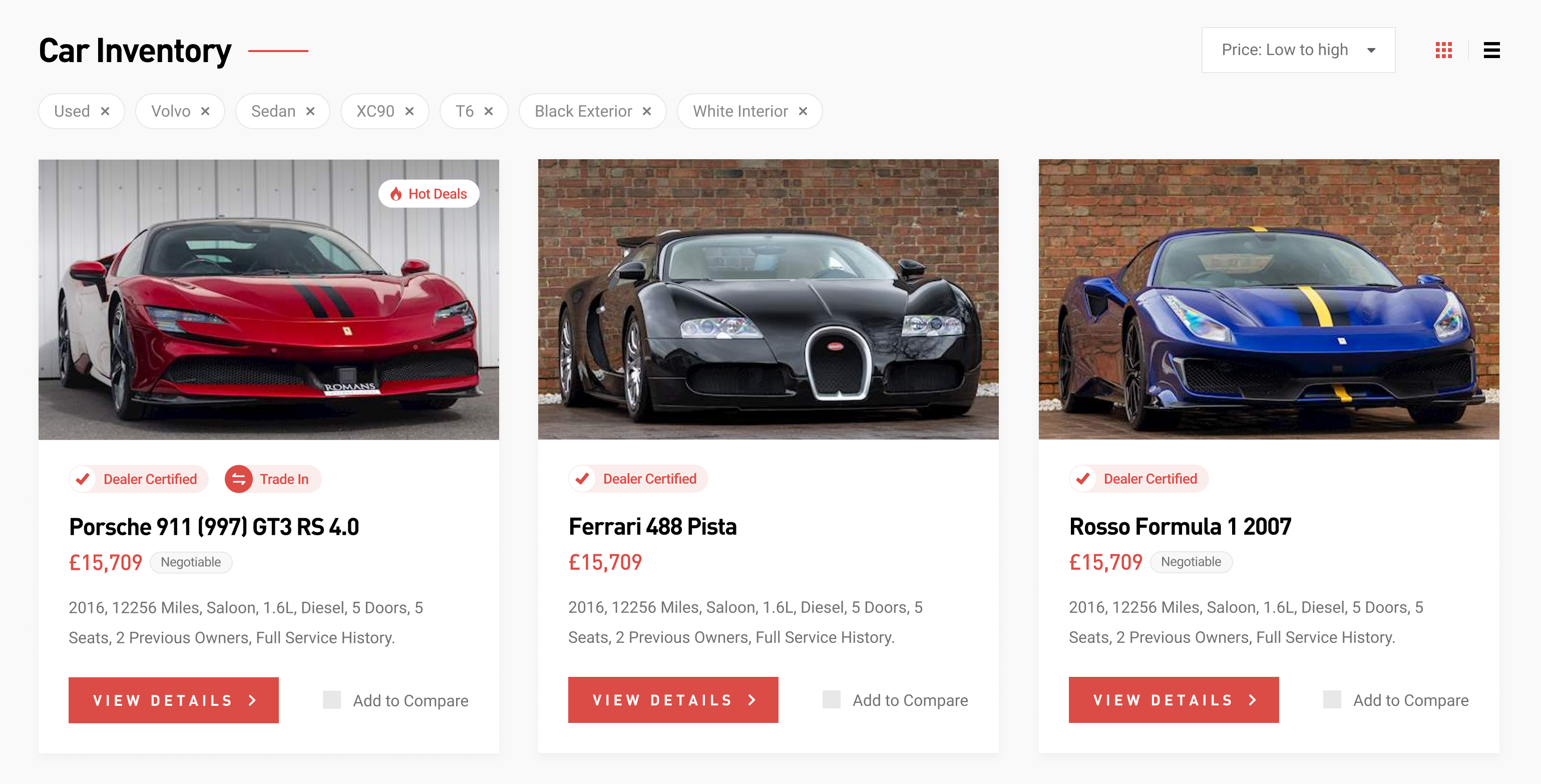
Silicon Motors inventory page showing how stock cards, filters and sorting help buyers compare vehicles quickly.
Filters Buyers Actually Use
Good filtering lets buyers cut a long list down to the few cars worth considering, which keeps them on your site rather than back on a marketplace. It also gives shoppers a sense of control, which matters when they are comparing several dealers at once.
Start with the non-negotiables:
- Make, model, price range, mileage and year
- Fuel type, transmission and body type
- Location or distance, especially if you serve multiple areas
Then add decision filters for your audience:
- ULEZ compliant, where relevant
- EV range and charging type for electric stock
- Insurance group for younger buyers
- Feature tags people actually care about, such as CarPlay, heated seats and parking sensors
Keep filters easy to use on mobile. Buyers should be able to clear and adjust filters without losing their place. It sounds basic, but many dealer sites still get this wrong.
Vehicle Pages That Turn Clicks into Enquiries
Your vehicle detail page is where a buyer decides whether the car feels worth pursuing. By this point, they have already shown interest. Now they need enough information to feel confident, compare the vehicle properly and take the next step without hesitation.
Too many dealer websites treat the vehicle page like a basic spec sheet: a few images, a price, a long list of details and a generic enquiry button. That is not enough for a serious buyer who may be comparing several cars across your website, Auto Trader, Google and other dealer sites.
A strong vehicle detail page works like a sales conversation. It shows the price, mileage, key specs, condition, service history, finance options, trust signals and enquiry routes in a clear order, then answers the obvious questions before the buyer has to ask them.
Overloading the page is not the aim. Removing the reasons a buyer hesitates is. When the page feels complete and easy to act on, more buyers call, enquire, book a viewing, request finance or reserve.
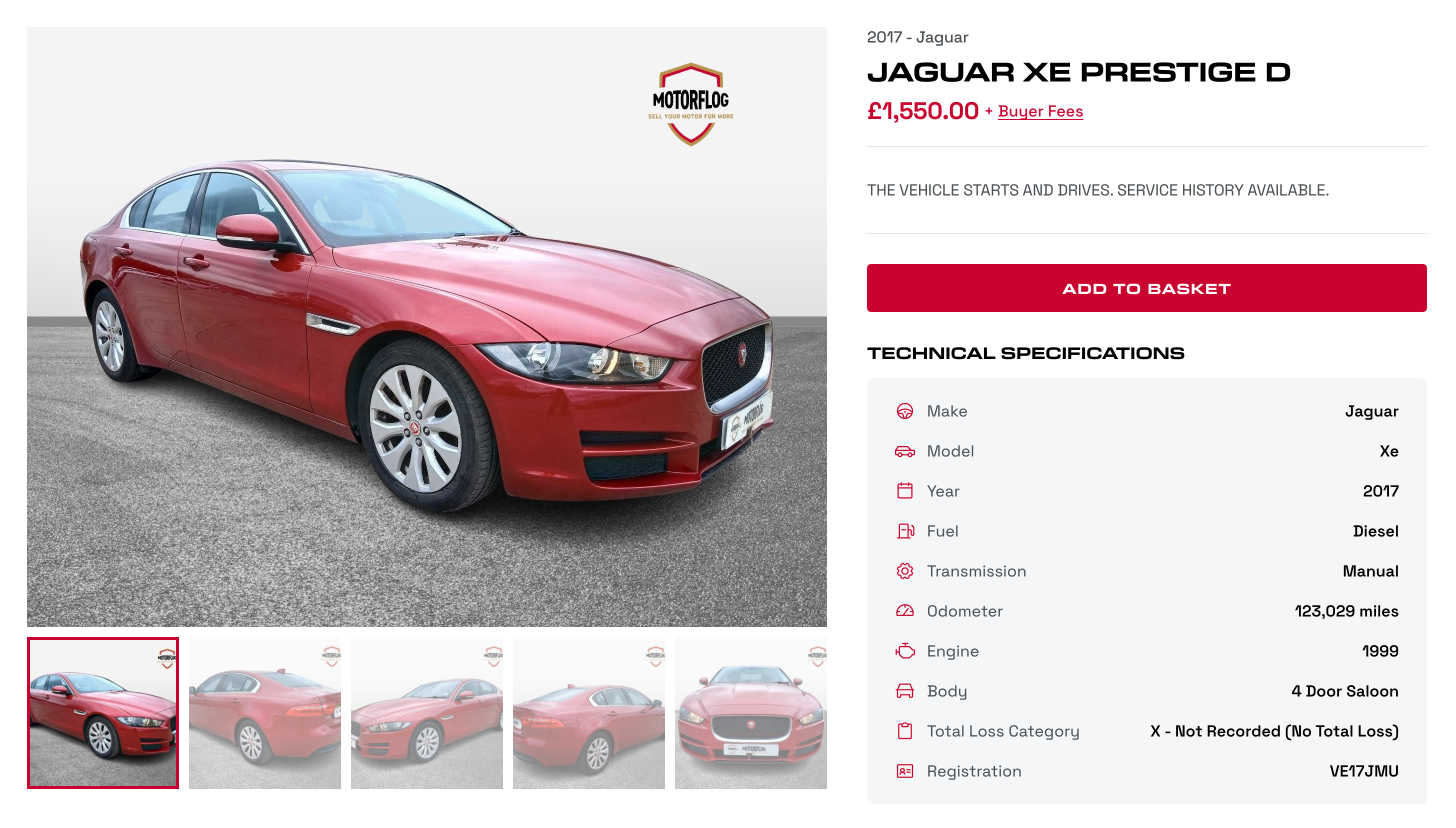
A vehicle page from our client Motorflog showing how clear imagery, pricing and specs help buyers assess a car quickly.
Stock Feeds & DMS: Keep Listings Accurate
If your vehicles are imported from a dealer management system, stock feed or third-party inventory tool, accuracy becomes a core website feature. Out-of-date listings create wasted calls, poor reviews and lower trust. Worse, they generate unqualified enquiries your team cannot convert.
A dependable feed workflow usually comes down to a few practical rules. Make sure sold and reserved statuses sync quickly, ideally the same day. Keep one consistent stock reference that appears on the vehicle page and in every enquiry, so your team can find the car instantly.
What a strong inventory setup typically includes:
- Automatic updates for price changes, availability, mileage and key spec fields
- Image handling that avoids broken galleries and duplicate photos
- Clear fallbacks when the feed is missing data, so the page still looks professional
- Data consistency checks that flag unusual values before they go live
For Motorflog, we built that accuracy on live UK vehicle data APIs. A number plate lookup pulls specs, MOT history and key details straight from source, so a listing populates from verified data rather than manual entry and stays correct as the record changes. It removes the slow drift between forecourt and website that turns into wasted calls and lost trust.
Protect your SEO and analytics by giving every vehicle one canonical URL. If the same car can be reached from multiple URLs, such as filters, categories or duplicate imports, ranking signals become diluted and tracking becomes unreliable. A single clean URL per vehicle keeps reporting cleaner and makes your vehicle inventory website easier to manage.
VDP Checklist: The Sections That Lift Conversions
Use this as a practical blueprint. You can compare it to your current vehicle pages and quickly see what is missing.
- Hero area: title, price, key specs, main CTA and a clear contact alternative, such as call or WhatsApp
- Photo gallery: fast-loading images with clear navigation and consistent shot order
- Highlights: a short “why this car” summary before the detailed spec list
- Key features: a scannable list of the options people actually search for
- History and condition: service history, MOT information, warranty or inspection notes and honest condition details
- Finance block: visible, adjustable examples, including deposit and term, plus a finance enquiry CTA
- Confidence proof: reviews, dealer promises, delivery or collection information and policies near CTAs
- Next steps: book viewing, test drive, reserve or enquire, repeated at logical points
- Mobile usability: sticky CTA and click-to-call options that stay accessible while scrolling
Above the Fold: Price, Key Specs & a Clear Next Step
Buyers should immediately understand what the car is, what it costs and what they can do next. If they have to scroll for price, mileage or enquiry options, you are creating hesitation. This is why above-the-fold content matters so much on vehicle detail pages.
- Clear title with year, model and trim
- Visible price and any important pricing notes
- Key spec strip covering mileage, fuel, transmission and engine
- Primary CTA such as enquire, book viewing or reserve
- Secondary CTA such as call or WhatsApp for buyers who want instant contact
- Mobile sticky CTA so action is always within reach
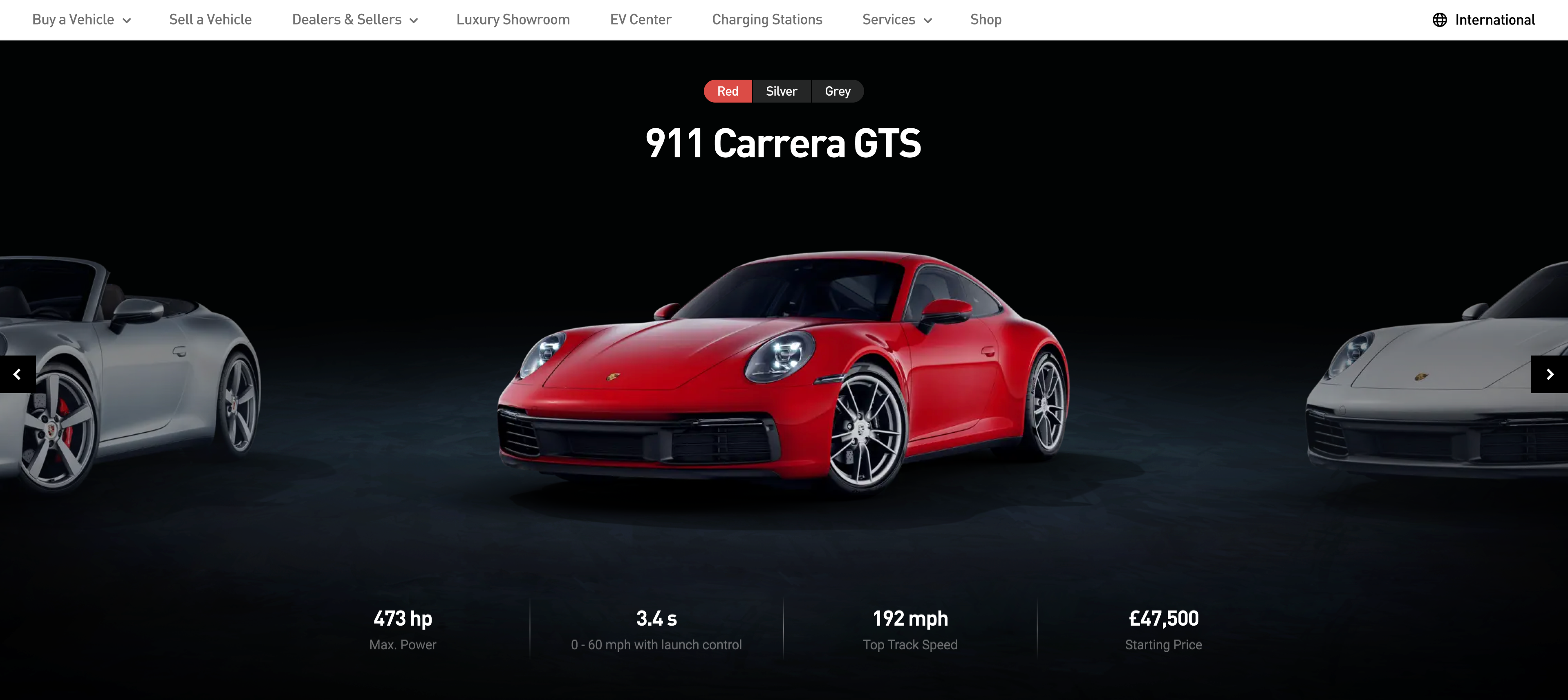
Silicon Motors above-the-fold layout showing how vehicle imagery, key stats and price can orient buyers quickly.
Photos, Video & 360: Set a Consistent Standard
Photos are one of your strongest trust signals. The best dealer sites do not just have lots of images. They have a consistent standard, so every vehicle feels professionally presented. Consistency also reduces disputes, because buyers can see what they are getting.
A practical photo set that works for most UK dealers:
- Front 3/4, side profile, rear 3/4, rear and wheels/tyres
- Front seats, rear seats, boot, dashboard and infotainment
- Close-ups of key features such as CarPlay, cameras, heated seats and parking sensors
- Honest close-ups of any marks or damage, as clarity reduces arguments later
Keep angles and lighting consistent where you can. Also make sure images are compressed properly, so the page stays fast on mobile. A beautiful gallery that loads slowly still loses sales.
Video earns its place on higher-value and enthusiast stock, where buyers want reassurance before travelling. A short walkaround shows condition and interior detail in a way photos cannot, which is exactly the reassurance a distant buyer needs before committing to the drive.
360 is worth it only if your team can produce it on every car. A handful of 360 listings among hundreds of flat ones just makes the rest of your stock look unfinished. If you commit to it, keep it lightweight and test performance on mobile data.
Meet Marketplace Expectations on Your Own Site
Many shoppers bounce between your website and marketplaces. That means they bring marketplace expectations with them. If your vehicle pages feel less complete than what they are used to, confidence drops, even if your stock is strong.
To stay consistent with how buyers compare cars online, make sure every listing includes:
- Complete specs with the key fields filled in, not “N/A” everywhere
- Consistent photo order so buyers can scan quickly across multiple cars
- Clear pricing with obvious notes on fees, warranties and what is included
- Visible condition and history cues such as service history, MOT information and notable marks
- Fast removal of sold stock so buyers do not waste time enquiring on unavailable vehicles
Buyers arrive with marketplace-level expectations. When your listings feel as complete and predictable as the sites they came from, you get fewer time-wasting questions and more confident enquiries.
Finance Tools That Make Monthly Costs Feel Simple
Finance is often the deciding factor. If your site is vague, buyers assume it is expensive, complicated or unavailable. Clear finance examples and a simple next step reduce hesitation and increase enquiries.
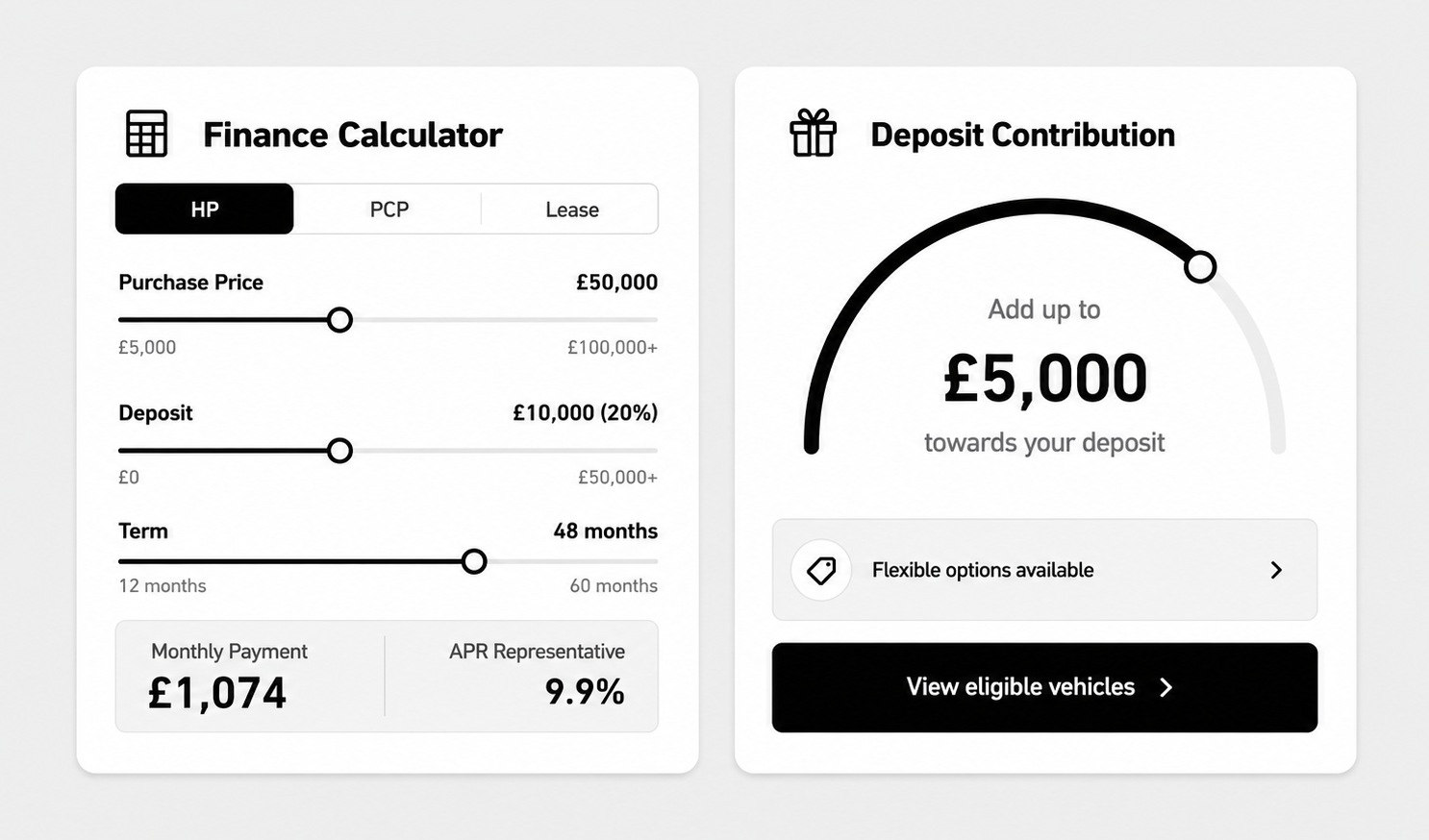
Finance tools can help buyers understand monthly costs, deposit options and affordability before they enquire.
- Simple calculator buyers can trust, with deposit, term and a clear estimate
- Vehicle-linked finance enquiry so leads arrive with full context
- Clear “what happens next” messaging instead of a generic “contact us” instruction
Dealer Website Integrations That Improve Lead Quality
A dealer site does not need to be complex to work well. It needs reliable connections to the tools your dealership already uses, without a fragile setup that breaks after updates. Start with the essentials, then add extra automotive website features only when they improve the buying journey or sales workflow.
Finance Widgets & Application Journeys
- Vehicle page finance examples with deposit, term and representative APR where relevant
- Finance enquiry forms that attach the vehicle reference automatically
- Clear next steps so buyers know what happens after they submit
CRM, Email & Call Tracking That Capture Context
If you run paid ads or manage leads from several sources, routing becomes a profit lever. You want the context behind each enquiry, not just a name and number.
- UTM capture so you can see which campaigns generate real buyers
- Call tracking so phone enquiries are not a blind spot in reporting
- Consistent lead notifications that include vehicle URL, stock reference and enquiry type
As a rule, keep integrations boring. Choose stable tools, avoid stacking multiple plugins that do the same job, and test the full journey after updates. On dealer sites, reliability month after month usually beats any flashy feature.
Viewing & Test Drive Requests Without Friction
A good site reduces back-and-forth. Booking tools help, but a full calendar system is overkill for most dealers. Often a well-designed request flow does the job.
The most important part is context. Every vehicle enquiry should include the stock reference automatically. Otherwise, your team wastes time working out what the buyer is talking about.
- Request from the exact vehicle page, with the stock reference auto-filled
- Capture preferred days and times rather than open-ended messages
- Explain what happens next, including response time and confirmation method
If you can resource it, you can add proper time slots and calendar syncing later. Start simple, prove the journey works, then improve it.
Reserve Online & Deposits Without Headaches
For many dealers, the biggest drop-off happens after a buyer decides they like a car but before they commit to a call or a visit. A reserve option can bridge that gap. It gives serious buyers a clear next step, especially if they are travelling, waiting for payday or comparing two vehicles.
Clarity is what makes this work. Deposits become a headache when terms are vague, so keep the offer simple, explain what happens next and set expectations in plain English.
When Reserve Online Is Worth Offering
- High-demand stock where buyers fear missing out
- Long-distance buyers who want reassurance before travelling
- Higher-value vehicles where confidence matters more than speed
- Weekend browsing where leads can go cold by Monday
Deposit Terms That Prevent Disputes
Most issues come from one of three things: buyers not understanding what they are reserving, unclear refund rules or unclear timelines. Solve those and deposits can work well.
- Be explicit about the hold period, such as “We’ll hold the vehicle for 48 hours once the deposit is received.”
- Explain the next step, such as a call, viewing, finance discussion or ID checks if relevant
- State the refund rule clearly, including whether the deposit is refundable, partially refundable or non-refundable
- Confirm what “reserved” means, such as removed from public listings or marked as reserved
Where the Reserve Button Should Sit
Put the option where the decision is happening, not buried below the spec list. A reserve CTA works best:
- Above the fold near the main enquiry button as a secondary action
- After the finance block for buyers thinking in monthly cost
- After trust proof where you have reduced perceived risk
If you do not want to take deposits, you can still use the same pattern with a “request a hold” or “book a viewing” step. Either way, give buyers a clear, low-friction action that keeps them engaged.
Part Exchange & Sell Your Car Leads
Part exchange is often the real blocker. Buyers hesitate because they do not know what their current car is worth, and they do not want a painful back-and-forth. A good part-ex flow removes that friction and improves enquiry quality.

Motorflog’s sell your car flow shows how a simple valuation step can capture useful details quickly.
The simplest approach is a two-step process: a quick valuation request that takes under a minute, followed by a more detailed follow-up only for serious leads. That way, you get volume without drowning in admin.
What to capture in step one:
- Registration and mileage
- Condition, using a simple dropdown such as excellent, good, fair or needs work
- Service history, such as full, partial or none
- Any finance outstanding, with a yes or no option
- Preferred contact method, such as call, email or WhatsApp
How to stop it creating disputes:
- Set expectations on the form: “Estimate subject to inspection and confirmation of history.”
- Give a response timeframe: “We’ll reply within X hours during opening times.”
- Attach context automatically: include the vehicle they are viewing, stock reference and URL in the submission.
For higher-quality valuations, add an optional photo upload. A few quick shots are often more useful than a long written description. Route part-ex leads to the right person and tag them clearly in your CRM, so they do not get treated like a generic contact form enquiry.
Done properly, part exchange does not just lift conversions. It also helps you source stock and gives your sales team better first-call conversations.
Trust Signals Placed at the Point of Doubt
Trust signals work best when they appear at the moment of doubt. If reassurance sits on a separate reviews page, it will not lift conversions as much as it could.
Place reviews, warranty messaging, service history and “why buy from us” proof close to your CTAs on vehicle pages. Then repeat key points on deposits, reservations and finance flows, where shoppers feel the most risk.
- Visible reviews, including Google rating and recent testimonials
- Clear warranty and inspection messaging, if offered
- Honest condition notes and clear policies
- Simple location information and opening times, with no hunting required
UK Buyer Expectations That Build Confidence
Generic advice is easy to find. The useful detail is what your buyers expect in the UK market, especially when they are deciding whether you are worth travelling to.
Practical UK additions that often improve confidence:
- ULEZ clarity on relevant vehicles, where it helps buyers decide quickly
- MOT and service history presented clearly, not buried in a paragraph
- Delivery and collection options explained in plain English
- Reservation and deposit terms that are easy to understand
- Finance disclosures and “what happens next” messaging that feels transparent
Your site does not have to read like a legal document. It just has to be clear, which cuts support questions and brings in more serious enquiries.
Lead Capture That Filters Spam & Saves Time
More leads is not the goal; better leads is. Your lead capture should reduce spam, prevent vague submissions and route enquiries to the right person.
Use light-touch spam protection. Avoid making buyers jump through hoops, but do add the basics: a honeypot, rate limiting and sensible validation. Only use CAPTCHA if you genuinely need it.
Give buyers more than one way to make contact: phone, message or a form, since different people prefer different routes. Keep every option clear and consistent, especially on mobile.
If you are investing in a more advanced setup, this is where specialist car dealer web design and CRM integration can pay off. Routing leads to the right salesperson, capturing UTM data from ads and logging vehicle context can improve close rates because your team can respond with the right information first time.
Bespoke vs Template Dealer Websites
A template can work for a small dealer that needs a simple online stock list, a contact form and a low-cost starting point. The problem comes when the website needs to do more than display vehicles. As soon as branding, SEO, tracking, stock presentation, finance journeys or integrations become important, a rigid template can start to hold the dealership back.
A bespoke dealer website makes more sense when you need stronger control over the buying journey. That might include custom stock layouts, flexible vehicle detail pages, better content sections, cleaner enquiry flows, multi-location structure, specialist stock presentation, custom tracking or more reliable integration with your CRM, DMS and marketing tools.
Webpop Design has been building bespoke websites for 18 years, including custom WordPress templates, ecommerce journeys, booking systems, directories, dashboards and lead-generation websites. For dealer projects, that experience matters because the website has to be easy for buyers, practical for staff and stable enough to support day-to-day sales activity.
Relevant Automotive Website Work
Webpop Design’s automotive experience includes our work with Silicon Motors, a premium automotive platform covering cars, rentals, planes, boats, bikes, memberships, MOT bookings, part-exchange and insurance enquiries.
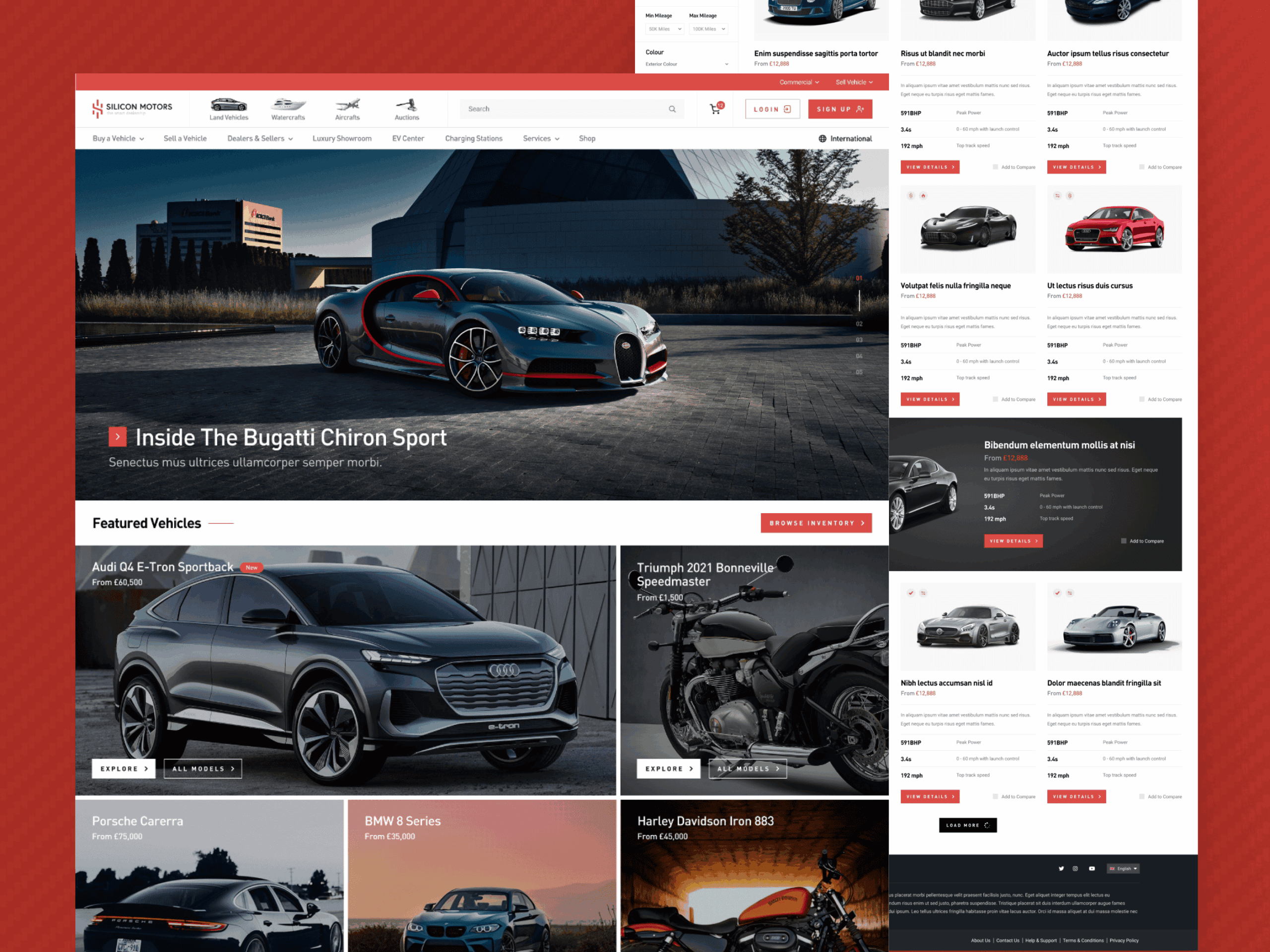
Silicon Motors shows bespoke car dealership web design shaped around stock browsing and buyer journeys.
The project focused on turning a complex multi-service offer into a site buyers could navigate without getting lost. We planned the UX, created wireframes and high-fidelity designs, structured modular page layouts for listings and service hubs, and designed conversion-focused journeys for browsing, enquiries, bookings and sign-ups.
That experience is directly relevant to car dealer websites because the same principles apply: clear stock presentation, strong filtering, mobile-first browsing, confidence-building vehicle pages and enquiry journeys that give the sales team useful context from the first interaction.
Operations That Lift Conversion Without a Redesign
A dealer website can look great and still underperform if the day-to-day workflow is messy. Plenty of so-called website problems are really operational ones: slow responses, missed calls, stock not updated and leads landing in the wrong inbox. Fixing those can lift conversion without touching the design.
Set a simple lead-handling SLA so every enquiry gets a fast, consistent response. Even a basic rule helps: reply within 10 to 15 minutes during opening hours, and first thing the next morning for out-of-hours leads. Make it obvious who owns each lead, so nothing drifts.
Make every lead usable by capturing the context your team needs. At a minimum, include stock reference, vehicle URL, preferred contact method and a simple intent choice, such as viewing, finance, part-ex or reserve. That reduces back-and-forth and improves close rate.
Keep the website and forecourt in sync. If a car is sold, reserved or pending, the website should reflect it quickly. Otherwise you create wasted calls and frustration, and you train buyers not to trust your listings. Even if you cannot automate everything, a daily stock hygiene routine prevents most of the damage.
Close the loop with tracking. Log calls, form leads, WhatsApp clicks and finance actions. Then review which vehicles, sources and pages create real appointments. Once you know that, you can stop guessing and start improving the parts that actually drive revenue.
- Fast replies with a clear owner for every lead
- Lead context captured automatically, including vehicle and intent
- Stock status discipline to avoid “is this still available?” churn
- Simple reporting that connects leads to outcomes
SEO & Performance Essentials for Car Dealer Websites
Many feature lists mention SEO, but they do not explain what actually matters. Dealer SEO wins are often built on clean templates, fast pages and sensible indexing.
Make sure you are not creating duplicate vehicle URLs. Keep your stock pages fast. Ensure your name, address and phone details are consistent with your Google Business Profile. Consider structured data for vehicles, so search engines can better interpret your listings.
For larger or more competitive sites, think carefully about make, model and location structure. A dealer with strong local stock visibility may need useful make/model pages, location-based stock pages, well-written metadata, clean sitemap output and sensible index control. These details help search engines understand the site without creating thin or duplicated pages.
If you are replacing an existing dealer website, migration also matters. Changing URLs, removing indexed pages or rebuilding stock templates without redirects can damage search visibility. A careful rebuild should protect useful rankings while improving speed, usability and conversion.
If you want this checked properly, Webpop Design can audit the areas that quietly hurt performance: page speed, indexing, duplicated content, stock templates, tracking gaps and lead journeys.
Tracking That Shows What Drives Revenue
If you only track page views, you are guessing. Track the actions that create revenue: calls, form submissions, finance enquiries, WhatsApp clicks, viewing requests and reserve actions.
Once you know what converts, the decisions get easier: which stock deserves promotion, which CTAs work best, and whether your ads bring serious buyers or time-wasters.
It also sharpens day-to-day decisions. If one vehicle type gets lots of views but few enquiries, the issue may be price, presentation, finance clarity or trust. If enquiries are coming in but not converting, the issue may be lead handling rather than the website itself.
Final Takeaway
The best car dealer websites are not packed with features for the sake of it. They are built around the buyer journey. Start with fast stock browsing and strong vehicle pages, because that is where most decisions happen. Then add finance, viewing requests, reserve options and part-ex tools that reduce hesitation. Finally, tighten the foundations: speed, SEO hygiene and tracking that measures real enquiries.
For a quick gut-check on your current site, ask this: can a buyer quickly find the right car, feel confident and take the next step without friction? If the answer is yes, you are ahead of most. If it is not quite there, the fixes are usually clearer than you think.
Webpop Design builds bespoke websites for businesses that need more than a basic template. If your dealer website needs stronger stock pages, clearer vehicle detail pages, better enquiry tracking or a more reliable lead journey, discuss your car dealer website.
Frequently Asked Questions
What features should a car dealer website have?
A car dealer website should include fast stock browsing, useful search filters, strong vehicle detail pages, finance information, part-exchange capture, viewing or test drive requests, clear trust signals and reliable enquiry tracking. Together, these help buyers find the right vehicle quickly and give your sales team useful context on every lead.
What makes a good car dealer website?
A good car dealer website is easy to use, fast on mobile and clear at every decision point. Buyers should be able to browse stock, compare vehicles, understand finance options, check trust signals and make an enquiry without unnecessary friction.
Why are vehicle detail pages so important?
Vehicle detail pages are where most buying decisions happen. A strong page should show the price, key specs, mileage, photos, finance options, service history, trust signals and clear next steps without making the buyer hunt for information.
Does a car dealer website need finance integration?
Finance integration is not always essential, but it can improve enquiry quality when buyers are thinking in monthly payments. Clear finance examples, simple calculators and vehicle-linked finance enquiries help buyers understand affordability before contacting the dealership.
Should a car dealer website connect to a DMS or stock feed?
For most dealerships, yes. A DMS or stock feed helps keep vehicle listings accurate, especially when prices, images, mileage, sold status and reserved status change regularly. Accurate stock reduces wasted enquiries and helps buyers trust the website.
How can a car dealer website generate better enquiries?
Better enquiries usually come from clearer vehicle pages, shorter forms, click-to-call options, WhatsApp links, finance prompts and enquiry forms that automatically include the vehicle reference. The more context your team receives, the easier it is to respond properly.
Should car dealers use a template or a bespoke website?
A template can work for a small dealership with simple requirements. A bespoke website usually makes more sense when you need stronger branding, better stock presentation, custom enquiry journeys, SEO control, integrations, tracking or a more flexible long-term setup.
What should be above the fold on a vehicle page?
The top of a vehicle page should show the vehicle title, price, mileage, key specs, main image and a clear enquiry option. Buyers should immediately understand what the car is, what it costs and what they can do next.