
 Alan Carr
Quick Summary: 25 Tips For Choosing The Right Domain Name
Your domain name is one of the first decisions you make when planning a website. It shapes trust, brand recall, your email addresses and how easily people pass your name on. Here are five key things to keep in mind:
- Start with a solid shortlist – Brainstorm 15–20 realistic domain ideas before checking availability with trusted tools like Bluehost or Namecheap.
- Choose the right extension for your audience – .com is widely recognised, but UK businesses should also consider whether .co.uk or .uk feels more relevant and trustworthy.
- Keep it short, clear and easy to say – Avoid hyphens, numbers, confusing spellings and anything that is hard to share verbally.
- Balance keywords with brand identity – A good domain can give people a clue about what you do, but it should still feel credible and flexible enough to last.
- Secure and protect your domain – Register it with a reputable registrar, enable domain privacy where appropriate, and consider buying important variations to protect your brand.
1
Make a List of Potential Names
Start broad, not perfect. Do not spend too long trying to find the perfect domain name, because in most cases, it will not exist. Even if you think of something ideal, there is a good chance someone else has already registered it.
A better approach is to brainstorm 15–20 strong options before checking availability. Include a mix of brand-led names, descriptive names, location-based options and shorter variations. This gives you more flexibility and stops you settling for a weak domain just because your first choice has gone.
Once you have a shortlist, you can check availability using a tool like the Bluehost Domain Search Tool.
Bluehost will also suggest alternative or similar domain names if your original ideas are taken. You can try it on their website.
2
Choose the Right Domain Extension
The domain extension is the part at the end of your domain, such as .com, .co.uk, .uk, .org or .net. It can shape how familiar and trustworthy your website feels before someone has even clicked through.
For many businesses, .com is still the most recognised option. It is familiar and works well for brands with national or international ambitions. If the .com version of your preferred domain is available and affordable, it is usually worth considering.
However, UK businesses should not ignore .co.uk or .uk. A .co.uk domain can feel familiar and locally relevant to UK customers, especially for service businesses, professional firms, trades, hospitality businesses and ecommerce brands focused mainly on the UK market.
As a London agency working mostly with UK clients, we rarely see a .co.uk hold a service business back, and we have launched plenty that rank and convert perfectly well on it. We tend to push for the .com only when the brand is genuinely international or the business is ecommerce-led.
According to Domain Name Stat, .com remains the dominant domain extension, which explains why many people still see it as the default choice.
While some established websites use other TLDs such as .net or .org, and newer extensions like .tech, .design or .store can work in the right context, your choice should be based on trust, audience and long-term brand fit. Do not choose a novelty extension just because the shorter version is available.
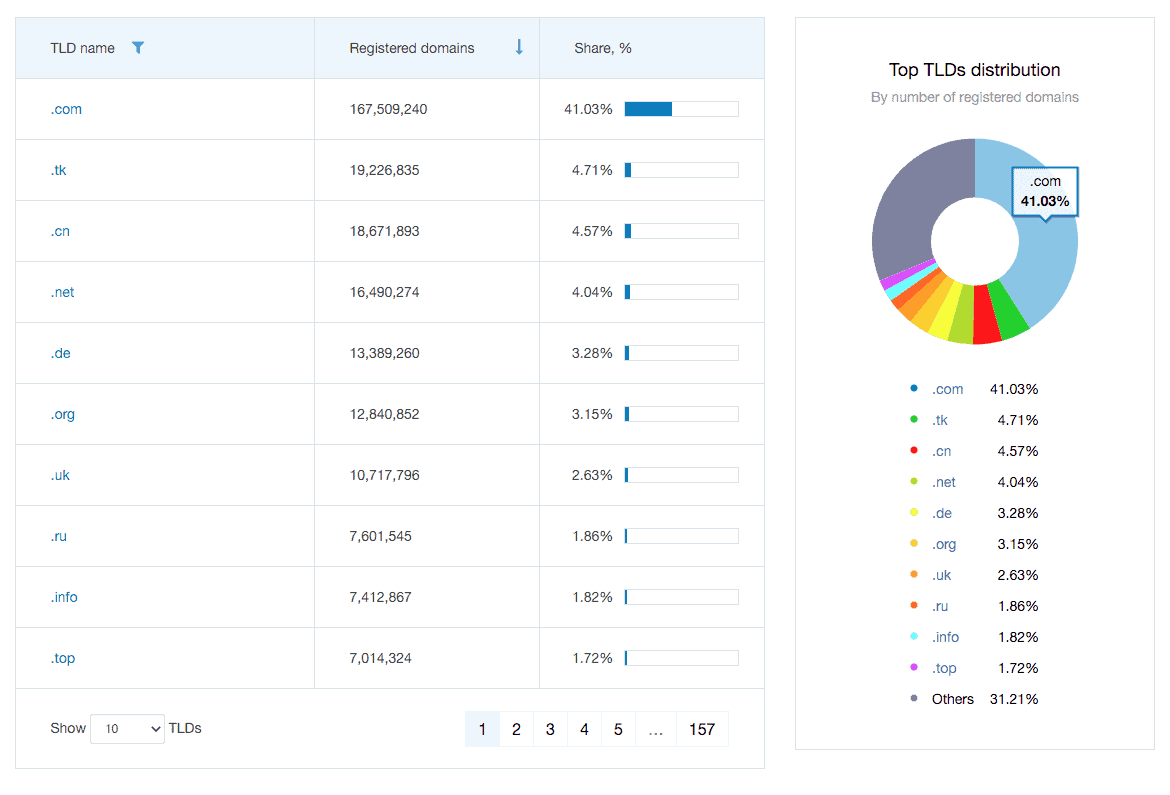
Source: https://domainnamestat.com/statistics/tld/others
3
Keep It Short and Simple
Shorter domain names are usually easier to remember, type, read aloud and use in marketing. As a general rule, aim to keep your domain under 15 characters where possible, excluding the extension.
Many of the world’s most successful business websites use concise domain names. Examples include wikipedia.org, amazon.com, and youtube.com. These names are short and easy to recall.
Short domains are also more practical on mobile. People often type domains into phones, email apps, social profiles, documents and adverts. The longer or more awkward your domain is, the more chances there are for mistakes.
Avoid slang, forced abbreviations and unusual spellings unless they are central to your brand. Names that are simple to read and repeat tend to feel more trustworthy, which matters when someone is weighing up your business.
4
Make Sure It Is Easy to Pronounce
A good domain should be easy to say as well as easy to spell. If someone hears it in a meeting, over the phone, at an event or from a recommendation, they should be able to understand it without needing a long explanation.
This matters more than it first looks. Word of mouth still plays a role in how businesses are found, especially for consultants, local service providers, agencies, restaurants, venues and professional firms.
Your domain will also appear in email addresses. An address such as david@abc.com is simple to say and easy to share. A long, confusing or awkward domain can make your business feel less credible, even if the website itself is strong.
5
Use Keywords Carefully
Relevant keywords can help your domain feel clear, especially if they describe what you do, who you help or where you work. For example, if you run a travel agency website, a name like cozytravel.com gives people an immediate sense of the sector and creates a softer, more memorable brand feel.
There are two main benefits to using keywords in a domain name:
They can help visitors understand what your website is about before they click.
They can support relevance when used naturally alongside strong content, useful pages and a clear website structure.
However, keywords should not make the domain feel spammy, forced or restrictive. A name chosen purely for SEO may look weak if it is too long, too generic or too close to a search phrase.
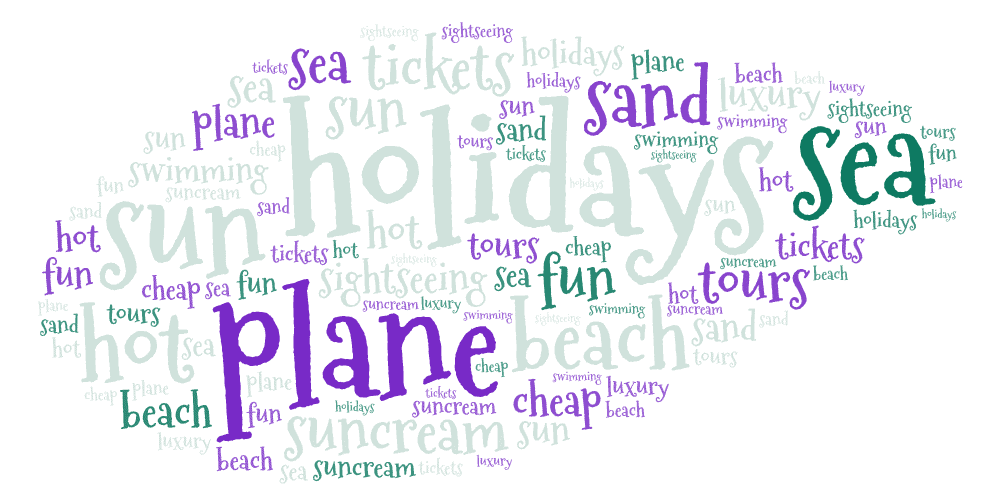
To research the language your audience uses, you can explore tools like the SEMrush Keyword Magic Tool. This can help you find useful phrases, but your final domain should still work as a brand name.
6
Choose a Unique and Brandable Name
A strong domain name needs to stand out in the memory while still feeling trustworthy. Names like amazon.com and apple.com show how simple words can become powerful brands when they are backed by clear positioning and a consistent customer experience.
Compare that with a generic domain like buystuffonline.com. It describes an activity, but it has little personality and would be hard to build into a serious brand.
Your domain should help you stand apart in your market. Look at competitors, but do not simply copy the same naming pattern. Ask whether your domain will still feel relevant if your services expand, your pricing changes or your business becomes more established.
You should also avoid names that are too close to existing brands or trademarks. A good domain should be original and legally safe enough to support long-term growth.
7
Make the Purpose Clear Where Possible
It can help if your domain gives people an instant clue about your website, service or market. If someone can understand roughly what you do from the domain alone, you reduce friction before they even visit the site.
For example, cozytravel.com clearly suggests a travel-related business with a warm, reassuring tone. A local trades business might benefit from a name that includes the service, location or both. An ecommerce brand might prefer something shorter and more memorable.
That said, not every good domain needs to explain the business literally. Apple does not sell apples, and Amazon is not a rainforest supplier. These names work because the brands behind them built meaning over time.
For most small businesses, the safest route is a domain people can trust now that still has room to grow into a bigger brand.
8
Be Careful with Exact Match Domains
An Exact Match Domain, often shortened to EMD, is a domain that matches a commonly searched keyword or phrase. For example, buycheapairlinetickets.com is built around a search-style phrase rather than a distinctive brand.
Exact match domains used to have a stronger SEO advantage than they do today. Search engines are now better at judging the quality of the website behind the domain. In our own work we have watched over-optimised exact-match keyword phrases hold a site back rather than help it, so we are wary of relying on a keyword domain to do work that the content and structure should be doing. If the site has thin content, weak trust signals or a spammy feel, the domain alone will not be enough to rank well.
That said, exact match domains can still have some advantages:
They are easy to understand at a glance
The purpose of the website is clear right away
Used carefully, they can support local relevance
They hold value when the phrase is genuinely commercial
The risk is that an exact match domain can feel generic, dated or low quality if it is too long or too keyword-heavy. If you use one, make sure the website behind it is genuinely useful, trustworthy and built around a proper brand.
9
Use Domain Name Generators
Manually searching for domain names can be frustrating, especially when your best ideas are already taken. Domain name generators can help you explore variations, word combinations and available names more quickly.
Tools like Namecheap’s Beast Mode Generator allow you to enter a keyword and generate hundreds of available domain ideas.
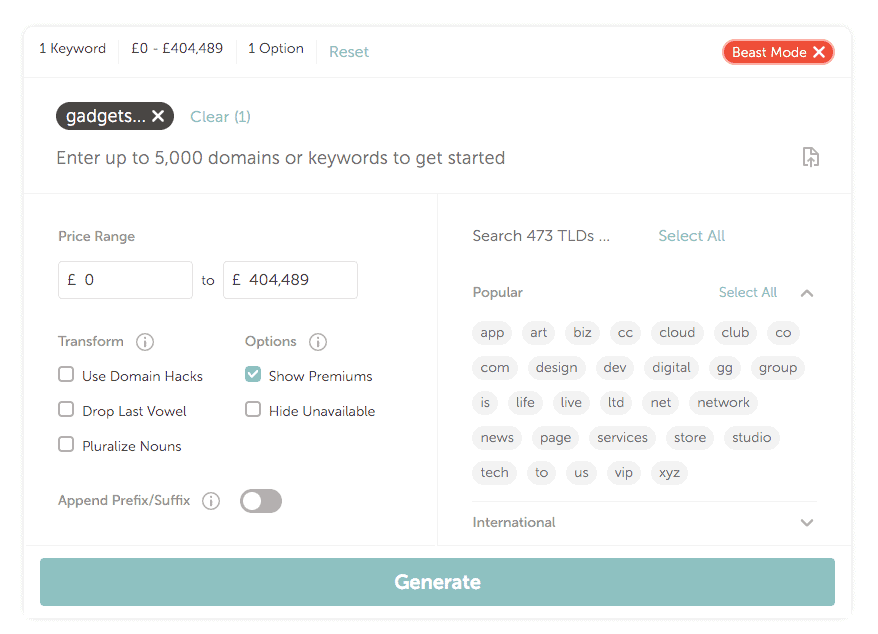
Source: Namecheap’s Beast Mode Generator
You can also try JustDropped by GoDaddy, which lists recently expired domain names. This can be useful if you want to explore domains that have recently become available.
Use generators for ideas, not final decisions. A generated name still needs to pass the basic checks: is it easy to say, easy to spell, legally safe, relevant to your audience and suitable for your long-term brand?
10
Experiment with Non-Traditional TLDs
Today’s domain landscape includes a wide range of non-traditional Top-Level Domains beyond .com, .co.uk and .net. These include industry-specific options like .design, .shop and .blog, as well as country code extensions like .io, .ly and .it.
Used carefully, these extensions can make a domain feel modern and easy to remember. For example, Microsoft Translator uses translate.it, which works as both a domain and a short phrase.
This approach can suit tech startups, creative businesses, personal portfolios and product-led brands. However, it is not right for every business. Some audiences still trust familiar extensions more, especially in professional services, finance, healthcare, legal, construction and local service sectors.
If you choose a newer extension, make sure it supports the brand rather than simply acting as a compromise because the .com or .co.uk has gone.
11
Buy Common Misspellings of Your Domain Name
If your brand name is commonly misspelled or easy to mistype, it may be worth registering the most likely mistakes and redirecting them to your main domain. This helps prevent lost traffic and protects you from opportunistic typosquatters who register similar domains to capture accidental visits.
This is especially useful if your business has a name people often hear before they see it written down. It can also help if your domain includes a word with more than one common spelling.
Of course, every extra domain adds renewal cost. You do not need to buy every possible variation, but it is sensible to protect the most obvious alternatives if your brand is important to your long-term marketing.
12
Plan for Expansion
A domain name should support where the business is going, not just where it is today. A very narrow domain might work now, but it can become limiting if your services, products or locations change.
For example, computeraccessories.com may be clear today, but it could feel restrictive if the business later expands into wider electronics. A broader name like electricwarehouse.com gives the brand more room to grow.
The same applies to location-based domains. A local keyword can help if you only serve one area, but it may become a problem if you later expand into other cities, counties or countries.
Avoid names that are too trendy or tied to a passing offer. A good domain should still feel credible several years from now.
13
Take Ideas from Your Competitors
Competitor research can help you understand naming patterns in your market. Look at whether competing businesses use brand-led names, service-led names, location-led names or shorter abstract names.
This does not mean copying them. The aim is to understand what feels normal in your sector, where there may be an opportunity to stand out, and what types of names might look credible to your audience.
For example, a law firm, restaurant, SaaS product and construction company will not usually need the same naming style. Some sectors reward clarity and trust. Others allow more personality and creativity.
Analysing competitors can also help you spot weak patterns to avoid, such as overused keywords, awkward abbreviations or names that are too similar to existing brands.

14
Avoid Hyphens, Numbers and Acronyms
Hyphens, numbers and acronyms often make domain names harder to remember, harder to type and harder to explain verbally. If someone forgets the hyphen, misremembers the acronym or is unsure whether to type “4” or “four”, they may end up on the wrong website.
Hyphens can also make a domain look less polished, particularly when used as a fallback because the cleaner version was unavailable. Numbers create similar problems because they introduce unnecessary ambiguity.
Acronyms can work for established organisations, but they are often weak for new businesses unless the initials are already familiar to the audience.
If the domain you want is only available with hyphens or awkward additions, it is usually better to return to your shortlist and find a cleaner option.
15
Try Using Geographic Terms
If your business serves a specific area, a location-based term can make the domain more relevant and easier to understand. This might include a city, county, region or country.
Geographic domains such as plumbersleeds.co.uk can work well for local service businesses because they make the offer and location clear immediately. They can also support local SEO when the rest of the website is properly structured.
This approach is common in sectors such as trades, legal services, construction, hospitality, clinics and local professional services.
However, location terms can become restrictive. If you expect to expand beyond one area, avoid choosing a domain that makes the business feel smaller than it is.
16
Use Your Name
If your personal reputation is central to the business, using your own name as a domain can be a strong choice. This often works well for consultants, coaches, freelancers, authors, speakers and independent specialists.
A personal-name domain can make the business feel direct and easy to associate with one expert. It can also protect your name online, even if you do not plan to build the website immediately.
That said, using your name may be less suitable if you want to build a company brand, hire a team, sell the business later or make the brand feel bigger than one person.
Before registering a personal-name domain, think about the long-term direction of the business and whether the brand should sit around you or around a broader company identity.
17
Consider Acquiring Existing or Expired Domains
Acquiring a domain that has already been registered, especially one that has expired or is about to expire, can sometimes give your website a head start. Some existing domains may already have backlinks, search history, type-in traffic or brand recognition.
This can be useful, but it needs proper research. A domain with a clean history and relevant backlinks may be valuable. A domain with spam links, previous penalties or unrelated past use can create SEO and trust problems.
A useful tool for researching available domains is Expired Domains, which allows you to filter by backlink profile, domain authority and keyword relevance.
Expired domains can be a smart option in some cases, but they should not be bought blindly. The history of the domain matters as much as the name itself.
18
Check the Domain’s Backlink History
Before buying an expired, dropped or pre-owned domain, review its backlink history. A domain with spammy or irrelevant backlinks can harm your SEO and make the site harder to trust.
On the other hand, a domain with clean, relevant links from credible websites may provide a useful starting point. The key is to understand what the domain was used for before and whether its history matches your new website.
Use a tool like the SEMrush Backlink Analytics tool to assess link quality, referring domains and potential toxic backlinks. Avoid domains with obvious link spam, unrelated anchor text or signs of previous manipulation.
19
Check Social Media Handles
Your domain does not need to match every social media handle exactly, but consistency helps. If your website, Instagram, Facebook, LinkedIn and other profiles all use similar naming, people are more likely to recognise and trust the brand.
Before registering a domain, check whether a close version of the name is available on the platforms your audience actually uses. This is especially important for ecommerce brands, restaurants, venues, creators, personal brands and businesses that rely on social discovery.
Matching handles and domain names, such as housedesign.com and @HouseDesignHQ, make it easier for users to find you across channels.
If the perfect handle is not available, look for a clear suffix or variation that still feels natural. Avoid awkward additions that weaken the brand or make it harder to remember.
20
Make Sure It’s All Legal and Above Board
Before registering a domain name, check that it does not infringe on an existing trademark. Using a protected name, even by accident, could create legal issues and may force you to stop using the domain later.
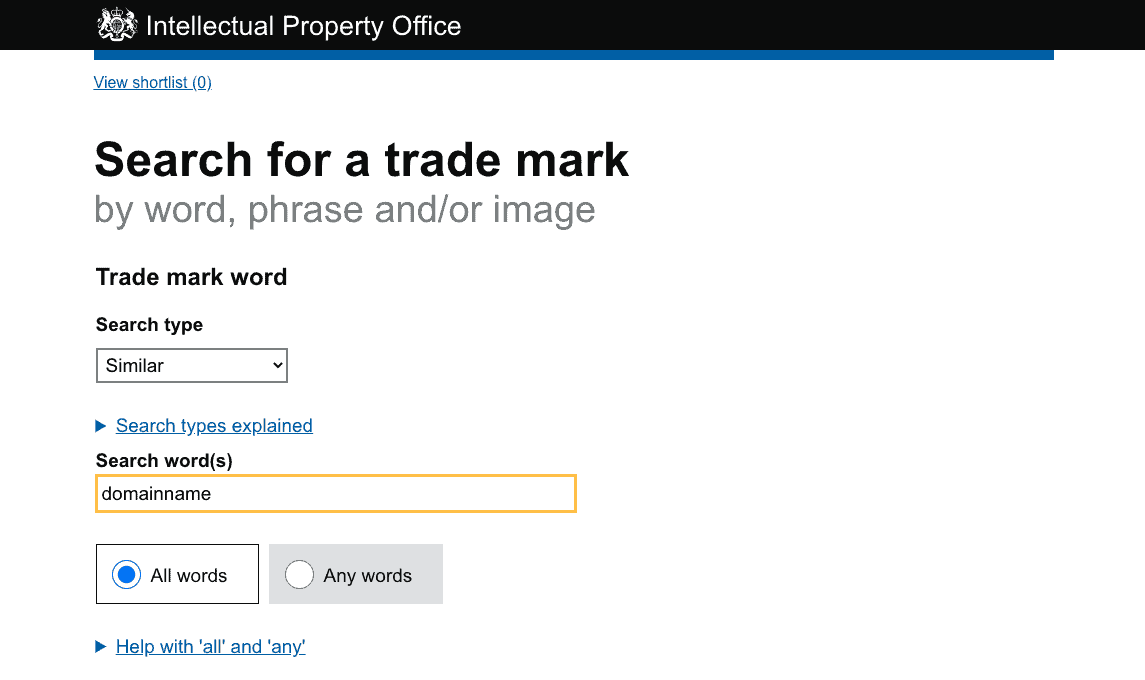
For UK businesses, visit gov.uk to check trademark status. For US readers, use the USPTO trademark database.
You should also search Google, Companies House, social media platforms and relevant marketplaces to see whether a similar name is already being used. This is not a substitute for legal advice, but it can help you spot obvious conflicts before you commit.
21
Don’t Get Frustrated If Your Domain Is Taken
If your ideal domain is taken, do not assume the idea is dead. In some cases, the owner may be willing to sell, especially if the domain is parked, unused or held as an investment.
Use a tool like who.is to look for ownership details, although privacy settings may hide some contact information.
If the domain is being used by an active business, it may be harder or more expensive to buy. You can still make a polite enquiry, but it is sensible to keep working on alternative names at the same time.
You can also explore marketplaces like Flippa, SnapNames, or the GoDaddy Domain Marketplace.

Premium domains can range from a few hundred to several thousand pounds, and some cost much more. Before paying a premium, be clear on whether the domain is genuinely valuable to the brand or simply attractive because it was your first choice.
22
Register Your Domain with a Reputable Registrar
Register your domain with a trustworthy, well-established registrar. A good registrar should make renewals, DNS management, domain locking, privacy settings and support easy to manage.
This matters because losing access to a domain can cause serious problems. Your website, email, advertising, search visibility and printed marketing may all depend on that one address.
Recommended registrars include GoDaddy, Bluehost, and Namecheap.
For business websites, make sure the domain is registered in the correct owner’s name and not only under a designer, developer, employee or temporary contractor. Domain ownership should be clear from the start.
23
Explore Domain Prices with Different Registrars
Domain prices can vary between registrars, so it is worth comparing costs before buying. Look at the first-year price, renewal price, privacy protection, transfer costs and any add-ons included at checkout.
As of now, here’s what a standard .com domain may cost annually:
Introductory prices can be lower than renewal prices, so check the long-term cost before committing. A cheap first year is not always the best deal if renewals, privacy or transfers become expensive later.
24
Register the Domain Once You Are Confident
Good domain names can disappear quickly, especially short, clear and commercially useful names. If you have completed the basic checks and feel confident in the choice, it usually makes sense to register the domain rather than wait too long.
That does not mean rushing into a weak name. Check the spelling, extension, trademark risk, social handles, renewal cost and long-term fit first.
Once those checks are complete, registering the domain is a relatively low-cost decision compared with the cost of rebranding, changing email addresses or rebuilding a website around a different name later.
25
Protect Your Domain Name
Once your domain is registered, make sure it is properly protected. Enable domain locking to help prevent unauthorised transfers. This feature is usually activated by default with reputable registrars like Namecheap, and Bluehost.
You should also consider domain privacy protection where appropriate. This hides personal registration details from public databases, reducing spam and helping protect your identity.
For important business domains, keep renewal reminders active, use a secure login, enable two-factor authentication if available, and make sure more than one trusted person knows where the domain is managed. A domain is a small annual cost, but losing control of it can create a much bigger problem.
Final Thoughts
Choosing the right domain name takes a little research and some honest judgement. The best domain names are easy to remember and say, work cleanly in email and still suit the business as it grows.
For UK businesses, the right choice is not always as simple as choosing .com. In some markets .co.uk is the more trusted option. A brand-led name often beats a keyword domain. A local domain can help, though it can quietly hold the business back as you grow.
So there you have it: 25 tips for choosing a domain name for your website. Take your time, shortlist properly, check the risks and choose a name that supports the website, brand and business you want to build.
If you are planning a new website or rebrand and want advice before choosing a domain, Webpop Design can help you think through the name, structure and wider website strategy before you commit.
Domain name FAQs
What is the best domain extension for a UK business?
For most UK businesses, .co.uk, .uk and .com are the main options to consider. A .co.uk domain can feel familiar and locally relevant to UK customers, while .com is often better for brands with international ambitions. The best choice depends on your audience, market and long-term plans.
Is .co.uk better than .com for a UK website?
Not always, and as a UK agency with a .com we lean towards .co.uk more often than clients expect. A .co.uk domain can work very well for UK-focused businesses because it feels local and recognisable. We usually steer clients to .com only when the brand has real international reach or a strong ecommerce focus. If both are available and affordable, many businesses register both and use one as the main domain.
Does a domain name affect SEO?
A domain name can support SEO, but it will not make a weak website rank on its own. Clear, relevant domains can help users understand what the site is about, but rankings depend much more on content quality, technical SEO, authority, user experience and how well the page matches search intent.
Should I use keywords in my domain name?
Keywords can be useful if they make the domain clearer and more relevant, but they should not make the name feel forced or spammy. A strong brand name with useful content is usually better than a long keyword-heavy domain that is hard to remember.
Should my domain name match my business name?
In most cases, yes. Matching your domain to your business name makes the brand easier to remember and helps customers find you online. If the exact match is taken, look for a clean variation rather than adding awkward hyphens, numbers or extra words that weaken the brand.
What should I do if my ideal domain name is taken?
First, check whether the domain is being used. If it is parked or inactive, you may be able to contact the owner or buy it through a domain marketplace. If it is too expensive or already used by another business, return to your shortlist and choose a name that is still clear, credible and easy to remember.
Is it bad to use hyphens or numbers in a domain name?
Hyphens and numbers are usually best avoided because they make domains harder to say, type and remember. They also increase the chance of mistakes when someone hears the domain aloud. A cleaner alternative is usually better than a compromised version of your first choice.
Who should own my domain name: me or my web designer?
The business owner should usually own the domain name directly. A web designer or developer can help set it up, but the domain should be registered under your business details, with clear access to the registrar account. Losing control of a domain can affect your website, email, search visibility and marketing.